


Choosing Curtain Fabric NZ for a Luxurious Home
Choosing the right curtain fabric is about so much more than just picking a colour you like. It’s one of those defining decisions that completely shapes the light, mood, and comfort of your home. Get it right, and you can turn a room from a functional space into a true sanctuary that feels uniquely yours.
Weaving a Sanctuary with the Right Curtain Fabric
Curtains are far from a simple finishing touch; they're a core part of the room's design and have a huge impact on its character. Here in New Zealand, where the light can change in an instant from soft and hazy to brilliantly sharp, your fabric choice is even more critical. It's what determines how that beautiful natural light is filtered, how much privacy you have, and how your home feels from one season to the next.
Think of fabric as your main tool for painting with light. A delicate, sheer linen can wash a living room in a soft, ethereal glow, blurring the lines between your indoor space and the garden outside. On the other hand, a rich, heavyweight velvet will swallow the light, creating a sense of intimacy and cocoon-like comfort that's just perfect for a bedroom or media room. It's always a delicate balance between what you need and what you love.
This guide will walk you through everything you need to know to select the ideal curtain fabric. We'll dive into:
- Fibre Types: We'll look at the unique qualities of natural materials like linen and cotton and see how they stack up against durable synthetics.
- Opacity and Weight: It’s time to master light control, from beautifully airy sheers to full blackout options.
- Linings and Performance: We’ll explore how thermal and acoustic linings can make your home more comfortable and energy-efficient.
- Customisation and Care: Let's make sure you get a perfect fit and keep your investment looking beautiful for years.
A Growing Appreciation for Quality
It's clear that Kiwi homeowners are increasingly looking for beautiful, high-quality window treatments. You can see it in the numbers; the New Zealand window covering sector was valued at USD 87.27 million and is on track for some serious growth. This really points to a shared appreciation for luxurious, custom home decor that marries function with timeless style. You can discover more insights about the NZ window covering market growth and see how premium options are shaping our local interior design trends.
Choosing a curtain fabric is an investment in your home's atmosphere. It’s the difference between a house and a haven, a space that not only looks beautiful but feels deeply personal and restorative.
Ultimately, picking the right material is your chance to create spaces that are both stunning to look at and perfectly suited to your lifestyle. Whether it's the textural appeal of an artisanal linen or the practical brilliance of a modern blend, the perfect curtain fabric is out there waiting to complete your vision. This is about making a choice you’ll love for years to come.
Decoding the Language of Curtain Fabrics
Choosing the right curtain fabric can feel like stepping into a whole new world. You’ll hear terms like ‘weave’, ‘drape’, and ‘handfeel’ thrown around, but what do they actually mean for your home? Getting to grips with these basics is the key to picking a fabric that not only looks stunning but functions perfectly for years to come.
Think of fabric weight like the body of a good wine. Some are light and airy, creating a soft, ethereal mood. Others are rich and opulent, grounding a space with a real sense of luxury. This weight is what determines the ‘drape’—that elegant, soft-folding way a curtain hangs.
A lighter fabric, like a delicate linen sheer, will billow gently in a breeze and let beautiful, filtered light stream in. On the other hand, a heavier material like velvet or a dense wool blend will fall in more structured, sculptural lines, offering fantastic insulation and a more formal, polished look.
The Great Divide: Natural vs. Synthetic Fibres
When it comes to curtain textiles, everything falls into two main families: natural and synthetic. Each has its own distinct personality and practical perks, and the right choice for you will really depend on the room and your lifestyle.
Natural fibres, sourced from plants and animals, bring a breathability and textural beauty that’s hard to replicate. They connect a room to the natural world, adding a layer of organic warmth and character.
- Linen: Loved for its relaxed, slightly rumpled texture, linen brings a casual elegance that’s perfectly suited to the New Zealand home. It’s incredibly strong, drapes beautifully, and just gets softer and more inviting over time. If you’re drawn to this classic material, you can learn more in our detailed guide on the unique qualities of linen fabric in NZ.
- Cotton: A true chameleon. Cotton is wonderfully versatile, easy to look after, and can be woven into everything from crisp, clean voiles to soft, brushed finishes for a cosier feel. It offers a classic look that simply works, no matter your interior style.
- Silk: The absolute pinnacle of luxury. Silk has an unmistakable lustre and a smooth, soft handfeel. While its drape is second to none, it is prone to sun damage, so it’s best reserved for more formal spaces that don’t get hit with harsh, direct sunlight.
Synthetics, on the other hand, are the workhorses of the fabric world. They are engineered for performance, often giving you better durability, fade resistance, and fuss-free care—making them a brilliant, practical choice for busy family homes or sun-drenched rooms. Polyester is incredibly resilient and holds its colour exceptionally well, while certain acrylics can offer a wool-like feel with fantastic resistance to fading and moisture.
Comparing Popular Curtain Fabric Types
To help you decide, here’s a quick rundown of the most common fabrics and where they shine.
| Fabric Type | Key Characteristics | Best For | Care Level |
|---|---|---|---|
| Linen | Relaxed texture, breathable, strong, gets softer with age. | Living rooms, bedrooms, and spaces wanting a natural, airy feel. | Moderate (can wrinkle, often dry-clean only). |
| Cotton | Versatile, durable, easy to clean, available in many weights. | Almost any room; great for kids' rooms and casual living areas. | Low to Moderate (often machine washable). |
| Silk | Luxurious sheen, beautiful drape, smooth feel. | Formal living rooms, dining rooms, master bedrooms (with lining). | High (dry-clean only, protect from sun). |
| Polyester | Extremely durable, fade-resistant, wrinkle-resistant. | Sun-facing rooms, high-traffic areas, and family homes. | Low (very easy to clean and maintain). |
| Blends | Combines features (e.g., linen's look with polyester's durability). | Any room where you need both style and practicality. | Varies, but generally easier than pure naturals. |
This table shows there’s no single "best" fabric—it’s about finding the right fit for your specific needs.
Visualising Your Fabric Choice
Making a confident decision is much easier when you can picture how all these elements—style, quality, and comfort—will come together in your own home.
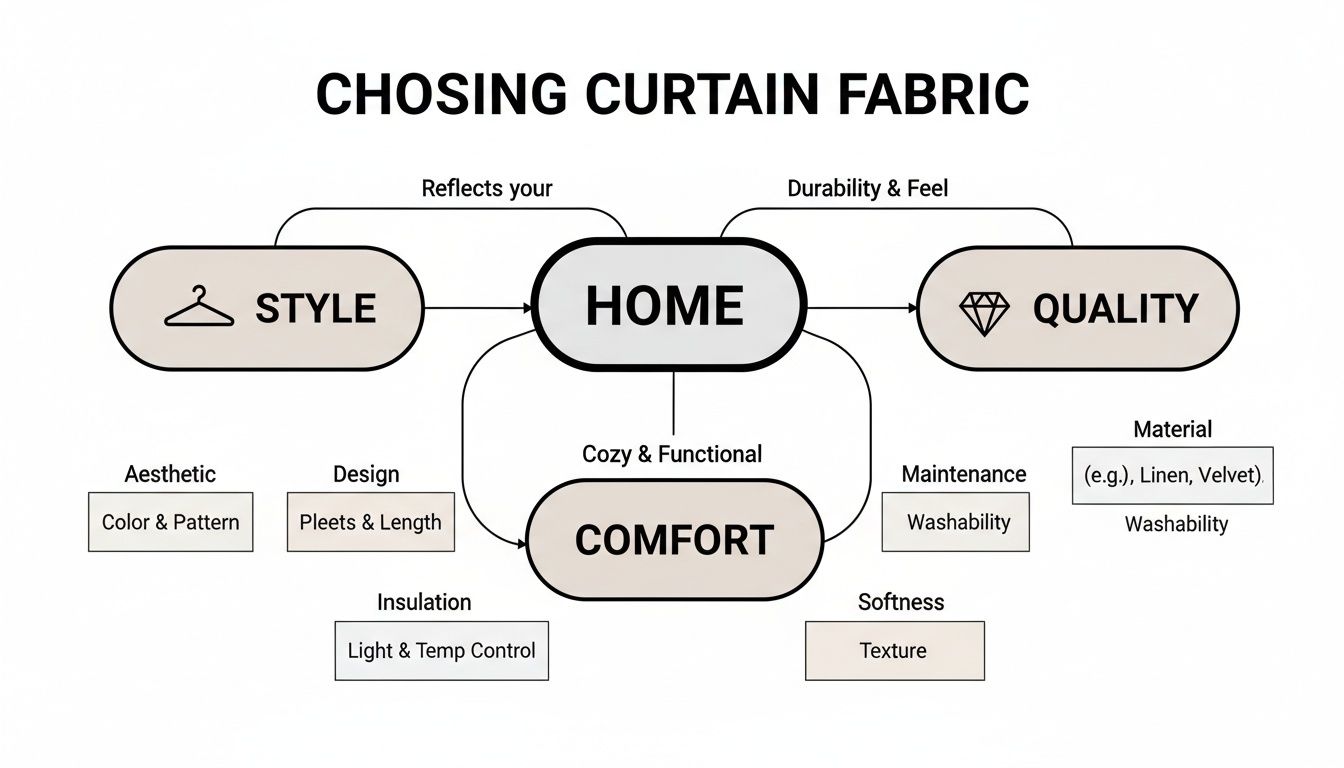
As you can see, your final choice sits at the intersection of your home's aesthetic (style), the fabric's durability and performance (quality), and the atmosphere you want to create (comfort).
Often, the most intelligent solution is a blend. A linen-polyester blend, for example, gives you the gorgeous, natural texture of linen with the wrinkle-resistance and hard-wearing nature of a synthetic. It’s truly the best of both worlds: high-end style that stands up to the demands of everyday life.
Ultimately, the "best" fabric is the one that meets both your aesthetic desires and your practical needs. It’s about finding that perfect balance between the heart and the head—a material you love to look at and that works seamlessly with your life.
By understanding these fundamental differences, you’re no longer just picking a colour. You’re designing with purpose, choosing a fabric that will not only complete your room but genuinely enhance the way you live in it.
Mastering Light and Privacy with Fabric Opacity
Once you've settled on a fibre, the next big decision is opacity. This is really about how much light you want to let in—or keep out. Think of it as the dimmer switch for your room's natural light; it's how you dial in the perfect balance of brightness, privacy, and mood. Getting this right is crucial for creating spaces that feel both beautiful and practical, especially in New Zealand where the sun can be surprisingly intense.
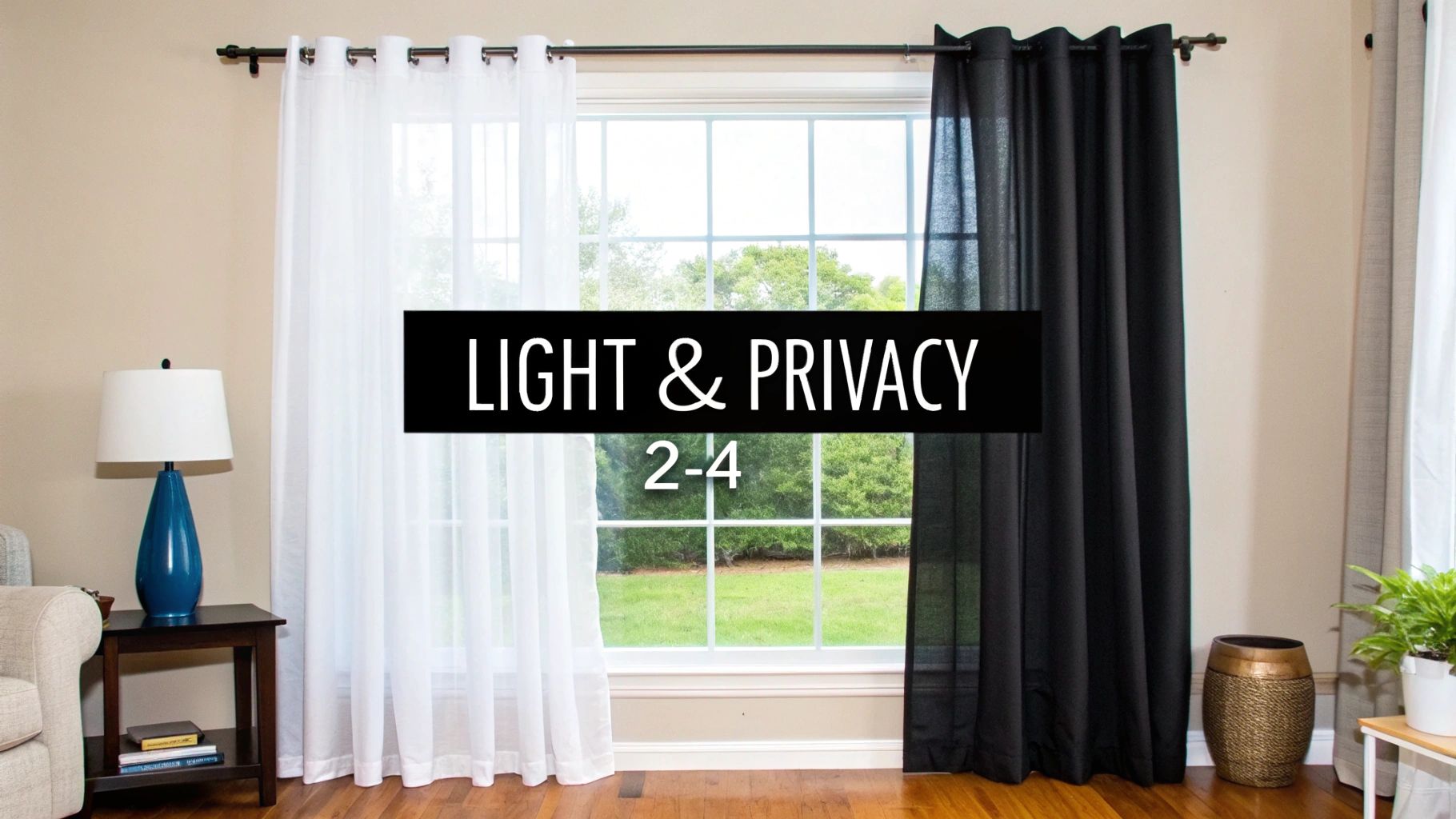
This isn’t just about blocking sunlight, it’s about curating it. The way light filters through a fabric can soften a room’s hard edges, highlight beautiful architectural details, and create a real sense of calm. Of course, the windows themselves play a huge role. Before you get your heart set on a fabric, it's worth remembering that choosing the right windows and doors is the first step, as their style and placement dictate how light enters your home to begin with.
Sheer Fabrics: For a Soft, Diffused Glow
Sheers are the poets of the curtain world. They don't block light so much as they transform it. Thanks to their loose, open weave, they act like a soft-focus lens, turning harsh sunlight into a warm, ethereal glow. They’re perfect for when you want to feel connected to the outdoors—whether that’s a lush garden view or a city skyline.
This makes sheers a natural fit for living areas, dining rooms, and sunrooms where you're not overly concerned with privacy but want to create an airy, uplifting atmosphere. They cut the glare without sacrificing brightness, which helps protect your furniture from UV damage while keeping the space feeling open and bright.
Sheer fabrics are less about concealment and more about atmosphere. They blur the hard edges of the outside world, creating a serene and gentle ambience indoors.
For a look that's both classic and sophisticated, you really can't go past the gentle drape of linen. A beautifully made set like our sheer linen curtains in timeless white strikes that perfect balance of texture and translucency, adding a layer of relaxed elegance to any room.
Light-Filtering Fabrics: The Perfect Middle Ground
Need privacy but don't want to live in a cave? Light-filtering fabrics are your answer. These textiles are woven more tightly than sheers, so they provide a solid visual barrier from the outside while still letting plenty of soft, natural light flow through.
They really are the versatile all-rounder. During the day, they'll obscure the view into your home for complete peace of mind. At the same time, they turn direct sun into a pleasant ambient light, often meaning you can leave the overhead lights off for longer.
This makes them a fantastic choice for:
- Street-facing rooms where you want to block the view of passersby.
- Bathrooms and bedrooms that need privacy but feel so much nicer with natural light.
- Home offices where you need to cut screen glare without making the space feel gloomy.
Dimout and Blackout Fabrics: For Ultimate Control
Finally, for those rooms where light control is simply non-negotiable, you’ll want to look at dimout and blackout fabrics. These are the heavyweights, designed to block as much external light as possible. They’re indispensable for creating the perfect environment for sleep or watching a film.
Dimout fabrics will typically block between 95-99% of light. They have a very dense weave and are often backed with foam or another layer of tightly woven fabric to stop light from getting through. For most bedrooms, this is more than enough to create a dark, restful space that encourages deep sleep.
Blackout fabrics take it a step further, offering 100% light-blocking capability. These are often made with multiple layers, including a completely opaque membrane, ensuring not a single sliver of light can pass. They are the gold standard for media rooms, home cinemas, and for light-sensitive people or shift workers who need to create a night-time environment during the day. As a bonus, their dense construction also provides excellent thermal and acoustic insulation, making your room quieter and more energy-efficient.
The Unseen Powerhouse: Why Curtain Linings are a Game-Changer
Picking out a stunning curtain fabric is the exciting part, but it's only half the picture. The real secret to curtains that not only look incredible but also perform brilliantly is something you’ll barely even see: the lining. It’s far more than just a backing fabric; a quality lining is what gives your curtains their beautiful structure, protects them for the long haul, and delivers a whole suite of benefits that can genuinely change how your home feels.
I often compare it to the lining in a beautifully tailored jacket. On its own, the wool is lovely, but the lining is what helps it hang just right, prevents it from stretching, and gives it that substantial, high-quality feel. It's the same with curtains. The right lining is an investment that pays you back every day in energy savings, quieter rooms, and by keeping your fabrics and furnishings from fading.
Here in New Zealand, where we can get a bit of everything weather-wise in a single day, a good lining becomes non-negotiable. It’s the invisible workhorse that helps keep your home comfortable and cosy, no matter what’s happening outside.
The Foundation: Standard Lining
The starting point for any quality curtain is a standard lining, which is usually made from a lovely cotton or a durable poly-cotton blend. Its main job is to give your chosen curtain fabric a bit of body and weight. This is what helps the curtain drape in those beautiful, full, and even folds, creating a much richer, more luxurious look.
It also acts as a crucial first line of defence against the sun. By shielding your main fabric from direct sunlight, it prevents those vibrant colours from fading over time—an absolute must for delicate materials like silk or a beautiful, richly-dyed linen. A standard lining is the first step up from a simple piece of fabric to a professionally finished window treatment.
The Smart Upgrade: Thermal Lining
If you're looking to make your home more energy-efficient (and who isn't?), a thermal lining is one of the smartest upgrades you can make. These linings have a special acrylic suede coating on the back that creates a highly effective insulating barrier. During a chilly winter, this layer traps warm air inside and stops it from escaping through the glass—a big deal when windows can be responsible for up to 30% of a home's heat loss.
Then, when the hot Kiwi summer rolls around, that same lining works to reflect the sun's heat, keeping your rooms noticeably cooler and meaning you won't have to crank up the air conditioning. It makes your home so much more comfortable year-round, and you’ll see the difference in your power bills.
But the benefits don't stop at temperature. Thermal linings are also fantastic for acoustic insulation. The dense, coated material does a surprisingly good job of muffling outside noise, which is a blessing if you live on a busy road or simply want to create a peaceful retreat in your bedroom.
A high-quality thermal lining doesn't just make your curtains look better; it actively improves the comfort and tranquillity of your living space. It’s an intelligent investment in the performance of your home.
The Ultimate in Light Control: Blackout Lining
For absolute, total darkness, nothing beats a blackout lining. This is the go-to solution for bedrooms, nurseries, and home cinemas—anywhere you need to completely block out the light for rest or the perfect viewing experience. Unlike 'dimout' fabrics, a true blackout lining is designed to block 100% of incoming light.
It does this with multiple, bonded layers that create a completely impenetrable barrier. Not even the brightest midday sun can find its way through. The effect on sleep quality is huge, as it helps keep your room properly dark, allowing your body to get the deep, uninterrupted rest it needs.
Kiwis have a real appreciation for these high-performance options. Even after a small market dip, spending on New Zealand curtains reached around $12 million, showing that homeowners are still happy to invest in premium curtain fabrics that deliver real benefits like energy efficiency. This focus on performance and longevity is a defining trend, and you can get a deeper insight into how consumer demand shapes the New Zealand curtain market to see where things are headed.
At the end of the day, adding the right lining elevates your curtains from a simple decorative touch to a hardworking part of your home's ecosystem. It's the smart decision for anyone who wants to blend timeless style with modern, practical performance.
How to Measure for Custom Curtains
The secret to curtains that look professionally hung and utterly flawless? It all comes down to the measurements. Getting this step right is the single most important thing you can do to achieve that beautiful, bespoke finish. It might feel a bit intimidating, but I promise it's straightforward once you know what you're doing.
This isn't just about covering a pane of glass; it's about framing your window to enhance the entire room.
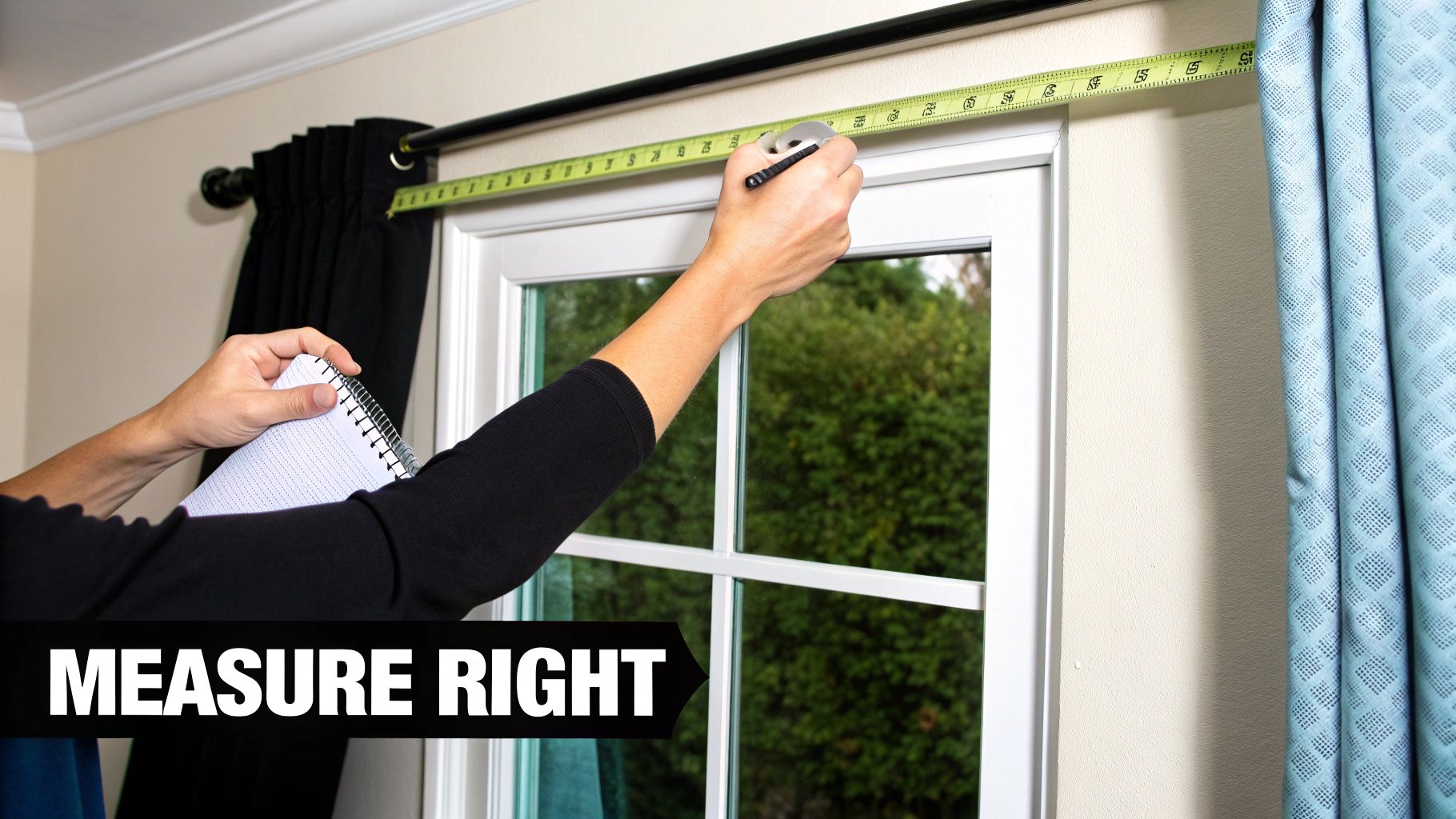
Spot-on measurements ensure your curtains hang gracefully, give you the light control you need, and can even make your room feel bigger and more inviting. Before you do anything else, grab a metal tape measure (they don't stretch!), a pen, and a notepad.
Measuring the Curtain Width
First things first: think about where you'll place your curtain rod or track. A classic interior design trick is to install the hardware wider than the window itself. This makes the window appear larger and far more grand.
This space on either side is called the ‘stack back’ area. It’s where your curtains will sit when they're open, allowing every bit of natural light to flood in without fabric blocking the view.
- Measure the Track/Rod Width: This is the key measurement. You’re measuring the full width of the hardware you plan to install, not the window frame.
- Add for Stack Back: As a general rule, your rod should extend at least 15-25cm past the window frame on each side. If you have the space, going even wider creates a truly stunning, high-end effect.
- Calculate Fullness: This is what separates luxe, flowing curtains from sad, flat panels. To get those beautiful, deep folds, you need much more fabric than the width of the track.
For a lush, professionally styled result, your total fabric width should be 2 to 2.5 times the width of your curtain rod. For delicate sheers, you might even go up to 3 times the width for that soft, dreamy, billowy look.
Determining the Curtain Length or Drop
The length of your curtains has a massive impact on the feel of your room. By installing the rod higher than the window frame—say, halfway to the ceiling—you can create a wonderful illusion of height, making the whole space feel more airy and elegant.
There are three classic looks to choose from for the curtain drop:
- Floating Length: The hem hovers about 1cm off the floor. It’s a clean, practical style that’s perfect for busy areas of the home, as the fabric stays pristine and doesn't gather dust.
- Touching Length: The hem just kisses the floor. This gives a very precise, tailored finish that looks incredibly smart and contemporary.
- Puddling Length: The fabric drapes onto the floor by an extra 5-15cm (or more!). This is a very romantic, dramatic statement, best reserved for formal living spaces or bedrooms where you can showcase luxurious fabrics like linen or velvet.
Decide which look you're after, then simply measure from the top of the curtain rod or track down to where you want the hem to finish. For a more detailed walkthrough, our complete guide on how to measure for curtains has extra tips and visuals to help you get it perfect.
Calculating Your Fabric Needs
Now for the final piece of the puzzle: working out how much fabric you'll need to order. Keep in mind that fabric comes in different widths. A standard 137cm fabric will require more drops (and therefore more seams) than a wider 280cm or 300cm 'continuous' fabric, which can give you a more seamless, polished look.
If you’ve fallen for a patterned fabric, you'll also need to factor in the 'pattern repeat'. This is the vertical distance before the pattern starts again, and you’ll need to order extra fabric to ensure the design lines up perfectly across all your curtain panels. It’s a small detail that makes a world of difference.
Styling and Sourcing Your Perfect Curtain Fabric
Now that we’ve covered the practical side of things, we get to the best part: styling. This is where your knowledge of fibres, opacity, and linings comes together with your personal taste to create something truly special for your home.
Think of choosing a fabric as casting a character for a role. Every room has its own personality and purpose, and the curtains should complement that story. It’s about creating a feeling, not just covering a window.
Curating the Atmosphere in Every Room
The right fabric choice really depends on how you live in a space. A living room, for instance, is all about connection and conversation, so you want materials that feel relaxed and inviting.
-
Living Rooms: I find that flowing, textural linens are a perfect match for that classic, laid-back New Zealand elegance. They filter the light in such a beautiful way, casting a soft, welcoming glow that keeps you connected to the outdoors. The natural drape just adds a layer of effortless style.
-
Bedrooms: This is your sanctuary. It needs to be a space for rest. Go for richer, heavier fabrics like a dense lined linen or a soft wool blend to create a real cocooning effect. These materials are fantastic for light control and dampening sound, helping you craft that quiet, serene environment you need for a good night's sleep.
-
Kitchens and Bathrooms: In rooms with a lot of moisture, practicality is king. You’ll want durable, easy-to-clean fabrics. A high-quality polyester blend or even 100% hemp, which is naturally antimicrobial, works wonders. Often a simple, clean style like a Roman blind is the best fit here.
If you're looking for broader ideas on elevating your space, these general home staging tips offer great insights into how fabrics can enhance your home's overall appeal.
Embracing Timeless New Zealand Style
Trends will always come and go, but the heart of New Zealand interior design is its connection to nature. This shows in our enduring love for materials and colours that mirror our stunning landscapes—think earthy tones, muted greens, and warm neutrals that just feel calm and grounded.
Choosing custom, locally crafted curtains is an investment in quality and longevity. It ensures a perfect fit and supports the skilled artisans who bring timeless design to life, creating a piece that will enhance your home for years to come.
Natural textures are everything. The subtle slub of linen, the soft feel of brushed cotton, or the warmth of a wool blend—these details add so much depth and character, creating a tactile experience that feels both authentic and luxurious.
Sourcing Quality Locally
When you invest in custom, locally made curtains, you're not just getting a flawless fit. You're connecting with the craftsmanship and expertise that truly define a high-end interior.
It's clear that discerning buyers agree. Curtains are on track for the swiftest growth in NZ's window covering market, largely driven by demand for sustainable fabrics like organic cotton and linen. It’s also telling that offline sales still account for 70% of revenue; people want to see and feel the quality of a fabric before they commit.
By taking the time to style each room thoughtfully and source from artisans who prioritise quality, your curtains become so much more than window dressings. They become a central part of your home's story—a reflection of timeless style and a commitment to refined living.
Your Curtain Fabric Questions, Answered
Choosing the right curtains can feel like a big decision, and it often comes with a few questions. We get it. To help you make a choice you’ll love for years to come, we’ve put together answers to some of the queries we hear most often from our clients here in New Zealand.
What Is the Best Curtain Fabric for Insulation?
In a place with four seasons in one day, insulation is everything. For keeping your home cosy, your best bet is a dense, tightly woven fabric backed with a high-quality thermal lining. Think heavyweight materials like velvet, substantial wool blends, or even a thick linen. These fabrics are brilliant at trapping air, which stops warmth from escaping in winter and keeps the heat out during summer.
But the real secret lies in the partnership between the fabric and the lining. Your chosen face fabric sets the style, but it’s the thermal lining—usually a coated acrylic suede—that does the hard work, creating a formidable barrier against the elements. This two-layer system is a game-changer for your home's energy efficiency and year-round comfort.
A great set of thermal-lined curtains is one of the smartest investments you can make for your home. It’s a beautiful design choice that also delivers on performance, giving you lower energy bills and a more comfortable space.
Should I Choose Ready-Made or Custom-Made Curtains?
Ready-made curtains can be a quick and easy solution, especially if you're working with standard window sizes and a tighter budget. They definitely have their place. However, when you're aiming for that seamless, high-end finish that truly elevates a room, custom-made curtains are in a league of their own.
Going custom means every single detail is chosen by you, for you. From the exact fabric and lining to the heading style and the precise drop, everything is made to measure. This is a must for large, unusually shaped windows or when you're creating a specific, cohesive look throughout your home. For a beautifully appointed space, the quality, fit, and aesthetic perfection of custom curtains are well worth the investment.
How Much Extra Fabric Do I Need for Curtain Fullness?
That beautiful, generous look of professionally hung curtains comes down to one thing: fullness. This refers to how much extra fabric is used to create those lovely, deep pleats when the curtains are closed. Skimping on fullness is a common mistake that can leave curtains looking thin and a bit sad.
For that truly luxurious, professionally styled feel, we always recommend a fullness ratio of 2 to 2.5 times the width of your curtain track.
- Here's an example: If your curtain track measures 200cm, you'll want between 400cm and 500cm of fabric width.
- For sheers: To get that dreamy, floaty effect with lightweight fabrics, you can be even more generous, sometimes going up to 3 times the track width.
It’s this abundance of fabric that creates the elegant, structured folds that signify quality and bring a sense of opulence to your windows.
At The Foxes Den, we know that the perfect fabric does more than just cover a window—it turns a house into a home. Take a look at our carefully selected collection of premium textiles and let's find the material to bring your vision to life. Discover our luxurious fabrics and custom curtain options today.