


Your Ultimate Guide to Choosing a Duvet Inner NZ
Choosing the perfect duvet inner in NZ is about so much more than just another purchase for your home. Think of it as a genuine investment in your well-being, the secret ingredient for unlocking a perfect night's sleep.
From the balmy, humid summers in the far north to the crisp, frosty mornings deep in the south, finding the right fill, weight, and material is absolutely key. It’s what allows you to get that truly restorative rest, perfectly suited to our country's wonderfully varied climate.
Your Guide to Creating a Bedroom Sanctuary
Your duvet inner is the very heart of your bed. It’s the one thing that truly defines your comfort, night after night. It’s the difference between kicking the covers off in frustration and sinking into a deep, blissful sleep that leaves you refreshed.
This guide is designed to be your roadmap. We’ll cut through the confusion and turn the process of choosing a duvet inner NZ locals will adore into a simple, even enjoyable, journey. Forget dry definitions; we're going to dive into the tangible qualities that actually matter, making this your personal consultation for creating a true sleep sanctuary.
Why Quality Bedding Is an Investment
When you invest in a quality duvet inner, you're looking beyond immediate comfort. You're investing in your long-term health. A good night's sleep affects everything from your mood the next day to your overall productivity, making your bedding a cornerstone of a healthy lifestyle.
This is a feeling shared across New Zealand, where more and more of us appreciate high-quality, thoughtfully crafted homewares. For more ideas on improving your nightly routine, you might find these 3 Habits That Can Improve Your Sleep Quality helpful.
The numbers back this up, too. New Zealand's home bedding market is on a steady rise, with an expected compound annual growth rate (CAGR) of 6.4% from 2025 to 2035. This growth is fuelled by a real desire for locally made and eco-friendly options. In fact, 70% of Kiwi consumers now say sustainability is a priority in their purchases—a huge jump from just 55% five years ago.
The right duvet inner does more than keep you warm. It regulates temperature, manages moisture, and provides a sense of security, directly contributing to deeper, more restorative sleep cycles.
What You Will Learn in This Guide
This guide will give you all the knowledge you need to choose with confidence. We’ll break down all the essential factors, including:
- Fill Materials: We'll compare the beautiful benefits of natural fibres like wool and down against premium hypoallergenic alternatives.
- TOG Ratings: Let's demystify this measurement of warmth and show you how to match it to New Zealand’s distinct seasons.
- Sizing and Fit: We’ll make sure your duvet inner and cover are a perfect match for that plush, cloud-like look.
- Care and Longevity: Learn how to protect your investment with simple, effective maintenance tips.
By the time you're done, you won't just know what to look for—you'll know how to find the one piece that perfectly suits your personal comfort and style. Our article on achieving the perfect night's sleep also has plenty of extra tips for creating a truly restful space.
Choosing Your Ideal Duvet Inner Fill Material
The heart of any truly exceptional duvet inner lies in its filling. This single choice dictates how your bed feels, how it breathes, and how it cocoons you through every season. Let's move beyond simple labels and get into the real-world feel and practical qualities of the best fill materials available here in New Zealand.
Think of it like choosing the engine for a luxury car. One provides quiet, effortless power, while another offers a responsive, robust feel. Each fill material for your duvet inner offers a unique performance profile, and finding the right one is all about matching it to your personal needs.
The Great Divide: Natural Fibres vs. Premium Synthetics
Your first big decision is usually between natural and synthetic fills. Natural fibres, like wool and down, have been trusted for centuries for their remarkable ability to work with the body's temperature. On the other hand, synthetics have made huge advancements, now offering premium hypoallergenic options that are both effective and accessible.
This concept map helps visualise how the key factors—fill, weight, and climate—all come together to create your perfect sleep environment.
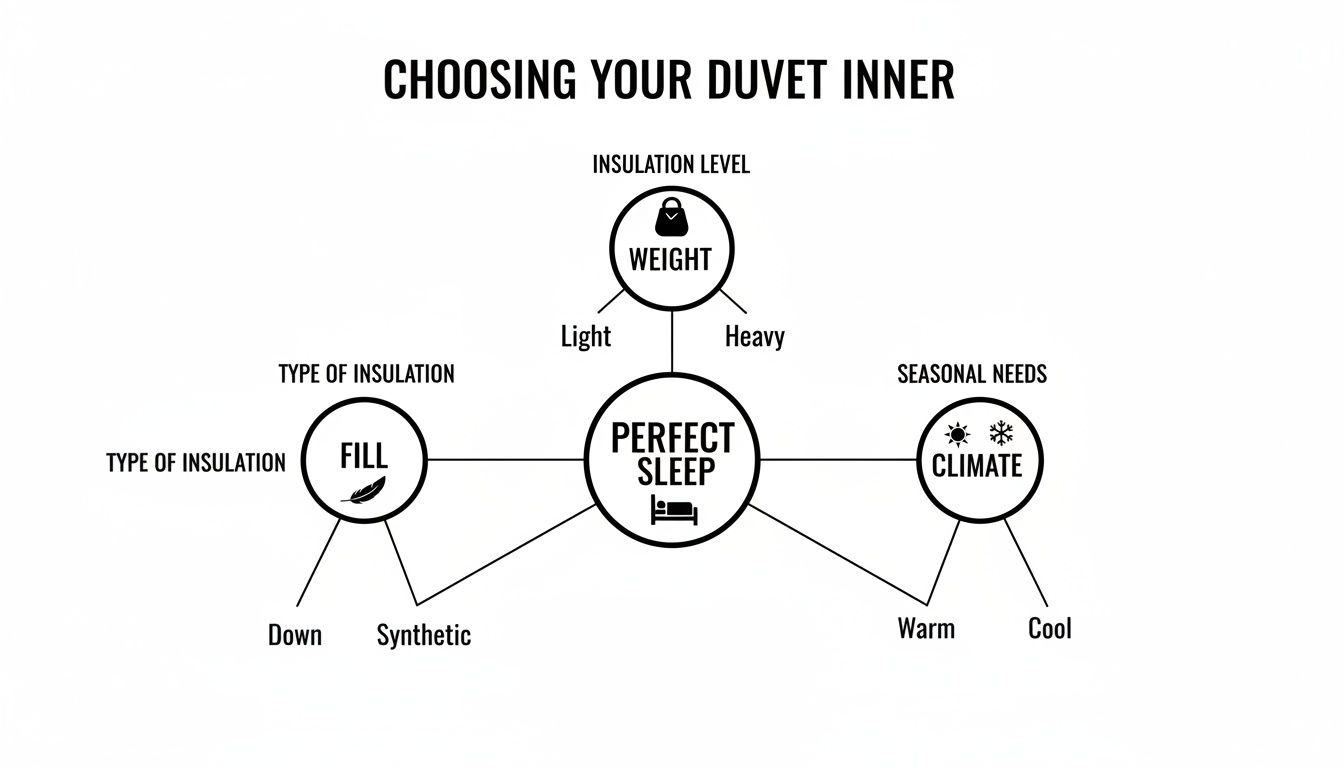
As you can see, selecting the right fill is the foundational choice. It influences everything from how insulated you feel to the overall weight and feel of the duvet on top of you.
Unpacking Natural Fills
Natural materials are celebrated for their breathability and longevity. They interact with your body and the environment in a way that synthetic materials just can't replicate, making them a true investment in comfort.
New Zealand Wool: The Climate Control Expert
Imagine a high-performance athletic fabric designed by nature—that’s New Zealand wool. It’s a remarkable fibre that actively manages temperature and moisture while you sleep.
- Feel: Wool has a denser, reassuring weight. It feels less lofty than down, providing a gentle drape that hugs the body.
- Performance: Its standout feature is its incredible ability to wick moisture away from your skin, keeping you dry and comfortable. This makes it fantastic for couples with different temperature needs and absolutely ideal for humid Kiwi nights.
- Best For: Those who experience temperature fluctuations, allergy sufferers (it’s naturally hypoallergenic and resistant to dust mites), and anyone seeking a sustainable, locally sourced option.
Feather and Down: The Cloud-Like Classic
Down is the fluffy undercoating from ducks or geese, prized for its incredible insulating power and minimal weight. Feathers are often added for structure and to bring the price down a little.
- Feel: This is the classic ‘sleeping on a cloud’ experience. It’s exceptionally light, lofty, and plush. A higher percentage of down means more softness and even less weight.
- Performance: Down clusters trap a huge amount of air, providing outstanding warmth without any of the heaviness. This is what gives a premium down duvet inner its signature puffiness.
- Best For: Cold sleepers, those who love a lightweight and airy feel, and anyone wanting to recreate that five-star hotel luxury at home.
The quality of down is measured by its 'fill power'—the higher the number (e.g., 700+), the larger and more efficient the down clusters are, resulting in better insulation and a lighter, fluffier duvet.
Silk: The Ultimate Indulgence
Though less common, silk-filled duvets offer a unique and seriously luxurious experience. Spun from the cocoons of silkworms, silk is a naturally hypoallergenic protein fibre.
- Feel: Silk duvets are quite thin and very lightweight. They drape beautifully, contouring to your body without any of the bulk you get from other fills.
- Performance: It provides surprisingly effective temperature regulation, feeling cool in summer and warm in winter. It’s a fantastic option for those who dislike the puffy volume of traditional duvets.
Exploring Premium Synthetic Alternatives
Modern synthetic fills, often called microfibre or down-alternative, are engineered to mimic the best properties of natural materials while offering their own distinct benefits.
Microfibre: The Hypoallergenic Innovator
High-quality microfibre is made from incredibly fine polyester strands that are light, soft, and wonderfully easy to care for. It's an excellent choice for anyone with sensitivities or those who simply prefer a vegan option.
- Feel: It can feel remarkably similar to down—soft, light, and airy, though it may not have the same complex, buoyant loft.
- Performance: It provides good warmth and is inherently hypoallergenic. Its biggest advantage is often its ease of care, as most microfibre duvets are fully machine washable.
- Best For: Allergy sufferers, children’s beds, and anyone looking for an affordable and easy-to-maintain duvet inner.
To make things a bit easier, here’s a quick-glance table comparing these beautiful materials.
A Comparison of Luxury Duvet Inner Fill Materials
This quick reference table compares the key characteristics of popular duvet inner fillings to help you match a material to your personal sleep preferences.
| Fill Material | Feel and Weight | Breathability | Warmth Level | Best For |
|---|---|---|---|---|
| NZ Wool | Denser, reassuring weight with a gentle drape | Excellent; actively wicks moisture away | Medium to High (self-regulating) | Hot sleepers, couples, and humid climates. |
| Feather & Down | Very light, lofty, and cloud-like | Very good; allows air to circulate | High (excellent warmth-to-weight ratio) | Cold sleepers and those who love a plush, lightweight feel. |
| Silk | Thin, very lightweight, and body-contouring | Good; naturally temperature-regulating | Light to Medium | People who dislike bulky duvets and want year-round, lightweight luxury. |
| Microfibre | Light and soft, mimics the feel of down | Moderate; less breathable than natural fibres | Medium to High | Allergy sufferers, children, and those prioritising easy-care and value. |
Ultimately, the best material is the one that aligns with what makes you feel comfortable. Whether you crave the breathable magic of wool or the weightless warmth of down, understanding how each fill performs is the key to unlocking a truly perfect night’s sleep.
How to Understand TOG Ratings for NZ Seasons
When you start looking for a new duvet inner nz, you’ll quickly come across the term TOG rating. It might sound a bit technical, but it’s actually a wonderfully simple concept.
Think of it as a thermostat for your bed. It’s just a standard measure of how well a duvet traps warm air—in other words, how toasty it will keep you. A low TOG number means less insulation, perfect for balmy nights. A high TOG number means more insulation, giving you that snug, cocoon-like feeling in the dead of winter. It takes all the guesswork out of the equation.
This system is a lifesaver here in New Zealand, where our climate can be so unpredictable. A duvet that feels blissful in a humid Northland summer would be useless against a frosty Central Otago winter. Understanding TOG ratings means you can choose the perfect level of warmth for where you live and the time of year.
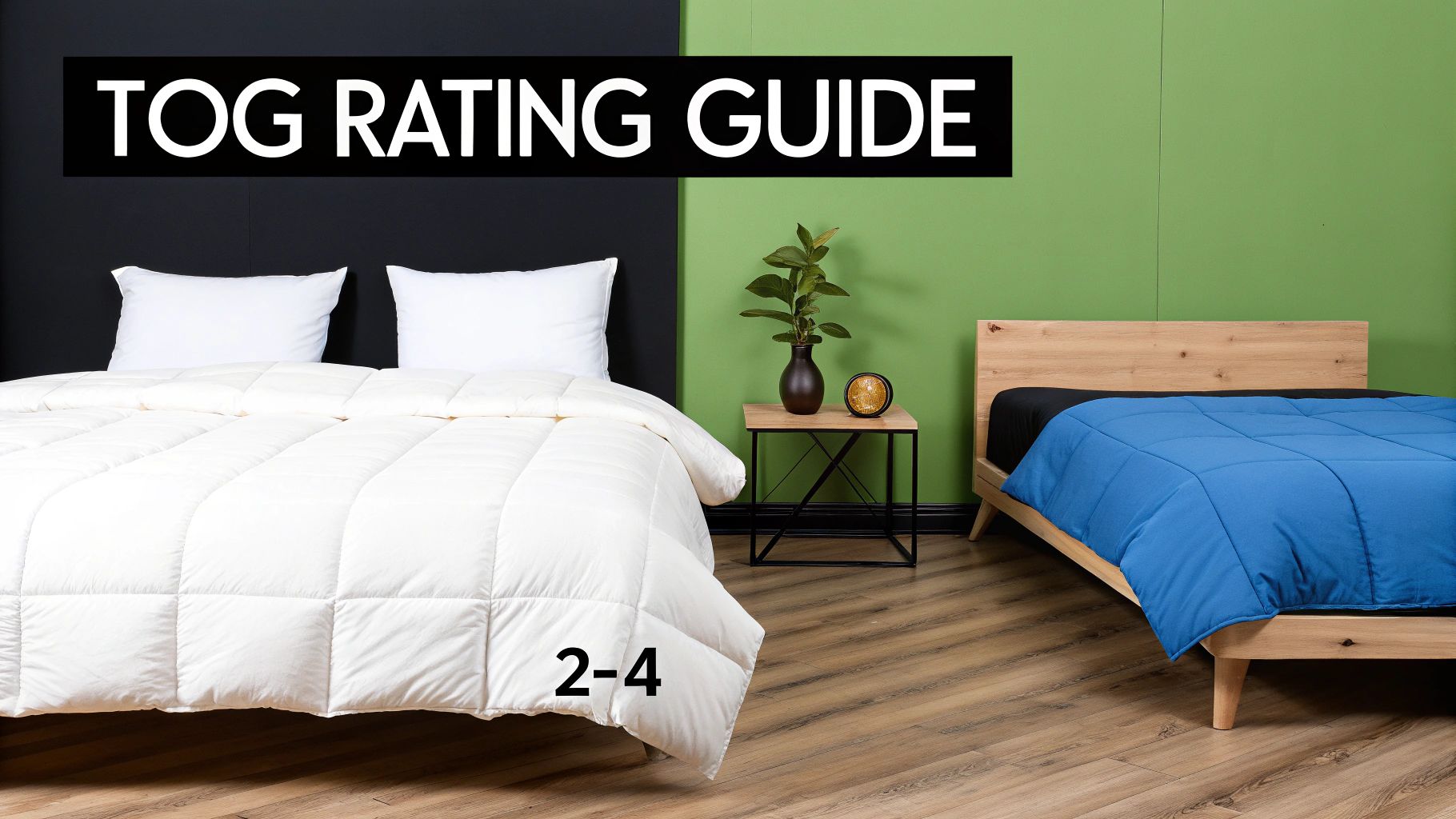
Matching TOG Ratings to the Kiwi Climate
Let's make this practical. Here’s how those numbers translate to our seasons, so you can find a duvet inner nz that feels just right.
-
Summer & Warm Climates (3.0 – 4.5 TOG): This is your lightweight hero. It's ideal for those sticky summer nights or for year-round comfort in warmer spots up north. You get a touch of cosy comfort without any of the overheating.
-
Autumn & Spring (7.0 – 10.5 TOG): The versatile middle ground. Often called an ‘all-seasons’ duvet, it strikes the perfect balance for those transitional months when you never know what the weather will do.
-
Winter & Cold Climates (12.0 – 15.0 TOG): Meet the ultimate winter warrior. This is the one you want for maximum warmth, especially if you feel the cold, live in an older home, or are braving the chill down south.
Kiwis are increasingly seeking out bedding that suits our specific climate. In fact, the market for duvet inners alone is projected to reach US$122.72 million in 2025. This is driven by our love for natural, breathable fibres that manage temperature well—with 80% of surveyed locals saying a quality inner helps them sleep better. You can explore additional insights into New Zealand's bedding industry to see more on these trends.
Beyond the Seasons: It's Personal
While the seasons are a great guide, your personal comfort is just as crucial. The perfect TOG rating is a mix of the weather outside and your own internal thermostat.
Before you make a decision, think about these factors:
- Your Body Temperature: Are you a ‘hot sleeper’ who’s always kicking off the covers, or a ‘cold sleeper’ who needs to be bundled up? Hot sleepers should stick to lower TOG ratings, while those who feel the cold might want a higher TOG, even in spring.
- Your Home’s Insulation: A modern, well-insulated home holds heat far better than an old villa with single glazing. If your bedroom stays naturally warm, you can get away with a much lighter duvet.
- Your Partner: If you share a bed with someone who runs at a different temperature, a mid-weight 'all-seasons' duvet is often the best compromise. Some couples even find happiness with two separate, smaller duvets with different TOGs.
Expert Tip: Don't confuse weight with warmth. A luxurious down duvet can feel incredibly light and airy but have a very high TOG rating. On the other hand, a dense wool duvet might feel heavier but offer a more moderate, breathable warmth.
The All-Season Duvet: A Flexible Solution
For many of us, an 'all-seasons' duvet is the smartest choice. These clever systems usually feature two separate duvets that can be used alone or together—for example, a light 4.5 TOG for summer and a medium 9.0 TOG for the shoulder seasons.
When winter really sets in, you simply clip or tie them together. Suddenly you have a super-warm 13.5 TOG duvet ready to tackle the coldest nights. This adaptability makes it a brilliant, cost-effective investment for navigating New Zealand’s classic four-seasons-in-one-day weather, giving you total control over your comfort all year long.
Finding the Perfect Fit and Style
You’ve chosen a beautiful, high-quality duvet inner, but that’s only half the battle. To get that plush, inviting look you see in luxury homewares magazines, the real secret lies in pairing it with the perfect duvet cover. It’s about more than just looks—the right fit ensures your inner performs exactly as it should, giving you even warmth without any frustrating bunching.
Think of it as a beautifully tailored suit for your bed. The correct dimensions are what create those clean lines, that sumptuous drape, and a feeling of effortless style. Let’s get into the practical details of sizing, so you can create a bed that looks just as incredible as it feels.
Standard New Zealand Duvet Sizes
Thankfully, bedding sizes are standardised here in New Zealand, which makes matching your duvet inner to its cover much easier. Knowing these dimensions by heart is the key to shopping with confidence, whether you're browsing online or in a showroom.
Here’s a quick reference for our standard NZ duvet inner and cover sizes:
- Single: 140cm x 210cm
- Double: 180cm x 210cm
- Queen: 210cm x 210cm
- King: 245cm x 210cm
- Super King: 265cm x 210cm
- Californian King: 285cm x 210cm
A common trap is accidentally confusing our local sizes with international ones. For example, an Australian King is the same as ours at 245cm x 210cm, but a UK King is much smaller and squarer, while a US King is a completely different shape. To avoid a disappointing mismatch, always, always check the measurements in centimetres.
For a deeper dive, our complete guide on duvet cover sizes in NZ is packed with extra tips.
The Secret to a Sumptuous, Cloud-Like Bed
Ever wonder how stylists achieve that incredibly full, ‘cloud-like’ bed? The trick is often a clever bit of sizing between the inner and its cover. While you want them to be a close match, using a slightly larger inner is an industry secret for making your bed look and feel far more luxurious.
An inner that is 2-5 cm larger than its cover creates a perfectly snug fit. This simple technique stops the inner from shifting around, making the entire duvet feel plumper and look fuller, and finally banishing those dreaded empty, floppy corners.
This subtle oversizing keeps everything right where it should be and really enhances the loft of the fill, whether it's down, wool, or a premium microfibre. It's a small detail that makes an enormous difference to both the comfort and the overall look of your bed.
How Construction Affects Fit and Appearance
Beyond its dimensions, the way your duvet inner is constructed internally plays a huge role in how it sits inside its cover. Good construction is what keeps the fill evenly distributed, preventing annoying cold spots and unsightly lumps.
The gold standard here is a baffled-box stitch. Imagine a grid of tiny, internal fabric walls—the baffles—that create individual pockets for the filling. These walls allow the down or wool to expand to its maximum loft, but they stop it from migrating from one end of the duvet to the other.
This clever design ensures a consistently smooth and even look right across the surface of your bed. It means your duvet will drape beautifully and provide uniform warmth, maintaining that perfect, just-made look day after day.
Caring for Your Duvet Inner Investment
A beautiful duvet inner is more than just bedding; it's an investment in years of restful sleep. To get the most out of it, we need to think beyond the standard wash-and-dry cycle. The secret to keeping that cloud-like comfort you first fell in love with is tailoring the care to the material inside.
After all, you wouldn't treat a fine cashmere sweater the same way you would a cotton t-shirt. It’s the same with your duvet. A natural wool inner, for instance, thrives on fresh air and rarely needs a full wash, while a delicate down inner requires a much gentler hand. Knowing the difference is key to protecting its longevity and performance.
The bedding market is a significant part of New Zealand’s furniture retailing industry, which is on track to be worth $1.5 billion by 2026. What’s really interesting is the shift in what people want. Recent figures show that 62% of discerning buyers are now opting for customisable duvet inners—a jump of 18% in just two years. This tells us that personalised, long-lasting luxury is more important than ever. You can explore more about these evolving trends in NZ's furniture and bedding industry to see how consumer tastes are changing.
Daily and Routine Care Tips
The best way to keep your duvet inner feeling fresh and full is through simple, regular habits. These small daily actions make a huge difference, preventing the build-up of dust and moisture that can cause a duvet to feel flat and heavy over time.
- Give it a Good Morning Shake: Before you make the bed, grab the corners of your duvet and give it a firm, vigorous shake. This simple move is fantastic for redistributing the fill, fluffing it up, and airing it out after a night's sleep.
- Let it Breathe: Once a month or so, hang your duvet inner outside on a dry, breezy day. Avoid harsh, direct sunlight, as this can damage the delicate fibres. This is especially brilliant for wool, which has natural self-cleaning properties that are refreshed by a good airing.
- Spot Clean Spills Right Away: Accidents happen. When they do, act fast. Gently blot the area with a damp cloth and a touch of mild detergent, being careful not to soak the filling underneath.
Washing Your Duvet Inner at Home
Washing your entire duvet inner is a job for only when it’s truly necessary—perhaps once or twice a year at most. The first step is always to check the care label. Some premium fillings, like high-loft down or silk, are strictly dry-clean only.
If your duvet is machine washable, here’s how to do it right:
- Check Your Machine: You’ll need a large, front-loading washing machine. The central agitator in most top-loaders can be too rough, potentially tearing the delicate stitching and causing the fill to bunch up.
- Use the Right Soap: Choose a gentle liquid detergent, ideally one made specifically for wool or down. Steer clear of harsh powders and fabric softeners, as they can strip the natural oils from the fibres and reduce their performance.
- Set to Gentle: Wash on a delicate or wool cycle using lukewarm water. It’s a good idea to add an extra rinse cycle to make sure every last bit of soap is washed out.
- Dry with Patience: This is the most important part of the process. Tumble dry on the lowest heat setting possible. To help break up any clumps and restore that beautiful loft, toss in a few clean tennis balls or wool dryer balls. This can take several hours, so be patient. It’s crucial that the inner is 100% dry before it goes back on your bed to prevent any chance of mildew.
When to Call in the Experts: If you have a very large duvet (like a Super King or Californian King), if it’s filled with a high-end down, or if you simply don’t feel confident tackling the job at home, it’s always best to trust it to a professional cleaner who specialises in bedding.
Making the Right Choice for Your Home
Choosing the perfect duvet inner NZ is far more than a practical purchase—it’s a deeply personal one. The right duvet feels like it was made just for you, transforming your bedroom into a genuine sanctuary and enhancing your nightly rest. To help you zero in on your ideal match, let’s look at how different lifestyles and sleep habits point to different choices.
Think of it like casting a character for a role. Are you ‘The Hot Sleeper,’ constantly flipping the pillow to find the cool side? Or maybe you’re ‘The Eco-Conscious Homeowner,’ for whom sustainability is a non-negotiable. Pinpointing your "type" makes it much easier to find a duvet inner that will bring you years of satisfaction.
Matching Your Duvet to Your Lifestyle
Let's get practical. By walking through a few common scenarios, you can see how specific needs line up with certain materials and features, helping you clarify which direction is best for you.
-
For the Hot Sleeper: If you frequently wake up feeling overheated, breathability is everything. A New Zealand wool duvet inner is an absolute game-changer here. It works like a personal thermostat, wicking moisture away from your body to keep you comfortably dry all night. A lightweight, low-TOG down or a luxurious silk duvet would also be fantastic choices.
-
For the Eco-Conscious Homeowner: When your purchasing decisions are guided by sustainability and ethics, natural and renewable fibres are the way to go. New Zealand wool is a clear winner, celebrated for its local origins and minimal environmental footprint. If you have your heart set on down, look for certifications like the Responsible Down Standard (RDS) to ensure the waterfowl have been treated humanely.
-
For the Allergy Sufferer: If you need a sniffle-free sleep, creating a hypoallergenic environment is your top priority. Wool is naturally resistant to dust mites and mould, making it an excellent first choice. Alternatively, high-quality down-alternative microfibres are specifically designed to be hypoallergenic and are a breeze to wash, which helps keep potential allergens from building up.
A Commitment to Conscious Comfort
At the end of the day, choosing a duvet inner goes beyond fill power or tog ratings. It's a chance to invest in your own well-being and bring your values into your home. Will you go for the cloud-like lightness of down, the incredible breathable performance of local wool, or the fuss-free, easy-care nature of a premium synthetic?
The best duvet inner doesn’t just keep you warm; it adapts to your body, supports your health, and reflects your commitment to quality and thoughtful consumption. It's the final, crucial layer in creating a space where you can truly rest and restore.
This decision is just one piece of the puzzle in creating a truly restful and functional home. To see how it all fits together, you might find this complete guide to bedding essentials, including comforters and mattress protectors really helpful. By making a well-informed choice now, you're ensuring your investment will deliver years of luxurious comfort.
A Few Final Questions About Duvet Inners
Even with all the details covered, a few questions often pop up when you’re about to choose your perfect duvet inner. Let’s tackle the most common ones we hear, clearing up any last little uncertainties so you can feel completely confident in your decision.
Duvet Inner vs. Comforter: What's the Real Difference?
This is easily one of the most frequent points of confusion, but the distinction is quite simple. Think of a duvet inner as the engine of your bedding—it’s the soft, insulating core that provides all the warmth and comfort. It’s designed to slip inside a separate duvet cover. This two-piece system is brilliant; you can wash the cover easily and completely change the look of your room just by swapping it out.
A comforter, on the other hand, is a single unit. The filling and the decorative outer fabric are stitched together into one piece. They can be a real hassle to clean at home due to their bulk. Here in New Zealand, the flexibility and style potential of the duvet inner and cover duo have made it the go-to choice for almost everyone.
How Often Should I Be Replacing My Duvet Inner?
A top-quality duvet inner isn't just a purchase; it's a long-term investment in your sleep. If you look after it well, a premium natural fill like wool or down can last anywhere from 5 to well over 15 years, far outlasting most synthetic options.
You'll know it's time for a new one when you spot a few tell-tale signs:
- It’s gone flat: The duvet has lost its loft and no longer feels as puffy and inviting, even after a vigorous shake.
- It’s getting lumpy: The filling has started to clump together, creating uneven, uncomfortable spots.
- You're feeling the cold: It just doesn’t seem to keep you as warm as it used to.
Can I Get Away With Using a Heavy Winter Duvet All Year in NZ?
For most of us here in New Zealand, using a heavy winter-weight duvet (anything around 12.0 TOG or higher) all year round is probably not the best idea. Our climate just varies too much. You’d almost certainly end up overheating during the milder spring, autumn, and summer nights, leading to restless sleep.
The smartest approach for the classic Kiwi climate is to either go for an 'all-seasons' duvet (around 7.5-10.5 TOG) or have two separate inners: a lightweight one for summer and a cosier one for winter. This way, you’re guaranteed to be comfortable whatever the weather decides to do.
Are Wool Duvet Inners a Good Choice for Allergy Sufferers?
Yes, absolutely. New Zealand wool is a fantastic, natural solution for anyone with allergies. It’s inherently hypoallergenic and creates an environment where common culprits like dust mites, mould, and mildew just can’t thrive.
The real magic is in its moisture-wicking ability. Wool actively pulls moisture away from your body while you sleep, keeping your bedding dry and fresh. Since allergens love damp conditions, this makes a wool duvet inner NZ homes can count on for a healthier night’s rest.
Ready to transform your bedroom into a sanctuary of comfort and style? Explore the curated collection of luxurious, perfectly sized bedding at The Foxes Den. Find your perfect fit at https://www.thefoxesden.co.nz.