


Your Guide to the Perfect Duvet New Zealand Has to Offer
Choosing the right duvet in New Zealand isn’t just another item on your shopping list—it’s a genuine investment in your comfort, night after night, all year round. Our famously fickle climate, where you can easily get four seasons in one day, means we need to be a bit smarter about how we dress our beds. This guide is here to help you do just that.
Your Guide to the Perfect New Zealand Duvet
We all know a great night's sleep is the foundation of a good day, and the right duvet is at the very heart of creating a restful bedroom. It's so much more than a blanket; it's a personal cocoon that needs to work with your body and your home’s environment, whether you're dealing with the balmy humidity of a Northland summer or the sharp, frosty nights in Central Otago.
But let's be honest, stepping into the world of duvets can feel a bit much. With all the talk of different fills, tog ratings, and materials, it’s easy to feel lost. My goal here is to cut through the noise and break everything down in a simple, practical way.
What You'll Find in This Guide
We're going to walk through all the important bits and pieces that make a duvet the right one for you. By the end, you'll feel confident you’re making a choice that will lead to countless nights of incredible sleep.
Here’s what we’ll cover:
- Duvet Fills Unpacked: We'll look at everything from luxurious goose down and the amazing natural benefits of New Zealand wool to practical, modern synthetic options.
- Decoding Tog Ratings: I'll demystify the "tog" scale, showing you how to match your duvet’s warmth to your local climate and personal sleeping temperature.
- Getting the Size and Style Right: We'll cover how to choose the perfect size for your bed and how a simple duvet cover can completely change the look of your room.
- Looking After Your Duvet: You’ll learn some simple tricks to keep your duvet fresh, lofty, and hygienic for years, protecting your investment.
By the time you've finished reading, you'll be able to confidently pick a duvet that not only feels amazing but is perfectly suited to our unique Kiwi lifestyle. Your best sleep is just a few decisions away.
And once you've found your perfect duvet, you might want to consider other easy bedroom upgrades that enhance relaxation and style.
Right, let’s get started by looking at the heart of any duvet—what’s on the inside.
Decoding the Different Duvet Fills
The fill is the absolute heart and soul of your duvet. It’s the single biggest factor that dictates its weight, warmth, and that wonderful feeling you get when you finally climb into bed. Getting the fill right is all about matching the material to your own sleep style, ensuring your duvet delivers the perfect comfort, whatever the season.
Think of the fill as the engine. A good one adapts to different conditions, keeping you comfortably warm without ever letting you overheat. It’s about finding that sweet spot for your body temperature all night long.
This is especially relevant now, as more of us are looking for quality, locally made bedding. The New Zealand market is set to grow by a steady 6.4% each year between 2025 and 2035, and it’s all driven by our desire for premium, sustainable comfort. It’s clear Kiwis are investing more in getting a great night's sleep.
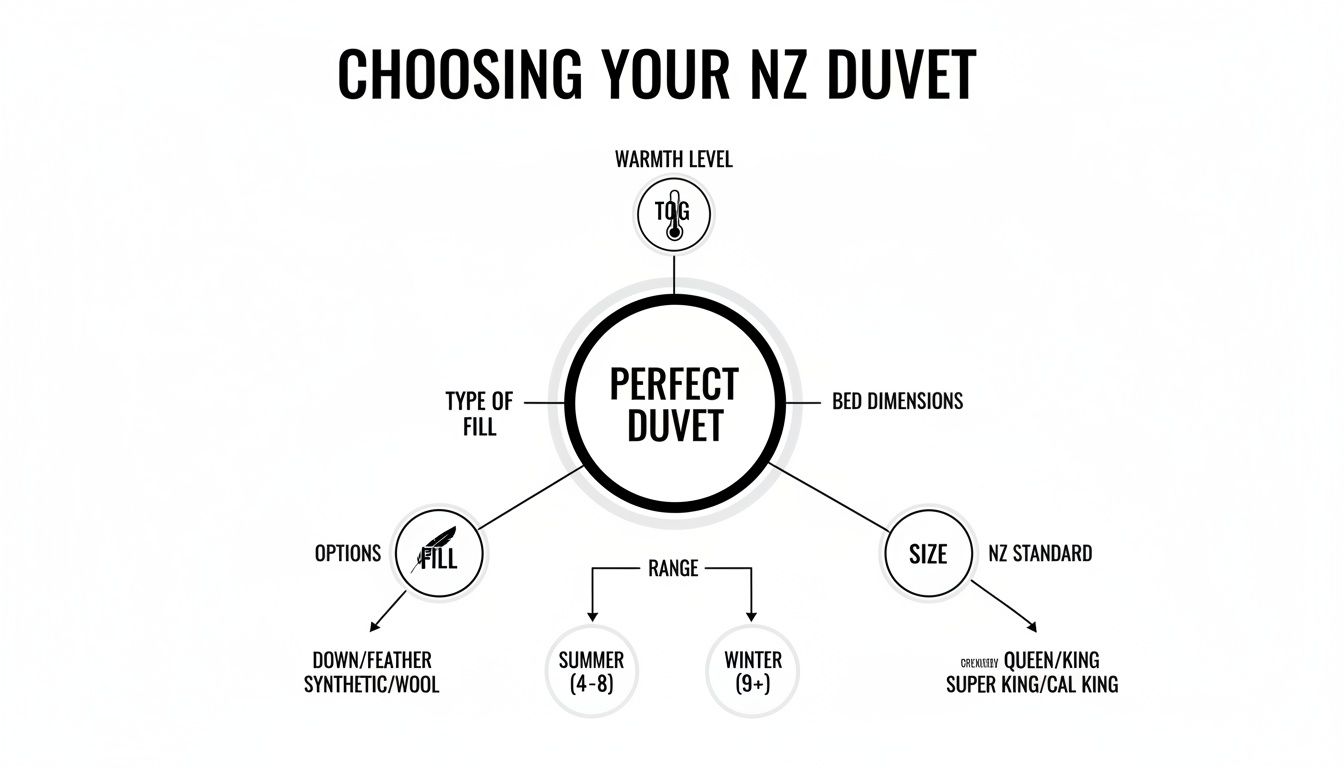
This guide shows how the core elements—fill, warmth, and size—all work together. The key takeaway? They're all connected. The best fill for you really depends on how warm you need to be and the size of your bed.
To help you navigate the choices, here's a quick rundown of the most common duvet fills.
A Quick Comparison of Common Duvet Fills
Use this table to quickly compare the key features of popular duvet fill materials to find the perfect match for your needs.
| Fill Type | Best For | Feel & Weight | Breathability | Hypoallergenic |
|---|---|---|---|---|
| Down | Cold sleepers wanting luxurious, lightweight warmth. | Ultra-light, lofty, and cloud-like. | Excellent | No, unless treated. |
| Wool | Year-round comfort and temperature regulation. | Denser, with a comforting, gentle weight. | Exceptional | Yes, naturally. |
| Synthetic | Allergy sufferers and those on a budget. | Soft and light, mimics down. | Varies, can be less than natural fills. | Yes, always. |
| Silk | Hot sleepers needing a light, breathable layer. | Very light, drapes closely to the body. | Superb | Yes, naturally. |
Each fill has its own unique character, so the "best" one truly comes down to what makes you feel most comfortable at night.
Natural Fills: The Traditional Choice
Natural fills have been the go-to for generations, loved for their incredible breathability, durability, and luxurious feel. They're often seen as a long-term investment in your sleep, with a couple of standout options here in New Zealand.
Down and Feather
Down is that incredibly soft, fluffy stuff found under the tougher feathers of ducks and geese. It’s famous for its amazing warmth-to-weight ratio, which means it can create a super insulating duvet that feels almost weightless.
- Feel: Exceptionally light and puffy, giving you that classic "sleeping on a cloud" feeling.
- Warmth: A top-tier insulator. It traps air so efficiently it keeps you toasty with very little bulk.
- Best For: Anyone who feels the cold but hates the feeling of heavy blankets.
A quality down duvet insert is a fantastic choice for pure warmth and lightness, but it's well worth checking that the down has been ethically sourced.
New Zealand Wool
When it comes to bedding, wool is a true local hero. Just like your favourite merino jumper, a wool duvet is a master of temperature control, making it perfectly suited to New Zealand's changeable climate.
It works by creating a personal microclimate around you, wicking moisture away to keep you dry and comfortable. This natural breathability is what stops you from getting that clammy, overheated feeling that can ruin a good night's sleep. It’s also a brilliant solution for couples who sleep at different temperatures.
A wool duvet is a dynamic insulator. It keeps you warm when the room is cool but breathes to release excess heat and moisture as you warm up, helping you stay comfortable all night.
Synthetic Fills: The Hypoallergenic Alternative
For anyone with allergies or sensitivities, synthetic fills are a fantastic, practical, and often more budget-friendly option. These materials are cleverly engineered to mimic the feel of natural fills while being completely hypoallergenic.
The most common choice is microfibre, which is essentially a very fine polyester. The fibres are spun to be incredibly soft, creating a duvet with a down-like feel without any of the potential allergens.
- Hypoallergenic: They’re naturally resistant to dust mites and mould, making them a safe haven for allergy sufferers.
- Easy Care: Most synthetic duvets can be thrown in the washing machine and even the tumble dryer, which is a huge plus.
- Affordability: They are generally much friendlier on the wallet compared to high-end down or wool.
The main trade-off, however, is breathability. While modern synthetics have come a long way, they can still trap more heat and moisture than natural fibres. For hot sleepers, this can be a deal-breaker, and they might find a wool duvet a far more comfortable choice for year-round use.
Choosing the Right Tog Rating for NZ Seasons
When you're on the hunt for the perfect duvet, you'll inevitably come across the term ‘tog’. It’s not just some bit of industry jargon; it's a wonderfully simple way to measure a duvet's warmth.
Think of it as a warmth score—the higher the tog number, the toastier you'll be. Getting this right is the secret to a great night's sleep.
Understanding the tog scale is crucial for finding a duvet New Zealand homes will actually love. A duvet that's brilliant for a sticky Auckland summer would leave you shivering through a frosty Queenstown winter. It's all about matching the tog to where you live and how you sleep.

Tog Ratings for New Zealand's Climate
New Zealand's weather is famously changeable, swinging from subtropical humidity in the north to alpine chills down south. This means a single, one-size-fits-all duvet just won't cut it for most of us.
Here’s a rough guide to help you find your sweet spot:
-
Low Tog (3.0 – 4.5): This is your classic summer duvet. It's light, airy, and designed to give you that little bit of comfort on humid nights without making you feel trapped. Perfect for those balmy evenings in the upper North Island.
-
Medium Tog (7.5 – 10.5): For most of the country, this is the ideal three-season workhorse. It strikes a great balance, offering enough warmth for those crisp spring and autumn nights without being too heavy. A really popular pick for places with moderate climates, like Wellington or Christchurch.
-
High Tog (12.0 – 15.0): This one's for the serious cold. A high-tog duvet is your best mate during the depths of winter, especially if you live in the deep south or an older, draughty villa that feels the chill in July and August.
While the tog rating is your starting point, remember that the fill makes a difference to how that warmth actually feels. If you're curious about how different materials stack up, our guide to the best duvet inners NZ has all the details.
The All-Seasons Duvet Solution
For many Kiwis, the 'all-seasons' duvet is the ultimate problem-solver. It's a clever system made of two separate duvets with different tog ratings—typically a lightweight summer one (around a 4.5 tog) and a medium-weight one for spring and autumn (around a 9.0 tog).
The real magic is in its flexibility. Use the light one in summer, the medium one in the shoulder seasons, and then simply clip them together for winter. This creates a combined 13.5 tog duvet that’s incredibly cosy and warm.
An all-seasons duvet is basically three duvets in one. It’s a smart, cost-effective way to handle New Zealand’s ‘four-seasons-in-one-day’ climate, ensuring you’re comfortable no matter what the weather decides to do.
Matching Tog to Your Personal Sleep Style
The local climate gives you a great starting point, but how you sleep is just as important. Some of us run hot all night, while others are forever searching for another blanket.
Think about these points before you decide:
- Are you a hot sleeper? If you often kick the covers off, you’ll probably want to choose a lower tog rating than what’s generally recommended for your region. Breathable materials like wool can also be a game-changer.
- Do you share a bed? This can be a tricky one if your partner’s internal thermostat is set differently. A medium-tog wool duvet is often the perfect peacemaker, as wool naturally helps regulate temperature for both of you.
- How well is your home insulated? A modern, well-insulated home holds heat far better than an old villa with single glazing. If your bedroom stays pretty warm overnight, you can get away with a much lower tog.
By blending your knowledge of the tog scale with a little self-awareness, you can pick a duvet that guarantees a perfect, restful sleep night after night.
Getting the Right Duvet Size and Style
Picking the right size duvet for your bed is about more than just measurements. It’s the difference between a blissful night's sleep and a frustrating tug-of-war over the covers. It's also the secret to making your bed look inviting and perfectly put together.
A duvet that’s too small looks stingy and leaves you with cold drafts. One that’s too big can look messy and swamp the bed frame. Getting it just right is the foundation of a comfortable and beautiful bedroom.
Matching Your Duvet to Standard NZ Bed Sizes
Thankfully, New Zealand has standard bed and duvet sizes, which makes things a bit easier. But here’s a little tip straight from the interior design playbook: consider going one size up from your mattress.
This simple trick is how you get that plush, luxurious drape over the sides of the bed that you see in high-end hotels. For instance, putting a King-sized duvet on a Queen bed gives you generous coverage. It’s a game-changer for couples, putting an end to the nightly battle for the blankets once and for all.
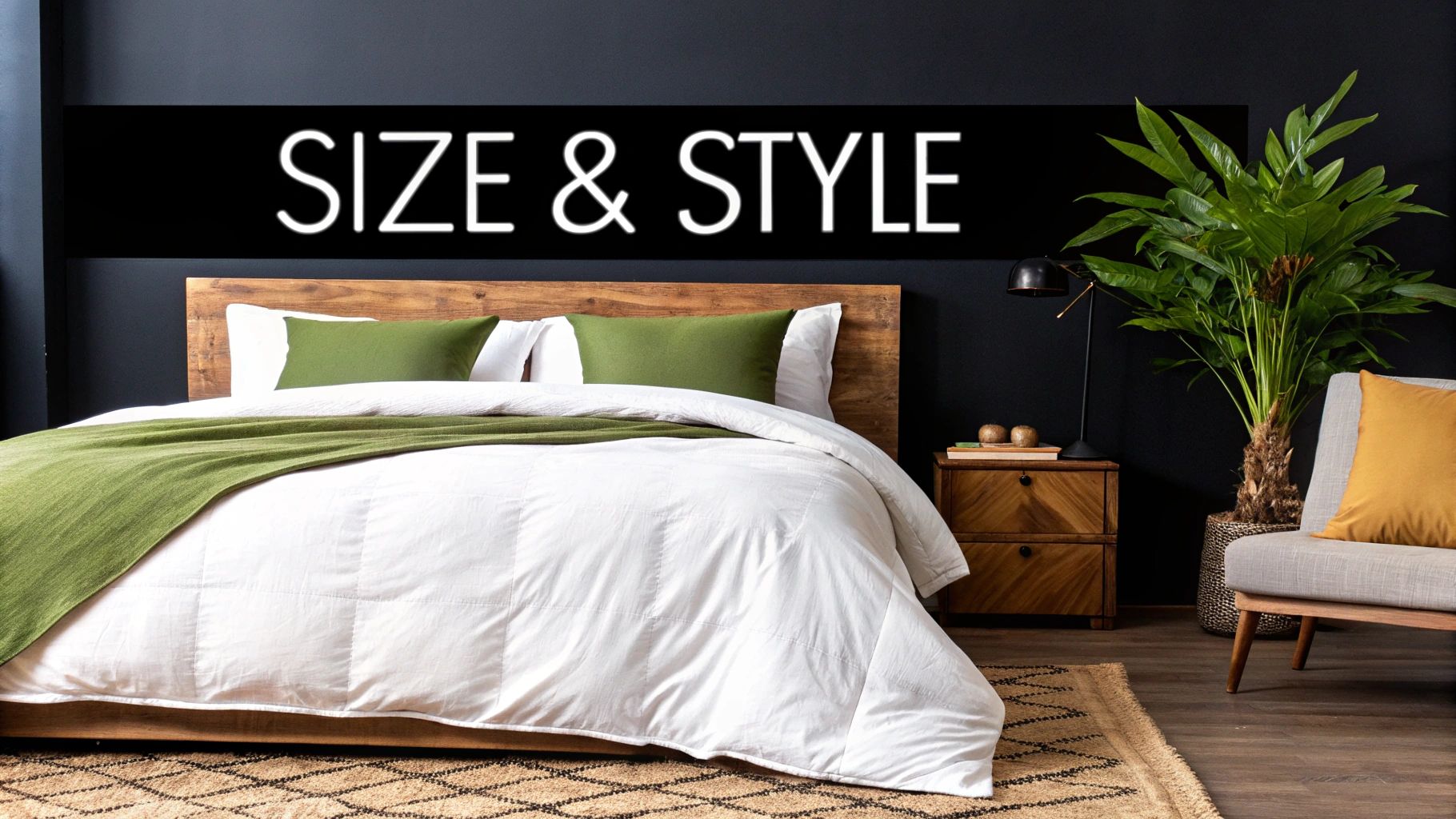
Of course, the "one size up" trick isn't for everyone. Some people prefer a neater, more precise fit. To make the best choice for your style, it helps to know the exact numbers you’re working with.
For a complete rundown of all the measurements, our detailed guide on New Zealand duvet sizes breaks everything down. It covers every size you'll find here, from a kid's Single to a sprawling Super King, so you can choose your duvet inner and cover with total confidence.
The Duvet Cover: More Than Just a Pretty Face
Once you've nailed the size, the duvet cover is where you can really express your personal style. It’s the most dominant feature of your bedding, setting the whole mood for the room. But it does a lot more than just look good.
The fabric of your duvet cover has a massive impact on how comfortable you are at night. This is where it pays to stick with high-quality natural fibres, as they complement the work your duvet fill is already doing.
- Linen: Beautifully relaxed and incredibly breathable, linen is a fantastic year-round option. It has a lovely, lived-in look and just gets softer and softer with every wash.
- Premium Cotton: Think long-staple varieties like Egyptian or Supima® cotton. These feel incredibly smooth and crisp, plus they're durable and let your skin breathe.
A great duvet cover doesn't just protect your duvet inner—it elevates it. Natural fabrics allow the fill to breathe, wicking away moisture and helping it regulate your body temperature just as it was designed to.
It's tempting to grab a cheap polyester cover, but this can completely cancel out the benefits of a beautiful wool or down duvet. Synthetics are notorious for trapping heat and moisture, which leads to that clammy, uncomfortable feeling that natural-fill duvets are meant to prevent.
In the end, pairing the right size duvet with a quality, natural-fibre cover is what turns your bed into a true sanctuary. It’s an investment in your comfort that pays you back every single night.
Keeping Your Duvet in Top Shape for Years to Come
A great duvet is a real investment in your sleep, and looking after it properly means you’ll get years of comfort from it. The good news is, it's not hard to do. A few simple habits are all it takes to keep the filling fluffy, fresh, and doing its job perfectly.
First things first, your duvet cover is your best friend. Think of it as a bodyguard for your duvet, absorbing all the things you don't want getting into the fill—like sweat, body oils, and dust. The single most effective thing you can do is wash your cover regularly, ideally once a week when you change your sheets. This simple step is crucial for keeping your duvet New Zealand homes love in pristine condition.
Beyond that, a bit of fresh air can work wonders.
Little and Often: Your Daily and Seasonal Care Plan
When you make the bed in the morning, give your duvet a quick, vigorous shake. It only takes a second, but it’s a game-changer for redistributing the fill, stopping it from clumping together and helping it regain that lovely, lofty feel.
Every so often, maybe once a season, pick a dry, breezy day and hang your duvet outside in the shade for a few hours. This is especially good for natural fills like down and wool. The fresh air works like a natural reset button, wicking away any trapped moisture and getting rid of stale odours.
Think of airing your duvet as letting it breathe. It revitalises the filling, keeping it fresh and hygienic, and prevents that musty smell that can build up over time.
Spills happen. The trick is to act fast. Blot the spot immediately with a clean, dry cloth to soak up as much as you can. Whatever you do, don't rub it in, as that will just push the stain deeper. For most minor marks, a gentle spot clean with a damp cloth and a tiny bit of mild detergent will do the job.
The Big Clean: Washing at Home vs. Calling the Pros
Before you even think about washing the whole duvet, always check the care label. The type of filling inside dictates everything.
Many synthetic and some wool duvets are made to be machine washable, but you’ll need a big machine to give them enough room to move around. Compressing them into a small drum is a recipe for disaster.
If the label gives you the green light for a machine wash, here’s how to do it right:
- Go Gentle: Choose a delicate or wool cycle with cool water.
- Use the Right Soap: A small amount of gentle, wool-safe liquid detergent is best.
- Rinse, Then Rinse Again: An extra rinse cycle is a great idea to make sure every last bit of soap is gone, as residue can weigh down the fibres.
- Dry with Care: Tumble dry on the lowest possible heat. Throw in a few dryer balls (or clean tennis balls) to help fluff up the filling as it dries. It must be 100% dry before it goes back on your bed, otherwise you risk mould and mildew.
For down duvets, however, it’s often best to leave it to the professionals. The delicate down clusters are easily damaged by harsh detergents and the tumbling of a home washing machine, which can strip them of their natural oils and ruin their insulating power. A professional cleaner who specialises in bedding will have the right gear to clean it safely and restore its loft.
How to Store Your Duvet When It's Off-Duty
When summer rolls around and you're swapping to a lighter duvet, how you store your winter one matters. The number one rule? Avoid plastic bags or sealed containers. They trap moisture and stop the filling from breathing, creating a perfect breeding ground for mildew.
Instead, opt for a large cotton storage bag. This keeps the dust off while allowing air to circulate freely. Tuck it away in a dry, well-ventilated wardrobe or cupboard, out of direct sunlight, and it’ll be fresh and ready for you when the temperature drops again. Follow these simple steps, and your duvet will be the cosy heart of your bedroom for many years.
Why Sustainable and Local Bedding Matters
For a growing number of us Kiwis, the story behind what we buy is just as important as the product itself. When you choose a duvet that a New Zealand maker has poured their skill into, you're not just buying bedding—you're making a conscious choice. It's about connecting what's in our shopping basket to a much bigger picture, one that benefits our environment, our local communities, and ultimately, our own sense of wellbeing.
It’s that simple desire for products that feel good in every sense of the word. We're looking for materials that are kind to the planet and backing businesses that put ethical practices front and centre. This search for quality with a clear conscience is genuinely changing how we create our homes.
The Power of Local and Natural Materials
New Zealand is world-famous for its wool, and for very good reason. Picking a duvet filled with local wool is a perfect example of sustainability in action. Wool is a naturally renewable resource—sheep happily grow a new fleece every single year—and it's completely biodegradable, meaning it returns to the earth without leaving a trace when its long life is over.
But its green credentials are only half the story. New Zealand wool is also a performance powerhouse:
- Natural Temperature Regulation: It’s incredibly breathable, keeping you perfectly warm in winter and surprisingly cool in summer. No more kicking the covers off.
- Moisture Wicking: Wool has this amazing ability to draw moisture away from your body, preventing that damp, clammy feeling that can ruin a good night's sleep.
- Hypoallergenic: It’s naturally resistant to dust mites and mould, making it a brilliant choice for sensitive sleepers.
By choosing locally sourced materials, you’re also putting your money directly back into the pockets of Kiwi farmers and manufacturers. This keeps valuable skills and jobs within our communities and drastically reduces the "bedding miles" a product has to travel, which shrinks its carbon footprint. If you're keen to explore more eco-friendly options, our article on environmentally friendly bed linen in New Zealand is a great place to start.
Ethical Sourcing and Why It Counts
For anyone who loves that incredibly light, luxurious feel of down and feathers, ethical sourcing is something we really need to talk about. Thankfully, the conversation has shifted firmly towards animal welfare, and important certifications now give us the transparency we need to make a good choice.
The Responsible Down Standard (RDS) is the key certification to look for. It's a global standard that guarantees the down and feathers in a product come from birds that have been treated humanely. This means they were never subjected to unnecessary harm like force-feeding or the cruel practice of live-plucking.
Choosing an RDS-certified duvet means you can wrap yourself in its incredible warmth, confident that it was produced with genuine respect for animal welfare. It's about connecting your personal comfort to responsible, ethical practices.
Supporting a Resilient Local Market
Making a conscious choice to buy local has never been more important. The New Zealand bed linen market has faced some pretty serious headwinds recently. In 2024, consumption dropped to around $10 million, which was a shocking 93.1% decline from the previous year. This dramatic fall followed a peak in 2021 and really shows how sensitive our local market is to global supply chain problems and shifting shopping habits. You can discover more about these market insights on bed linen consumption in New Zealand on indexbox.io.
By making a duvet New Zealand businesses have crafted our first choice, we can help strengthen our own industry, ensuring it remains resilient and thriving. Your purchase becomes a vote—a vote for quality, for sustainability, and for our local economy. It helps create a more stable, self-sufficient future for beautiful, well-made bedding right here at home.
Answering Your Duvet Questions
Choosing the right duvet can feel like a big decision, and it’s natural to have a few questions pop up. To help you feel completely confident in your choice, we’ve put together some simple, practical answers to the queries we hear most often from fellow Kiwis.
Duvet vs. Comforter: What's the Difference, Really?
Here in New Zealand, you'll often hear these words used for the same thing, but they are technically different. Think of a duvet as the "inner" – it's the quilted bag filled with wool, down, or synthetic fibres that does all the hard work of keeping you warm. It’s designed to slip inside a separate duvet cover.
A comforter is more of an all-in-one deal. The filling is stitched right into a decorative fabric, so you don't use a cover. While that might sound simpler, it makes them a real pain to wash. That's why most people prefer the duvet and cover combo; you can just whip the cover off for a quick wash and change up your bedroom look in minutes.
How Often Should I Replace My Duvet?
This really comes down to the quality of the filling and how you look after it. A top-notch wool or down duvet is a long-term investment. If you care for it well, you can easily expect it to last 10 to 15 years – sometimes even longer. These natural materials are incredibly resilient and hold their shape and warmth for years on end.
On the other hand, synthetic duvets have a much shorter life. The artificial fibres tend to clump and flatten over time, losing their ability to trap air and keep you warm. You'll probably find you need a new one every 5 years or so. The tell-tale signs it’s time for an upgrade are when your duvet starts feeling lumpy, thin, or just isn't giving you that same cosy warmth.
Is a Wool Duvet Good for a Hot Sleeper?
Yes, one hundred percent! It seems a bit odd to suggest wool for someone who runs hot, but it’s genuinely one of the best choices you can make. Wool is a bit of a natural miracle-worker when it comes to regulating temperature.
The magic is in its breathability. Wool fibres wick moisture away from your skin, so you never get that sticky, sweaty feeling that wakes you up. It creates a perfect little microclimate around you, keeping your body at a steady, comfortable temperature all night.
For this reason, it's a fantastic year-round option for anyone prone to overheating.
Is an Expensive Duvet Worth the Investment?
In our experience, investing in a quality duvet absolutely pays dividends. While the upfront cost is higher, you’re paying for superior materials like high-loft goose down or premium New Zealand wool, and much better construction.
These top-tier duvets don't just feel better; they perform better. They offer far better temperature regulation, they're more durable, and they will outlast cheaper alternatives by years. When you think about it, a great duvet is an investment in your sleep, and good sleep is priceless for your overall health and well-being.
At The Foxes Den, we believe a perfect night’s sleep starts with beautiful, natural materials. Explore our curated collection of luxurious linen and wool bedding to create your own sleep sanctuary. Discover the difference at https://www.thefoxesden.co.nz.