


A Guide to Glassware Drinking Glasses
Ever poured a beautiful wine into a clunky water tumbler? It just doesn't taste the same, does it? That’s not just in your head—the shape of your glassware genuinely changes how your drink tastes and feels.
The simple truth is that drinking glasses are much more than just containers. They are tools, carefully designed to enhance a drink’s aroma, flavour, and even temperature. Think of it like listening to your favourite music on a high-end sound system versus your phone's speaker. The song is the same, but the experience is worlds apart.
Why the Right Glassware Matters
Choosing the right glass can turn an ordinary drink into a memorable experience. It’s all about sensory science; the specific shape and material of a glass interact with its contents to direct aromas, manage temperature, and present the drink in its best possible light. A well-designed glass doesn’t just hold your drink; it elevates it.
This guide will walk you through this fascinating world, from the essential shapes every home bar should have to the subtle differences in materials. The goal is to help you select pieces that not only function beautifully but also reflect your personal style, turning every sip into a small celebration.
The Science of Shape and Sensation
Every curve and angle you see on a glass is there for a reason. Take a red wine glass, for instance. Its wide bowl increases the surface area, allowing the wine to breathe and release its complex bouquet. On the other hand, the tall, slender body of a Champagne flute is designed to preserve carbonation, sending a steady stream of bubbles upward to carry those delicate aromas right to your nose.
It all comes down to a few key details:
- The Rim: A fine, smooth rim delivers the liquid to your palate seamlessly. A thick, rolled rim? It can feel clumsy and get in the way of the taste.
- The Bowl: This is where the magic happens. The bowl's shape is what collects and funnels aromas, which account for a huge part of how we perceive flavour.
- The Stem: It’s not just for looks. A stem gives you a place to hold the glass so your hand doesn't warm up a perfectly chilled white wine or cocktail.
Choosing the right glass is about honouring the craft that went into the drink. Whether it's a winemaker, a distiller, or your local barista, their creation was made to be experienced in a certain way. The proper vessel is the final, crucial step in that journey.
Diving deeper into specific spirits, like whisky, really highlights how much the vessel matters. To get a better sense of this, you can explore guides on topics like how to choose the best glassware for whiskey. Once you start to understand these principles, you'll be able to unlock the full potential of every drink you pour.
Exploring the Essential Types of Glassware
Walking into the world of glassware is a bit like stepping into a gallery where every shape tells a story. It's easy to assume the design is purely for looks, but in reality, it’s a deliberate craft meant to make your drink truly sing. From the way a glass feels in your hand to how it channels the aroma of a fine wine, the right vessel is the final, crucial ingredient in any beverage.
Take a tall, slender highball glass, for instance. It’s the perfect companion for a Gin and Tonic, acting as a refreshing column that keeps the fizz alive and stops the ice from melting too quickly. No one likes a watered-down drink, and the glass's shape is the unsung hero preventing it. This direct link between form and function is why specific glasses exist for specific drinks.
To really get it, it helps to think about how a glass interacts with your senses. It’s not just holding a liquid; it’s a tool that manages aroma, flavour, and temperature.
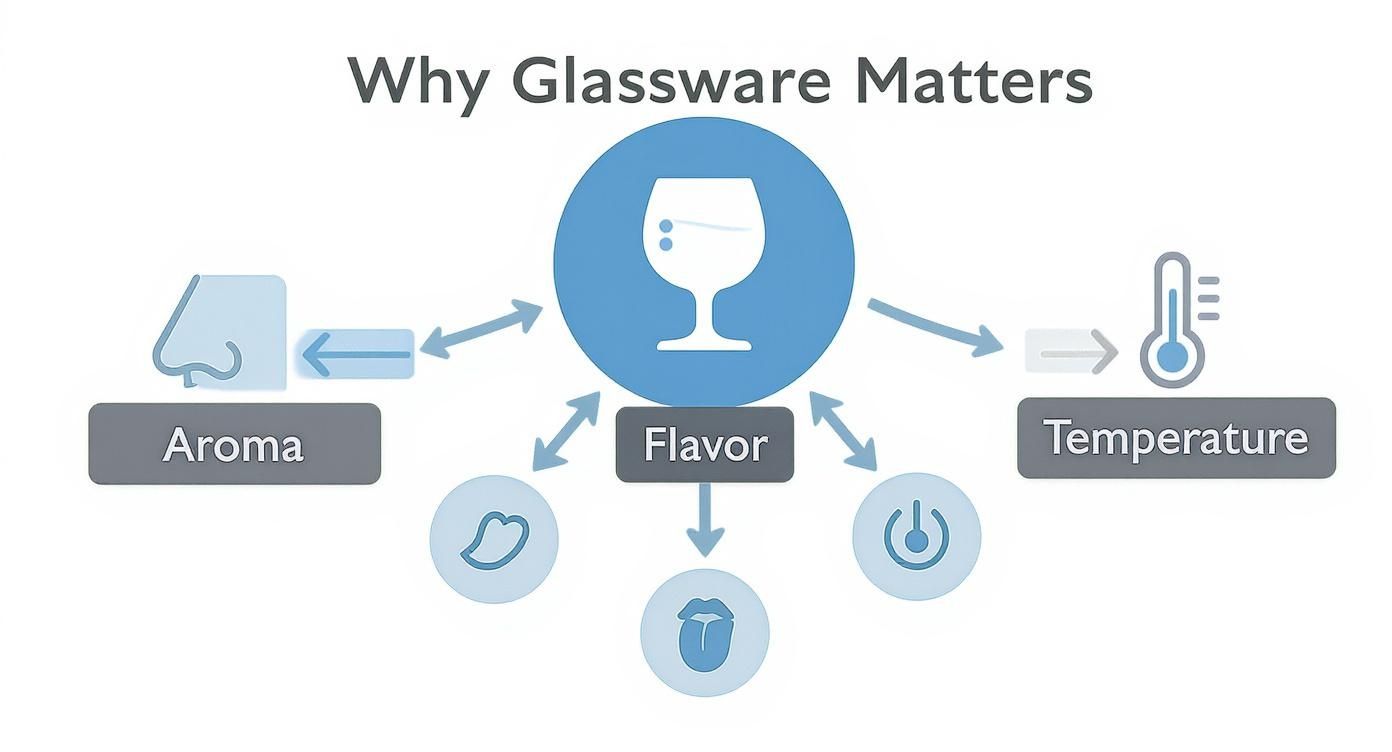
As you can see, a glass is engineered to deliver a complete sensory experience. It's proof that the vessel is just as important as what’s inside it.
The Everyday Essentials
Some glasses are the absolute foundation of any collection. They’re the versatile workhorses you’ll find yourself reaching for day in and day out, whether for your morning orange juice or an evening tipple.
- Tumblers: Often called a lowball or an Old Fashioned glass, the tumbler is short and reassuringly solid, with a wide, heavy base. Its classic design is perfect for serving spirits neat or on the rocks, and it’s the go-to for cocktails like a Negroni. That wide brim is no accident—it lets you fully appreciate the drink's aroma.
- Highball Glasses: As the taller sibling of the tumbler, the highball is made for mixed drinks that need plenty of ice and a mixer, like a vodka soda or a Dark 'n' Stormy. Its generous size holds more liquid, while the tall, straight sides help keep everything beautifully bubbly.
The best way to start your collection is with pieces you genuinely love and know you'll use. A set of elegant, durable tumblers can serve water at dinner, juice at breakfast, and whisky by the fire, making them one of the most functional investments for your home.
Stemware for Wine and Celebrations
Stemware instantly adds a touch of elegance to the table, but that long stem serves a very practical purpose. It lets you hold the glass without your hand warming the contents—a crucial detail for perfectly chilled wines and sparkling drinks.
- Wine Glasses: You'll generally find two main shapes for red and white wines. Red wine glasses have a large, rounded bowl to encourage oxygen exposure, which softens tannins and releases complex aromas. White wine glasses have a narrower, more U-shaped bowl to preserve delicate floral notes and maintain a cooler temperature.
- Flute Glasses: Tall, slender, and with a very narrow opening, the flute is designed to do one thing exceptionally well: preserve the carbonation in sparkling wines like Champagne and Prosecco. The shape encourages a steady, mesmerising stream of bubbles to rise, carrying the aroma to the surface with every sip.
- Coupe Glasses: With its broad, shallow bowl, the coupe is a classic beauty. It’s a wonderful choice for serving Champagne and cocktails served "up" (chilled, without ice), like a Daiquiri or a classic Martini. Its vintage charm has made it a firm favourite for celebratory toasts and sophisticated soirees.
For those keen on building out their collection, we've put together a quick reference to help you match the right glass to the right drink.
A Quick Guide to Common Drinking Glasses
| Glass Type | Primary Use | Best For |
|---|---|---|
| Tumbler | Spirits & Short Cocktails | Whisky on the rocks, Negroni, Old Fashioned |
| Highball | Mixed Drinks & Long Cocktails | Gin & Tonic, Vodka Soda, Dark 'n' Stormy |
| Red Wine | Red Wines | Cabernet Sauvignon, Pinot Noir, Merlot |
| White Wine | White & Rosé Wines | Sauvignon Blanc, Chardonnay, Rosé |
| Flute | Sparkling Wines | Champagne, Prosecco, Cava |
| Coupe | Champagne & "Up" Cocktails | Classic Martinis, Daiquiris, Manhattans |
This table covers the essentials, but the journey doesn't have to end here.
Specialty and Cocktail Glasses
Once you have the basics covered, you might find yourself wanting to add more specialised shapes that cater to specific drinks. This is how you turn a simple home bar into a well-equipped sanctuary. A dedicated rocks glass, for example, is essential for muddling ingredients right in the glass for a Mojito or Old Fashioned. To dig deeper into how different shapes enhance spirits, you can learn about the best glasses for Scotch whiskey.
This growing appreciation for quality glassware isn’t just a niche interest; it's a clear trend. Here in New Zealand, the glassware market is projected to grow significantly, with an expected compound annual growth rate of 7.83% between 2025 and 2032. Stemless styles have become particularly popular for their modern feel and added stability, while high-end hotels and restaurants continue to drive demand for premium, beautifully crafted pieces. It just goes to show there’s a real local passion for elevating the simple act of having a drink, and it all starts with the perfect glass.
Choosing Your Material: Glass vs Crystal
Beyond the shape of a glass, the material it's made from truly defines its character. It's the difference between a functional vessel and an object of beauty that elevates the entire drinking experience. When you pick up a delicate wine glass, what you’re feeling is a carefully crafted composition that dictates its sparkle, its weight, and how it will stand the test of time.
Getting your head around the difference between standard glass and crystal is the first step to choosing pieces you'll absolutely love.
Think of it this way: standard glass is like watching a film in standard definition. It does the job perfectly well. But crystal? That’s the 4K, ultra-high-definition upgrade. Both show you the picture, but one delivers breathtaking clarity, vibrant colour, and an immersive sharpness that transforms the experience. The unique mineral makeup of crystal allows it to be spun remarkably thin without sacrificing strength, giving it that signature delicate feel and producing a clear, musical ring when you gently tap the rim.

Everyday Durability: Standard Glass
Standard glass, often called soda-lime glass, is the reliable workhorse of the glassware world. It’s what you’ll find in most everyday tumblers, jars, and bottles. Its main selling point? It's tough and affordable. Being non-porous and relatively thick, it can handle the knocks of daily life and endless cycles through the dishwasher without a fuss.
But this sturdiness comes with a trade-off. Standard glass is thicker and has a lower refractive index, which is just a technical way of saying it doesn't bend light with the same dazzling sparkle as crystal. It's a fantastic, practical choice for casual get-togethers, but it doesn't quite have that touch of finesse for a special occasion.
The Brilliance of Traditional Lead Crystal
For centuries, lead crystal was the absolute pinnacle of fine glassware. By adding lead oxide to the glass formula, artisans could create a material that was softer and more workable, allowing for those intricate, light-catching cuts. This process also dramatically increases the glass's refractive index, giving it that unparalleled brilliance and a satisfying, reassuring weight in the hand.
It’s the lead content that allows for those paper-thin rims that feel almost non-existent against your lip, making every sip feel more refined. However, concerns about lead potentially leaching into acidic drinks over time have led many to either reserve their lead crystal for special moments or switch to more modern, safer alternatives.
The very quality that gives lead crystal its signature sparkle and workability also makes it more fragile. It is almost never dishwasher safe, as the intense heat and harsh detergents can cause a permanent cloudiness known as etching.
Modern Elegance: Lead-Free Crystal
In response to the concerns around traditional crystal, lead-free crystal has emerged as the modern material of choice for premium glassware. Instead of lead, manufacturers now use other minerals like barium, zinc, or potassium oxide to achieve that crystal-clear quality. The result is a material that truly offers the best of both worlds.
Lead-free crystal has all the exceptional clarity, sparkle, and fine-rimmed elegance of its predecessor, but with far greater durability and the assurance of being completely non-toxic. This makes it a much more practical option for regular enjoyment, with many high-quality collections now designed to be dishwasher safe. You get that luxurious feel and stunning light refraction without the worry, striking a perfect balance between beauty and functionality for the modern home.
To help you visualise the differences, here’s a quick side-by-side comparison.
Comparing Glassware Materials at a Glance
This table breaks down the key characteristics of each material, making it easier to decide which one is the right fit for your home and lifestyle.
| Feature | Standard Glass | Lead Crystal | Lead-Free Crystal |
|---|---|---|---|
| Brilliance | Low | Very High | High |
| Durability | High | Low | Medium-High |
| Weight | Lighter | Heavy | Lighter than lead |
| Dishwasher Safe | Usually Yes | No | Often Yes |
| Cost | Low | High | Medium-High |
| Rim Thickness | Thick | Very Fine | Fine |
So, what’s the final verdict? It really comes down to your lifestyle. For a busy household with kids or for everyday meals, the practicality of standard glass is hard to beat. But for those moments that call for something a little more special—a celebratory dinner, a quiet evening with a beautiful bottle of wine—the clarity, weight, and sheer beauty of lead-free crystal are an investment you’ll appreciate with every sip.
Building Your Perfect Glassware Collection
Knowing the difference between glass and crystal is one thing, but choosing the right pieces for your own home? That’s another journey entirely. Building a collection of glassware drinking glasses shouldn't feel like a chore. Think of it as an opportunity to find pieces that truly reflect your lifestyle, whether you're hosting elegant dinner parties or just want to make a quiet weeknight meal feel a little more special.
The secret is to start with a solid foundation of versatile essentials before you even think about branching out into more specialised glasses. It’s a bit like creating a capsule wardrobe. You start with the timeless staples—that classic white shirt, a great pair of jeans—that work for almost any occasion. Then, you layer in unique accessories that show off your personal style. For glassware, this means kicking things off with a few multi-purpose heroes.
Start with Versatile Staples
Your first step should be all about practicality and how often you'll actually use the glass. A couple of carefully chosen sets can cover nearly every drink you'll pour, laying the groundwork for a collection that's as functional as it is beautiful.
Here are the undisputed essentials to begin with:
- Durable Tumblers: A set of eight to twelve high-quality tumblers is simply non-negotiable. These are your everyday champions for water, juice, iced coffee, and a casual G&T. Look for a comfortable size, around 350-450ml, that feels good in your hand.
- Universal Wine Glasses: Before you get caught up in separate glasses for Pinot Noir and Sauvignon Blanc, invest in a great set of universal wine glasses. Their elegant, tapered bowl is cleverly designed to work beautifully for both reds and whites, making them an incredibly smart choice for any dinner setting.
Honestly, these two types of glasses will have you covered for 90% of your needs. Once this foundation is in place, you can start to thoughtfully expand your collection based on your own tastes and how you love to entertain.
A well-curated glassware collection is built over time, not bought all at once. Start with what you'll use most often, then add pieces that bring you joy and suit the specific ways you entertain. This approach ensures every glass is a valued part of your home.
Expanding Your Glassware Wardrobe
With your core pieces sorted, the fun really begins. Now you can start adding glasses that cater to your favourite drinks or the kinds of gatherings you love to host. This is where your personality gets to shine, allowing you to select styles that complement your home and make specific drinks taste even better.
Consider adding these to your collection next:
- Highball Glasses: If you enjoy a classic Gin and Tonic, a refreshing Mojito, or any long mixed drink, highball glasses are a must. Their tall, slender shape is perfect for drinks built with plenty of ice and mixers.
- Coupe Glasses: For anyone who loves classic cocktails or sparkling wine, the coupe adds an instant touch of vintage glamour. Its broad, shallow bowl is ideal for serving drinks "up" (chilled, without ice) and is far less prone to spills than a traditional V-shaped martini glass.
- Specialty Beer or Spirits Glasses: Are you a craft beer aficionado or a whisky enthusiast? Investing in specialised glassware can completely transform your tasting experience, bringing out aromas and flavours you might otherwise miss.
This considered approach to building your collection means you’ll always have the perfect vessel on hand. For more ideas on how to curate your home, you can see how stunning glassware pairs with other key pieces by exploring our best-selling homewares from 2023.
This appreciation for quality homewares is something we see across the country. In New Zealand, the demand for beautiful glassware is incredibly strong, leading to a significant reliance on international makers. The country imported glassware valued at US$246.55 Million, while exporting just US$22 million. It really highlights how much Kiwis value well-crafted pieces for their homes and are willing to look abroad to find them. You can learn more about New Zealand's glassware trade dynamics here.
How to Style Your Table with Glassware

Your glassware is so much more than a vessel for your drinks—it’s a central part of your table’s personality. The right choice and placement of glassware drinking glasses can bring colour, texture, and a real sense of occasion to any meal, elevating an everyday table into something truly special.
Think of your glasses as the jewellery of your tablescape. Just as a necklace can complete an outfit, the sparkle of fine crystal or the subtle shimmer of coloured glass adds life and light, complementing your dinnerware and linens. It’s a chance to show off your personal style, whether that’s clean and contemporary or classic and formal.
Creating a Cohesive Look
The first step to a beautifully styled table is creating harmony between your glassware and everything else on it. The goal is for your glasses to complement your plates and linens, not clash with them. This doesn’t mean everything needs to be a perfect match, but there should be a common thread tying it all together.
For a modern, minimalist vibe, try pairing sleek, clear crystal glasses with simple, neutral-toned dinnerware and high-quality linen napkins. Here, the beauty is in the form and materials. If your taste leans more traditional, intricately cut crystal glassware is a stunning match for classic porcelain and damask tablecloths, adding a gorgeous layer of sparkle.
The most memorable tablescapes are those that tell a story. A wonderful way to add depth is by playing with textures. Imagine pairing the cool, smooth surface of glass with the soft, organic feel of airo-washed linen or the rustic charm of a wooden charger plate.
The Art of Placement and Layering
Getting the placement of your glasses right is key for both looks and practicality, especially when you’re hosting a multi-course meal. The golden rule is to arrange them at the top right of the dinner plate, in the order of use, starting from the outside and working your way in.
A classic, formal arrangement usually looks like this:
- The water goblet: This sits directly above the dinner knives.
- The red wine glass: Positioned just to the right of the water goblet.
- The white wine glass: Placed to the right and slightly in front of the red wine glass.
This simple, logical layout makes it effortless for guests to reach for the right glass throughout the meal. If you’re looking for a more detailed walkthrough, you can find more table setting ideas in our guide.
Adding Personality with Colour
Coloured glassware is a brilliant way to inject personality and set the mood for your gathering. It catches the light beautifully and can act as a stunning accent that pulls your entire colour scheme together. A soft amber or smoky grey can bring a feeling of warmth, while a vibrant cranberry or a deep sage green creates a bold, unforgettable statement.
Don't be shy about mixing things up. Pairing a set of vintage coloured glasses with your modern clear crystal can create a really unique, curated look. The trick is to pick one or two accent colours and use them intentionally to enhance your theme, whether it’s for a relaxed seasonal brunch or an elegant dinner party.
Caring for Your Glassware to Make It Last
Investing in beautiful glassware drinking glasses is one thing, but knowing how to care for them is what turns that purchase into a lifelong collection. It’s not just about keeping them clean; it’s about preserving their clarity and brilliance, and protecting each piece from the dreaded trio of chips, scratches, and cloudiness.
The way you wash and store your glasses really does make all the difference. With just a few simple habits, you can keep every glass looking as pristine as the day you brought it home, always ready to shine.
Best Practices for Washing Glassware
The great debate—hand-washing versus the dishwasher—really comes down to what your glasses are made of. While plenty of modern, durable glasses can handle a machine, anything delicate, vintage, or high-end crystal almost always calls for a gentler, hands-on approach.
For your everyday tumblers and sturdy, lead-free crystal, the dishwasher is often a safe bet. To get the best results without risking damage, just follow a few golden rules:
- Top Rack Only: Always place glasses on the top rack, making sure they have a little space between them. You want to stop them from knocking against each other during the wash cycle.
- Go Gentle: Choose a delicate cycle or a lower temperature setting if your machine has one. Really high heat can put stress on the glass, which over time can lead to tiny cracks or that milky, cloudy film.
- Ditch the Heated Dry: That final blast of heat can bake mineral deposits right onto the surface, leaving you with stubborn spots. It's much better to let them air dry or simply open the dishwasher door once the rinse cycle is done.
But when it comes to fine crystal, particularly older lead crystal, hand-washing is the only way to go. The material is surprisingly porous and much softer, making it vulnerable to harsh detergents and the high temperatures inside a dishwasher.
When you're washing by hand, think gentle. A basin of lukewarm water, a soft cloth, and a tiny drop of mild dish soap are all you need. There’s no need for aggressive scrubbing, which can create micro-scratches that will dull the sparkle over time.
Achieving a Spotless Finish and Smart Storage
The final step—drying and polishing—is your secret to a truly flawless finish. This is where you banish water spots and streaks for good, leaving your glassware with a brilliant, lint-free shine that catches the light beautifully. For this, a high-quality microfibre or pure linen glass cloth is your best friend. We have a full guide with tips for achieving a lint-free glass cleaning every time.
Once your glasses are gleaming, storing them correctly will protect your investment. The classic question is, rim-up or rim-down? Storing them rim-down might keep dust out, but it places all the weight and pressure on the most fragile part of the glass, which is a sure-fire way to get chips.
Because of this, storing glasses rim-up is always the recommended method. To keep them dust-free, just make sure your cupboards are clean. The most important thing is to give your glassware enough breathing room. Overcrowding is the number one cause of accidents, so arrange your pieces with enough space that you can easily grab one without it clinking against its neighbours.
A Few Common Questions About Glassware
When you start to really look at drinking glasses, a few questions always seem to pop up. Whether you're building a collection from scratch or just want to get the details right, having clear answers makes all the difference. Think of this as a chat with an expert, where we tackle the most common things people wonder about.
Let’s clear up some of that confusion with some straightforward, practical advice.
What Are the Absolute Must-Have Glasses for a New Home?
For a starter set that will see you through almost any situation, you really only need three core types. First up, a good set of everyday tumblers (around 350-450ml) is non-negotiable. They’re the workhorses for water, juice, and any casual drink you can think of.
Next, add some elegant highball glasses to your cupboard. These are brilliant for mixed drinks, spirits with soda, or even just a fancy sparkling water. Finally, invest in a quality set of universal wine glasses. Their clever design works beautifully for both red and white wine, making them a smart, stylish choice until you decide to branch out.
My best advice? It's far better to own a few high-quality, versatile pieces you truly love than to have a cupboard overflowing with speciality glasses that gather dust. Start with the essentials and let your collection grow naturally with your tastes.
Can I Really Put My Expensive Crystal in the Dishwasher?
I would strongly, strongly advise against it. The combination of intense heat, aggressive detergents, and the risk of glasses knocking together in a dishwasher is a recipe for disaster with fine crystal. It can cause tiny cracks, chips, or a permanent cloudiness called etching. This is particularly true for older lead crystal, which is much softer than modern glass.
While you should always check what the manufacturer recommends, hand-washing is the only truly safe bet. A soft sponge, mild soap, and lukewarm water will preserve the brilliant clarity of your crystal for years, ensuring it stays as beautiful as the day you bought it.
Why Are Red Wine Glasses So Much Bigger Than White Wine Glasses?
It all comes down to aroma and letting the wine breathe. A red wine glass has a large, wide bowl for a reason: it increases the surface area of the wine that's exposed to the air. This process, known as aeration, helps to soften the tannins and release the rich, complex aromas you find in a Cabernet Sauvignon or a Merlot.
White wines, on the other hand, usually have more delicate, subtle notes of fruit and flowers. A smaller, narrower bowl helps to capture and concentrate these aromas right under your nose. It also does a better job of keeping the wine at a cooler temperature, so every sip is perfectly crisp and refreshing.
What’s the Difference Between a Coupe and a Martini Glass?
They might look similar, but they're designed for different jobs, even though both are for cocktails served 'up' (chilled, without ice). The coupe glass, with its broad, shallow, rounded bowl, was actually first designed for Champagne. Its shape is far more stable and less likely to spill, which is why it's now a favourite for cocktails like a classic Daiquiri or a Gimlet.
The martini glass has that iconic, sharp V-shape and a very wide mouth. That design isn’t just for looks; it’s specifically meant to open up and showcase the botanical aromas of the gin or vodka in your martini. It's a classic for a reason, but its top-heavy design means you have to be a bit more careful carrying it around!
Here at The Foxes Den, we believe that the right glassware can turn a simple drink into a cherished moment. Take a look at our curated glassware to find the perfect pieces that speak to your style. Explore our homewares collection today.