


Your Guide to Choosing a Silk Pillow Case in NZ
A silk pillowcase is so much more than a simple luxury. Think of it as a nightly beauty tool, one that works to protect your hair and skin while you sleep. Unlike cotton, which can tug at your skin and soak up moisture, silk provides a beautifully smooth surface. It reduces friction, which means less hair frizz, fewer sleep creases on your face, and less breakage.
It’s a simple swap, but one that makes a real difference.
Why a Silk Pillow Case Is Your Next Beauty Upgrade
Ever wake up with strange lines etched on your cheek, or a bed head that’s beyond saving? Your pillowcase is the likely culprit. Traditional fabrics like cotton create a surprising amount of friction against your skin and hair as you move in your sleep.
Imagine your cotton pillowcase as a soft but persistent brake. It grips at your hair's cuticles and gently pulls on the delicate skin of your face. Night after night, this friction adds up, leading to tangled hair, split ends, and sleep creases that could eventually settle into fine lines. It happens subtly, but it happens every single night.
The Gentle Alternative
This is where the magic of a silk pillowcase truly shines. Its surface is so smooth that your hair and skin simply glide across it. No resistance, just a gentle touch. This one small change can make a world of difference:
- Smoother, Healthier Hair: With less friction comes less frizz, fewer tangles, and less breakage. It's a game-changer for preserving your hairstyle overnight.
- Hydrated, Calmer Skin: Silk is far less absorbent than cotton. That means your expensive night creams and serums stay on your face doing their job, not soaked into your pillow.
- A Touch of Everyday Luxury: Beyond all the beauty benefits, the cool, soft feel of silk transforms your sleep experience. It turns your bed into a genuine sanctuary.
This shift isn't just a fleeting trend. The global silk pillowcase market was valued at USD 799.2 million and is growing fast, showing just how many people are catching on. And while we don't have hard numbers for New Zealand yet, our love for natural, high-quality goods fits this global movement perfectly. You can find more details on this growing market in the analysis from Wise Guy Reports.
To really understand the difference, let's compare silk and cotton side-by-side.
Silk vs Cotton: A Quick Comparison
See the key differences in friction, moisture absorption, and texture that set silk apart from standard cotton pillowcases.
| Feature | Silk Pillow Case | Cotton Pillow Case |
|---|---|---|
| Surface Friction | Extremely low; hair and skin glide over it. | Higher friction; can tug on hair and skin. |
| Moisture Absorption | Low; helps skin and hair retain natural moisture. | High; absorbs moisture and skincare products. |
| Texture | Incredibly smooth and soft. | Can feel rougher, especially lower thread counts. |
| Benefits | Reduces frizz, breakage, and sleep creases. | Breathable but can contribute to hair/skin issues. |
The table makes it clear: silk is engineered by nature to be gentle.
In essence, switching to a silk pillowcase isn't just about upgrading your bedding. It's about upgrading your nightly routine from passive rest to active restoration, using a specialised tool designed for care.
In this guide, we’ll walk you through everything you need to know to make this powerful change. From understanding quality markers like Mulberry silk and momme to simple care instructions, you'll have all the info you need to choose the perfect silk pillow case. Think of it as a small investment that pays you back in beauty and comfort every single morning.
Understanding What Makes Great Silk
Diving into the world of silk can feel a bit like learning a new language. You’ll see words like Mulberry, momme, and charmeuse on labels, but what do they actually mean for the silk pillow case you take home? Let's break down these terms so you can shop like a pro, knowing exactly what separates true quality from the rest.
Think about it this way: not all cotton is the same, right? You wouldn't put basic cotton in the same category as luxurious Egyptian cotton, and the same logic applies here. Getting to know the key markers of quality is the first step to choosing a pillowcase that actually delivers on its promises.
Mulberry Silk: The Gold Standard
If there’s one term you need to look for, it’s Mulberry silk. This isn't just a marketing buzzword; it really does signify the best quality silk you can buy. It’s produced by silkworms that are raised on a strict diet of nothing but leaves from the Mulberry tree.
This carefully controlled diet helps them produce silk fibres that are incredibly long, fine, and consistent in both colour and texture. The end result? A fabric that’s exceptionally smooth, surprisingly strong, and built to last—the perfect starting point for a luxury pillowcase. It’s truly the pinnacle of silk production.
Momme: The Silk Version of Thread Count
While we use thread count for cotton bedding, silk has its own measure of quality called momme (pronounced ‘mom-ee’). Momme tells you the weight and density of the silk fabric. A higher momme number means the fabric is heavier, denser, and woven with more silk.
It’s a bit like painting a wall. One thin, watery coat of paint might cover the surface, but a thicker, high-quality paint gives you richer colour, better coverage, and lasts much longer. Silk works in a very similar way.
Here’s a quick guide to common momme weights:
- 16-19 Momme: This is a good starting point. It feels lightweight and breathable but might not hold up as well over time with regular washing.
- 22 Momme: This is widely seen as the sweet spot for bedding. It offers that truly luxurious feel and substantial weight, giving it excellent durability without feeling too heavy or hot.
- 25 Momme and Higher: This is the ultimate in luxury. The fabric is incredibly rich and durable, usually reserved for the most premium silk products on the market.
For a pillowcase that needs to withstand nightly use and frequent washing while keeping its beautiful feel, 22 momme is the ideal choice.
When you choose a 22 momme Mulberry silk pillowcase, you're investing in a product crafted for both luxury and longevity. It's the sweet spot where superior softness meets practical, everyday resilience.
Silk vs Satin: A Crucial Distinction
This is probably the biggest point of confusion for anyone shopping for silk. You’ll see lots of products labelled "satin pillowcase," which understandably leads people to think satin is a type of silk. It’s not.
The difference is simple but hugely important:
- Silk is a natural protein fibre spun by silkworms.
- Satin is simply a type of weave, not a fibre itself.
You can have satin woven from polyester, nylon, or rayon. While these synthetic satin fabrics might look shiny like silk, they don’t have any of its natural benefits. Synthetic satin doesn’t breathe, often trapping heat and sweat, and it certainly won't be as gentle on your skin and hair.
Now, a product can be both silk and satin. When a silk pillow case is described as having a charmeuse weave—a specific type of satin weave—it means the 100% silk fibres have been woven to create that iconic glossy finish on one side and a duller, matte finish on the other. This weave is what gives the silk its famous smooth glide, making it perfect for a pillowcase. Just be sure to check the label for 100% Mulberry Silk.
Finally, always look for certifications that guarantee the fabric is pure and safe. These prove the silk is free from harmful chemicals, making it safe for even the most sensitive skin. If you're curious, you can learn more about what OEKO-TEX certification means and why it's such a vital stamp of approval for quality textiles.
The Real Benefits For Your Skin and Hair
Alright, let's get past the technical jargon and talk about what really matters: what can a silk pillowcase actually do for you? It’s one thing to talk about momme and Mulberry silk, but the reason so many people swear by them is the difference they see in the mirror each morning.
It all comes down to replacing friction with a smooth, gentle glide. Think about it—your standard cotton pillowcase, even a high-quality one, has a texture that can grip and tug at your hair and the delicate skin on your face as you move in your sleep. A silk pillowcase is the exact opposite. It creates a frictionless surface that lets your hair and skin glide across it, preventing the stress and damage that happens night after night. This one simple switch can make a world of difference.
How Silk Protects and Hydrates Your Skin
One of the first things people notice is waking up without those sleep creases pressed into their cheeks. You know the ones. They’re caused by your skin being bunched up against a resistant fabric like cotton for hours on end.
Over time, that repeated creasing can actually contribute to permanent fine lines and wrinkles. Because silk is so incredibly smooth, your skin simply glides over the surface instead of getting caught and folded. It’s a simple mechanical difference that helps keep your complexion looking smoother.
But it’s not just about friction.
- Moisture Retention: Silk is a protein fibre that doesn't absorb much moisture. Cotton, on the other hand, is like a sponge—it actively pulls moisture away from your skin. Silk helps your skin stay hydrated through the night.
- Skincare Efficacy: That low absorbency also means your expensive night creams and serums stay on your face, where they can do their job. You can sleep soundly knowing your skincare isn't just being soaked up by your pillow.
By minimising friction and maximising hydration, a silk pillowcase creates a healthier environment for your skin. It's a passive treatment that works for eight hours a night to support a clearer, more supple complexion.
This is where the quality markers we talked about earlier come into play. The combination of top-tier Mulberry silk, a dense momme count, and the right weave is what creates that perfect, beneficial surface.
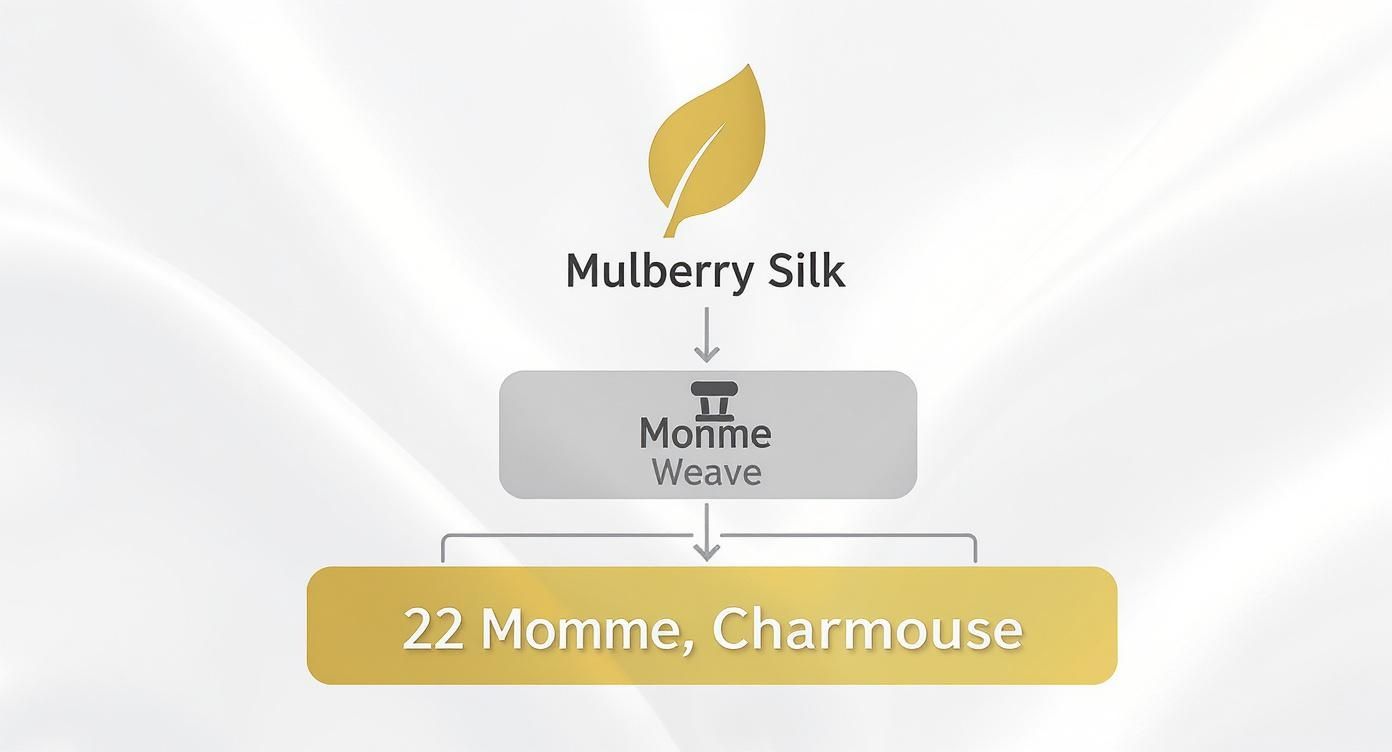
As you can see, it all starts with the best raw material—Mulberry silk—and is then refined through specific weaving (charmeuse) and density (momme) to achieve that signature smooth glide.
Tame Your Hair and Reduce Breakage
For anyone who’s ever woken up to a frizzy, tangled mess, the benefits for hair are just as compelling. The slightly rougher texture of cotton ruffles up your hair's cuticle layer, which is what causes that frizz, knotting, and even breakage.
A silk pillowcase gives your hair a super-sleek surface to slide over. This means you wake up with:
- Less Frizz and Fewer Tangles: Your hair stays smoother and more aligned, which makes your morning routine so much faster.
- Reduced Hair Breakage: The gentle glide puts far less stress on each strand. This is a game-changer, especially if you have delicate, fine, or colour-treated hair.
- Longer-Lasting Hairstyles: By preventing all that friction, silk helps preserve a blowout or styled look for an extra day or two.
It’s no surprise that these benefits are catching on. The silk pillowcase segment now makes up 43.8% of the beauty pillowcase market share. We're certainly seeing that trend here in New Zealand as more people look for natural, effective ways to care for their skin and hair.
For an even deeper dive into how these luxury linens work, explore this great resource on the benefits of silk satin pillowcases for hair and skin care. And for more advice tailored specifically for Kiwis, check out our complete guide to silk pillowcases in NZ.
How to Choose the Perfect Silk Pillow Case
So, you’ve got the basics down – you know your Mulberry silk from your satin and understand what momme means for quality. Now comes the fun part: picking the perfect silk pillow case for your own bed. This is where we move from the technical details to the practical choices that will make you fall in love with your pillowcase every night.
Think of it less like a simple purchase and more like a final fitting. Choosing the right size, closure, and colour ensures your new piece of everyday luxury works for you, your sleep habits, and your bedroom’s style. Let's walk through what to look for.
Getting the Size and Fit Just Right
First things first, let's talk fit. Nothing is more frustrating than a pillowcase that’s too baggy or, even worse, too tight. A sloppy fit means the silk can bunch up, defeating the purpose of that smooth surface, while a case that’s too small will just keep slipping off.
In New Zealand, our pillows come in a few standard sizes, so matching your pillowcase is usually straightforward. A snug, correct fit keeps the silk taut and smooth against your skin and hair, which is exactly what you want to get the most out of its benefits.
Here’s a quick guide to what you’ll find:
- Standard: The classic, most common size. Perfect for a single or double bed.
- Queen: A little longer than a standard, giving you a bit more space to rest your head.
- King: The largest of the lot, designed to sit perfectly side-by-side on a king-sized bed without leaving a gap.
When in doubt, grab a tape measure. A few seconds of measuring your pillow will save you any guesswork and ensure you get it right the first time.
Choosing Your Pillow Case Closure Style
Next up is a detail that seems small but makes a big difference: the closure. How the pillowcase stays on the pillow affects its look, feel, and performance. The two main styles you'll come across are the envelope and the zipper.
An envelope closure has an internal flap of fabric that you tuck the pillow into, creating a clean, seamless finish with no zips or buttons. A zipper closure, on the other hand, fully encases the pillow, keeping it securely tucked away no matter how much you toss and turn.
A zipper closure is often the preferred choice if you want to guarantee a consistently smooth surface all night long. It stops the pillow from shifting or peeking out, which is key for getting those full skin and hair benefits.
To help you decide what’s best for your sleep habits and aesthetic preferences, here is a simple comparison of common closure types.
Choosing Your Pillow Case Closure Style
| Closure Type | Pros | Cons |
|---|---|---|
| Envelope Closure | Offers a completely seamless and clean appearance. No hardware that could potentially snag hair. | Can sometimes allow the pillow to shift or slip out, especially for restless sleepers. |
| Zipper Closure | Provides the most secure fit, keeping the pillow fully encased and protected. Creates a tidy, tailored look. | The zipper must be high quality and well-concealed to avoid snagging or discomfort. |
Ultimately, it all comes down to what you prefer. If you’re a quiet sleeper who loves a minimalist look, an envelope closure is a beautiful option. But if you want total security and a perfectly taut fit, a quality zipper closure is the way to go.
Styling with Colour and Texture
Finally, let's think about style. A silk pillow case isn't just a functional item; it’s a little piece of decor that can instantly lift the look of your entire bed. The right colour can tie your room together, create a striking contrast, or cultivate a calm, serene atmosphere.
Take a look at your existing bedding and decor. Are you drawn to soft, neutral tones like ivory, champagne, or silver-grey for a tranquil, spa-like vibe? Or do you want to make a statement with a rich, jewel-toned colour like emerald or deep charcoal? The natural lustre of silk makes any colour look incredibly vibrant and deep.
For those ready to find their perfect match, The Foxes Den has a stunning collection of luxury silk pillowcases, curated for the discerning New Zealand home. By carefully considering size, closure, and colour, you can confidently choose a pillowcase that’s a true upgrade for both your sleep and your style.
Simple Care for Lasting Luxury
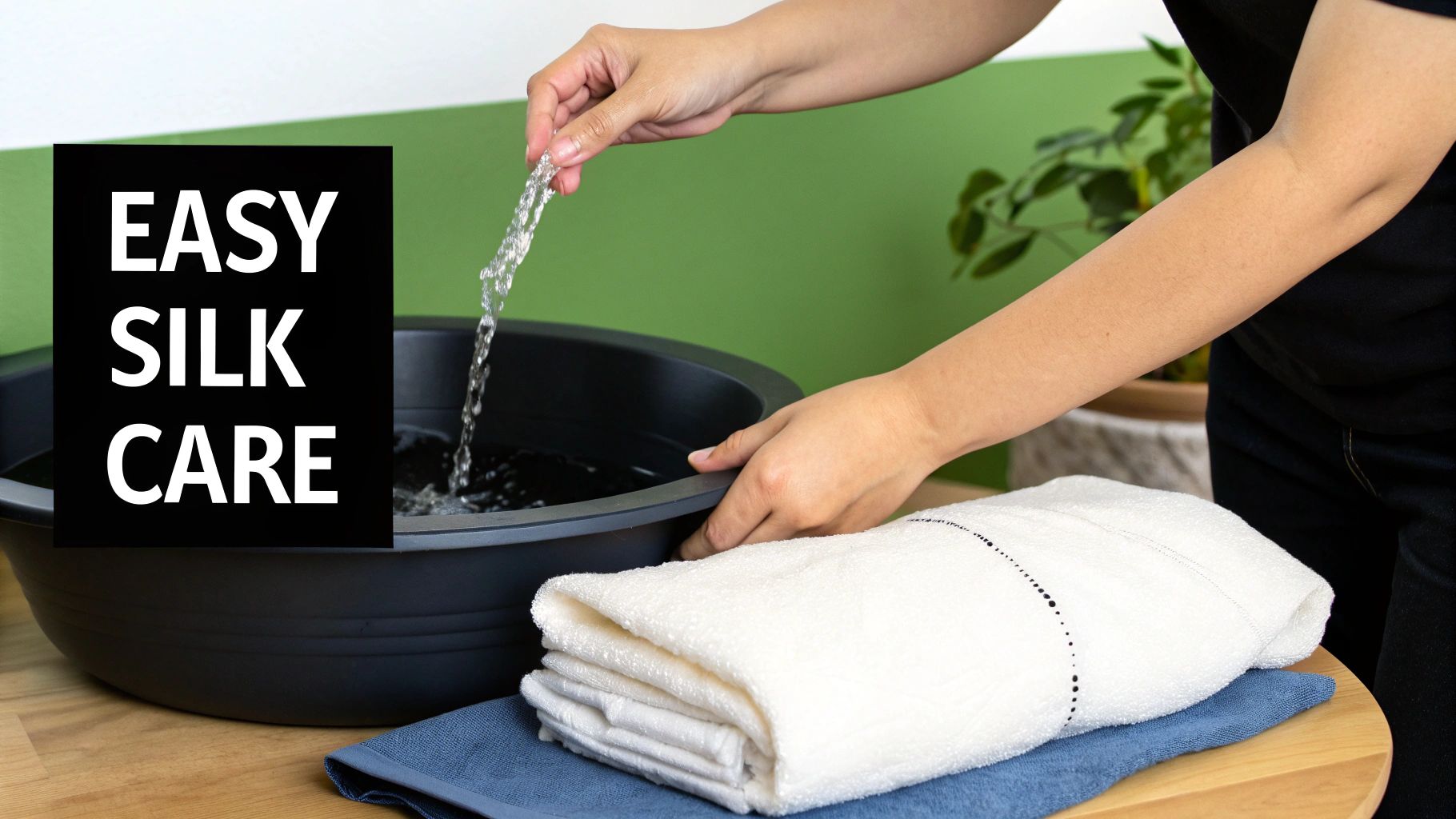
One of the most common worries I hear about owning a silk pillow case is that it's a nightmare to look after. The truth is, while silk feels incredibly delicate, caring for it is surprisingly simple. You don’t need to change your life, just a tiny part of your laundry routine to keep your silk feeling soft and looking lustrous for years.
Forget any ideas about complicated rituals or expensive trips to the dry cleaner. A high-quality silk, like the 22 momme Mulberry silk we use in The Foxes Den collections, is more than tough enough for home care. The secret is to be gentle and use the right products to protect its natural protein fibres and signature sheen.
Hand Washing: The Gold Standard for Silk Care
If you want the absolute best for your silk, hand washing is the way to go. It’s the gentlest method and gives you total control. Don’t worry, it's not a chore—it only takes a few minutes.
Here’s my go-to, foolproof method:
- Prep Your Basin: Fill a clean sink or basin with cool to lukewarm water. You’re aiming for no warmer than 30°C, as hot water is the enemy of delicate silk fibres.
- Add a Gentle Soap: Squeeze in a small amount of pH-neutral liquid detergent. It's best to avoid powders that can leave a residue and definitely steer clear of harsh chemicals like bleach, which can literally dissolve silk’s proteins.
- Soak and Swish: Submerge the pillowcase and let it soak for a few minutes. Gently swish it around in the water for three to five minutes, but resist the urge to scrub or twist it.
- Rinse and Squeeze: Drain the basin and rinse your pillowcase under cool running water until it runs clear. Gently squeeze out the extra water—but please, never wring it out!
A quick expert tip: Using a pH-neutral, silk-friendly detergent is non-negotiable. Standard laundry detergents are often too alkaline, which makes silk brittle and dulls its shine over time. Look for a wash specifically made for delicates.
Can You Machine Wash Silk? (Yes, Carefully!)
If hand washing just isn't for you, you can absolutely use a machine. You just need to take a couple of small precautions to do it safely. This method works best for high-quality, durable silk that can handle a gentle cycle.
Here's how to machine wash without worry:
- Bag It Up: Always place your silk pillow case in a mesh laundry bag. This is your best defence against snags from the machine’s drum or other items.
- Pick the Right Cycle: Choose the gentlest cycle your machine offers. This is usually called ‘Delicates,’ ‘Hand Wash,’ or something similar.
- Keep It Cool: Set the temperature to cool, making sure it’s 30°C at the absolute maximum.
- Low Spin: Select a slow spin speed to reduce stress on the fabric.
The Right Way to Dry and Iron Silk
How you dry your silk is just as crucial as how you wash it. Rule number one: never, ever put a silk pillowcase in a tumble dryer. The intense heat will shrink the fibres and cause irreversible damage to the fabric.
Instead, lay the damp pillowcase flat on a clean, dry towel. Roll the towel up with the pillowcase inside to gently absorb most of the moisture. Then, unroll it and hang the pillowcase on a non-slip hanger or a drying rack to air dry.
And this is important: keep it away from direct sunlight and heat sources. Sun can fade the colour and weaken the fibres over time.
If you find a few wrinkles, a quick iron will restore that perfectly smooth finish. Just turn the pillowcase inside out and use the lowest heat setting on your iron (usually marked ‘Silk’). For best results, iron it while it’s still the slightest bit damp. That’s all it takes to ensure your silk remains a beautiful and simple part of your nightly routine.
Got Questions About Silk Pillow Cases?
It's completely normal to have a few questions before you commit to something new, especially when it's part of your daily routine. Even after hearing about all the benefits, you might be wondering about the practical side of things.
Let's clear up some of the most common queries I hear. Think of this as a quick chat to cover everything from value for money to whether a silk pillowcase can really help with pesky allergies or acne. My goal is to give you all the information you need to feel fantastic about your choice.
Is a Silk Pillow Case Actually a Good Investment?
I get this question all the time, and the answer is a resounding yes. It's easy to see the higher price tag compared to cotton and pause, but it's much better to think of it as a long-term investment in your skin and hair. This is a tool that works its magic for eight hours a night, every single night, without you having to lift a finger.
When you start to tally up the costs of special hair serums, hydrating face masks, and anti-wrinkle creams, the value of a silk pillow case really shines through. A single, well-made silk pillowcase can help prevent damage and lock in moisture for years. It quickly becomes one of the most cost-effective—and effortless—parts of any beauty or wellness regimen.
A premium silk pillowcase isn't just a purchase; it's a nightly beauty treatment that pays for itself over time through healthier skin, smoother hair, and the simple pleasure of elevated comfort.
How Can I Tell Real Silk from a Fake?
This is a big one. Knowing how to spot genuine silk from a synthetic impostor like polyester satin is key to getting the benefits you're paying for. While polyester might look shiny at a glance, it's all show and no substance. Luckily, there are a few simple tells.
- Look at the Shine: Real silk has this incredible, almost pearlescent lustre. It catches the light and seems to shimmer, changing colour from different angles. Polyester satin has a much flatter, more static shine that can look a bit cheap and plasticky.
- Trust Your Touch: Run the fabric between your fingers. True silk is unbelievably smooth, but it's not slick; there's a subtle texture to it. As you rub it, it will generate a gentle warmth. Polyester, on the other hand, often feels slippery and stays cool to the touch.
- The Price Check: Honestly, this is often the clearest giveaway. If you see something advertised as 100% Mulberry silk for a price that seems too good to be true, it almost certainly is. Producing high-quality silk is a careful, labour-intensive process, and the price will always reflect that craftsmanship.
How Often Should I Be Washing It?
Many people worry that silk is going to be high-maintenance, but that's not really the case. A good rule of thumb is to wash your silk pillowcase about as often as you wash the rest of your bedding—somewhere around once a week, or every 10 days at most.
This schedule is the perfect balance. It keeps things hygienic by removing any buildup of natural oils or skincare products, but it isn't so frequent that it feels like a chore. It just slots right into your normal laundry routine, proving that a little bit of luxury doesn't have to be complicated.
Can It Genuinely Help with Allergies or Acne?
Yes, it can absolutely play a supportive role. Silk is a natural protein fibre, which makes it inherently hypoallergenic. It’s naturally resistant to the things that can make us stuffy and sneezy, like dust mites, mould, and other common allergens that love to set up camp in cotton or wool.
For anyone dealing with acne-prone or sensitive skin, the benefits are even clearer. First, its super-smooth surface means way less friction and irritation compared to other fabrics. Second, silk absorbs far less moisture (and your expensive night cream!) than cotton, which helps keep the pillowcase cleaner and more hygienic all night long.
While a silk pillow case isn't a miracle cure, it creates a much healthier, calmer environment for your skin to rest and repair. That alone makes it a brilliant choice for anyone looking to minimise irritation and keep allergens at bay.
At The Foxes Den, we believe real luxury is found in the small details that make everyday life better. Our collection of Mulberry silk pillowcases is designed to bring that exact feeling of elegance and wellness into your home here in New Zealand. See what a difference it can make for yourself at https://www.thefoxesden.co.nz.