


Choosing Curtain Fabric Material A Definitive Guide
Choosing the right curtain fabric is about so much more than just picking a colour or pattern. It’s the single most important decision you'll make, the one that truly dictates a room's atmosphere, its functionality, and how it feels to be in that space. The textile you select determines everything from the way light filters through to how well the room holds its warmth.
Why Your Curtain Fabric Material Matters Most
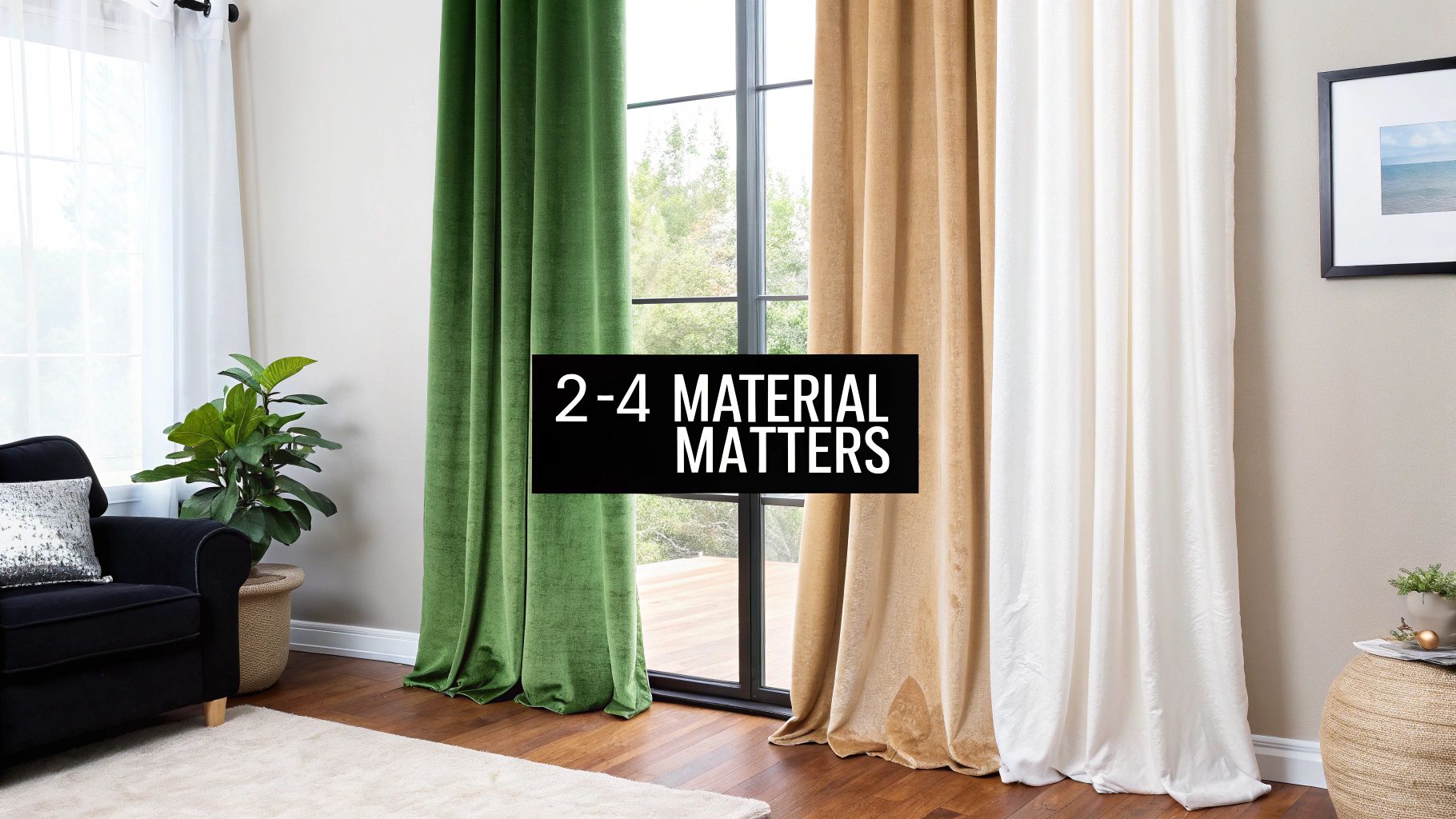
Think of your curtain fabric as the very soul of your window treatment. It’s what gives the design its character and purpose, turning a simple window covering into a functional piece of art. The choice you make here will fundamentally alter how a room performs and feels every single day.
A lightweight, breezy linen, for instance, will gently filter sunlight, creating an airy, relaxed vibe that's perfect for a sun-drenched living room. On the other hand, a sumptuous, heavy velvet will absorb light and sound, crafting a quiet, dramatic, and intimate space—ideal for a bedroom or a formal dining area.
Beyond Simple Aesthetics
The practical side of your fabric choice is just as critical as the visual appeal. The right textile is a silent workhorse, contributing to your home’s comfort and efficiency in several key ways:
- Energy Efficiency: A well-chosen fabric, especially with the right lining, acts as a powerful insulator. It helps trap heat during our cooler winters and keeps your home cool in summer, which can make a real difference to your energy bills.
- Acoustic Comfort: Heavier, denser materials like velvet and wool are brilliant at dampening sound. They absorb echoes within a room and soften noise from outside, creating a more serene and peaceful home.
- Light and Privacy Control: The fabric's weave and weight are directly responsible for how much light enters a room and the level of privacy you get. This can range from sheer fabrics that offer just a veiled view to blackout-lined materials that provide complete darkness.
- Longevity and Durability: The fibre itself—whether it's natural, synthetic, or a blend—determines how well your curtains will stand up to fading, wear, and moisture over time.
This growing appreciation for both function and form is something we're seeing more and more of. Here in New Zealand, there's a clear move towards natural and sustainable fabrics. Materials like organic cotton and linen are seeing a huge surge in popularity, driven by a desire for eco-conscious luxury. For a deeper dive, you can explore the full market report on these evolving consumer preferences.
Choosing a curtain fabric is like casting the main character in a play. It sets the tone, delivers the performance, and ultimately defines the entire production. Every other element, from the heading style to the hardware, simply plays a supporting role.
Understanding Natural Curtain Fabrics
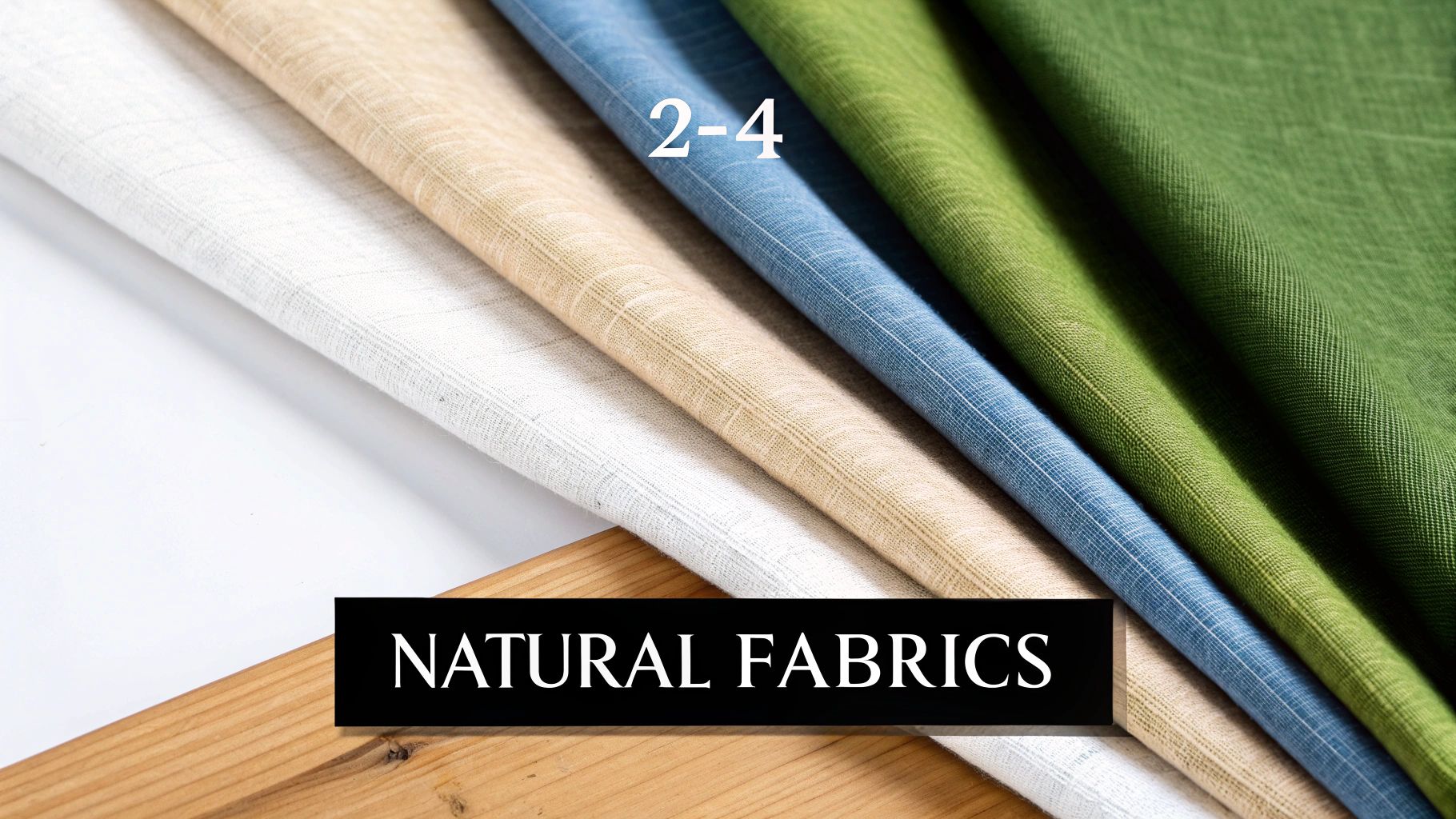
When we talk about natural fibres, we’re really talking about materials with personality. These are the fabrics that come from the earth—from plants and animals—and they bring an organic elegance and character into our homes that synthetic materials just can’t replicate. Choosing a natural fabric for your curtains is an investment in a feeling, a texture, and a timeless connection to the natural world.
Each fibre has its own story, its own way of hanging and catching the light. Getting to know their individual quirks is the first step in creating a space that doesn’t just look beautiful, but feels authentic. Let's get acquainted with the four icons of the natural fabric world.
Linen: The Epitome of Relaxed Elegance
Linen is the embodiment of effortless style. It's crafted from the fibres of the flax plant, and its trademark is a wonderfully imperfect, slubby texture that brings an immediate sense of organic warmth to a room. It isn't trying to be perfect; its charm is found in that relaxed, lived-in feel.
Think of linen curtains as a soft-focus filter for your windows. They don’t block the light, but rather soften and diffuse it, transforming harsh sun into a gentle, ethereal glow. This makes linen an incredible choice for living spaces, dining rooms, and anywhere you want to feel bright and airy without the glare.
The way linen drapes is just as special. It falls with a casual, fluid grace, forming soft, unstructured folds that feel both welcoming and calm. While it does wrinkle, this is widely seen as part of its character—a sign of its laid-back luxury. For a closer look at this aesthetic, we’ve put together a guide on why linen curtains remain such a beloved choice in high-end interiors.
Cotton: The Versatile and Crisp Classic
If linen is the bohemian artist, cotton is the sharp, well-dressed professional. It's the dependable workhorse of the textile world—incredibly versatile, always reliable, and perpetually in style. Cotton fibres create a fabric that feels crisp and smooth, holding their shape to give a more structured, tailored look than linen.
Cotton's superpower is its versatility. It can be woven into almost anything, from a light, breezy voile to a heavy, robust canvas. This adaptability means there's a cotton curtain perfectly suited to nearly any room or function.
- A Clean Finish: Cotton provides a neat, tidy look that works just as well in a modern apartment as it does in a traditional villa.
- True Colours: It takes dye beautifully, resulting in rich, vibrant colours that can be a stunning focal point or a perfectly subtle backdrop.
- Structured Drape: It forms crisp, uniform pleats, making it the ideal partner for more formal heading styles like a classic pinch pleat.
Ultimately, the choice between linen and cotton often comes down to mood. If you're after a soft, flowing, and relaxed vibe, linen is your answer. If you need a crisp, clean, and more structured silhouette for your windows, go for cotton.
Silk: The Ultimate Statement in Luxury
There’s no question about it—silk is the most luxurious curtain fabric you can choose. Spun from the cocoons of silkworms, its fibres have a unique prism-like structure that refracts light, giving the material an unmistakable, luminous sheen. Nothing else drapes like silk. It hangs in liquid-like folds that pool beautifully on the floor.
Choosing silk for your curtains is a bold statement of opulence. Its lustrous surface plays with the light, adding a dynamic, shimmering quality that feels incredibly grand. This makes it a perfect fit for formal living rooms, elegant dining spaces, or a master bedroom where you want to dial up the drama and indulgence.
But this luxury demands a bit of care. Silk is a delicate protein fibre and is very vulnerable to sun damage. It is absolutely essential to have silk curtains properly lined—often with both a standard privacy lining and a protective interlining—to shield the fabric from UV rays. This is the key to preserving its rich colour and integrity for years to come.
Wool: The Sophisticated Insulator
Wool is often the unsung hero of the curtain world. We tend to think of it for cosy jumpers, but it’s a remarkably sophisticated and practical choice for window treatments, especially here in New Zealand where keeping a home warm is so important.
Its greatest strength is its incredible insulating ability. The natural crimp in wool fibres creates thousands of tiny air pockets that act as a thermal barrier, helping to keep your home warmer in winter and cooler in summer. That same structure also makes wool a fantastic sound dampener, absorbing noise and reducing echo for a quieter, more peaceful room.
Beyond its practicality, wool has a rich, deep aesthetic. It has a matte finish that drinks in the light, creating an enveloping, cosy feeling. The fabric has a substantial weight, allowing it to hang in heavy, stately folds that feel both comforting and grand—an excellent choice for bedrooms, studies, or media rooms.
Of course, here is the rewritten section with a more natural, human-expert tone.
Exploring High-Performance Synthetic Fabrics
While we all love the character of natural fibres, sometimes our homes demand a little more. This is where high-performance synthetic and blended fabrics really come into their own. Think of them not as imitations, but as smart, engineered solutions for modern living. They’re designed to tackle real-world challenges like harsh sunlight, humidity, and the general chaos of a busy family home.
These textiles are the result of incredible innovation, offering a level of consistency and resilience that natural fibres can't always promise. It’s technology and design working together to create luxury that’s not just beautiful, but practical and built to last. Let’s take a look at the go-to options in this category.
Polyester: The Durable All-Rounder
When it comes to sheer practicality, polyester is the undisputed champion in the world of curtain fabrics. It’s an incredibly versatile and hard-wearing material, making it one of the most popular choices for curtains in contemporary homes for good reason.
You could almost call polyester the 'set and forget' solution. Its engineered fibres are naturally resistant to many of the headaches that can come with other fabrics.
- Fade Resistance: It stands up brilliantly to UV light, which is why we so often recommend it for those intensely sunny rooms where other fabrics would quickly lose their colour.
- Wrinkle Resistance: Polyester holds its shape beautifully. It just doesn't crease easily, so your curtains will always look crisp and well-kept without you having to do a thing.
- Moisture Resistance: Because it doesn't absorb moisture, it’s great at preventing mould and mildew. This makes it a fantastic, worry-free choice for kitchens or bathrooms.
This built-in resilience means polyester curtains are a breeze to look after and have a remarkably long life, offering fantastic value over the years.
Velvet: A Symbol of Plush Opulence
It’s a common misconception that velvet is a type of fibre. It’s actually a type of weave—a special construction with a dense, evenly cut pile that creates that unmistakably soft, plush feel we all know and love. While traditionally woven from silk, most modern velvets are made from cotton, polyester, or blends, which cleverly makes them far more durable and accessible.
The unique texture of velvet has a huge impact on the feel of a room. Its deep pile absorbs light instead of reflecting it, creating an incredible depth of colour and a real sense of drama. This quality is perfect for making a bedroom feel like a cosy, intimate sanctuary or giving a formal dining room a grand, stately atmosphere.
But velvet is more than just a pretty face; it’s a high-performance fabric too. Its sheer weight and density make it a brilliant thermal insulator, helping block out draughts, and it’s also fantastic for dampening sound, softening echoes to make a space feel quieter and more peaceful.
Fabric Blends: The Best of Both Worlds
Fabric blends are where things get really clever. By combining two or more different fibres—usually a natural one with a synthetic—we can create a curtain material that gives you the best qualities of each. It’s like creating a bespoke recipe for the perfect fabric.
This approach lets us target the weaknesses of one fibre and balance them with the strengths of another. It’s a truly innovative way to get the exact look and performance you’re after.
A perfect example is a linen-polyester blend. This fabric gives you all the beautiful, relaxed texture and airy feel of pure linen, but with the added wrinkle resistance and durability of polyester. The result? A curtain that has that effortlessly chic linen look but is far, far easier to care for. In the same way, a cotton-polyester blend will feel as soft and natural as pure cotton, but with added strength and less risk of shrinkage.
This kind of smart innovation is a big reason why our local manufacturing sector continues to thrive. Even with market ups and downs, like the recent dip in the New Zealand curtains market, the value of local curtain production has hit a new peak. This is largely thanks to the skill involved in creating these high-quality, practical fabrics. You can read more about these trends in New Zealand’s resilient curtain industry.
To help you decide, we've put together a quick comparison of what you can expect from each fabric category.
Natural vs. Synthetic Fabric Characteristics at a Glance
This table offers a quick overview, helping you weigh the distinct characteristics of these different fabric families at a glance.
| Attribute | Natural Fabrics (Linen, Silk, Cotton) | Synthetic & Blended Fabrics (Polyester, Blends) |
|---|---|---|
| Aesthetic | Offers organic, unique textures with natural variations. Known for timeless, relaxed or opulent elegance. | Provides a consistent, uniform appearance. Can be engineered to mimic natural looks or create modern finishes. |
| Durability | Varies greatly. Silk is delicate and prone to sun damage, while linen and cotton are more robust but can wrinkle. | Generally very high. Excellent resistance to fading, wrinkling, moisture, and abrasion, especially polyester. |
| Care | Often requires more specialised care, such as dry cleaning for silk or careful washing for linen to manage shrinkage. | Typically very easy to care for. Many synthetics and blends are machine washable and require minimal ironing. |
| Cost | Can be more expensive, particularly for high-quality silk and pure European linen. | Often more affordable and offers great long-term value due to its longevity and low maintenance needs. |
| Best For | Creating a specific mood—airy and relaxed with linen, formal and luxurious with silk, or crisp and classic with cotton. | High-traffic areas, sunny rooms, humid environments, and households needing low-maintenance, durable solutions. |
Ultimately, choosing between natural and synthetic comes down to balancing the look you want with the practical demands of your space and lifestyle.
Here is the rewritten section, crafted to sound natural and expert-written, following all your requirements.
How Fabric Controls Light, Privacy, and Insulation
Choosing a curtain fabric is about so much more than just picking a colour or pattern. It’s about deciding what you want your curtains to do. The right material acts as a sophisticated filter for your windows, precisely controlling the room's atmosphere by managing light, guaranteeing privacy, and even making your home more energy-efficient. This is where beautiful design meets practical, intelligent function.
Think of the fabric's construction—its weave and weight—as the control dial for your room's environment. A loose, open weave in a sheer linen, for example, is like a soft-focus lens. It gently diffuses harsh sunlight into a warm, inviting glow. On the other hand, a dense, tightly woven velvet acts like a solid barrier, blocking out almost all light and sound.
Once you understand how these properties work together, you can choose a fabric that doesn't just look good, but actively solves problems in your home.
Mastering Light Control and Privacy Levels
At their core, curtains are there to manage the light coming into a room, which goes hand-in-hand with privacy. The level of control you have comes down to the fabric's opacity—how much light can (or can't) pass through it. This gives you a whole spectrum of options, from barely-there sheers to total blackout solutions.
-
Sheer Fabrics: Think of gossamer-light linen or voile. These are your most transparent options, offering minimal privacy but working wonders for ambience. They soften direct sunlight, cut down on glare, and keep a room feeling bright and connected to the outdoors. They're perfect for living spaces where you want light, not prying eyes.
-
Semi-Sheer Fabrics: A step up in the privacy stakes, these materials obscure the view from outside while still letting a lovely amount of natural light filter through. Lighter cottons and some linen blends sit nicely in this category, striking a balance that works beautifully in most common areas of a home.
-
Light-Filtering Fabrics: These give you real privacy, day and night, completely blocking the view into your home. While you can't see through them, they still allow a soft, muted light to illuminate the space. This is the territory of medium-weight cottons, thicker linens, and many polyester fabrics.
-
Blackout Solutions: For the ultimate in light control, you need a blackout fabric or—more often—a blackout lining. These are engineered with a dense core that blocks up to 99% of external light, creating a dark, peaceful environment. They're an absolute game-changer for bedrooms, media rooms, and nurseries.
The most flexible approach is often pairing a beautiful decorative fabric with a specialised lining. This gives you the best of both worlds: you get the aesthetic of a stunning silk or wool on the front, while the lining does the heavy lifting for light-blocking and privacy.
The Science of Thermal and Acoustic Insulation
Beyond what you can see, your choice of curtain fabric plays a huge part in how your home feels and sounds. The material's weight and density are key here, working to create a home that's not only more energy-efficient but also more peaceful.
Heavier, denser fabrics like velvet, wool, and interlined silks are fantastic natural insulators. Their thick fibres and tight weave create a barrier, trapping a layer of air between the window and the room. In winter, this stops precious heat from escaping; in summer, it helps block the sun's heat from getting in. The right insulating curtains can make a real difference to your heating and cooling bills over time.
That same density also makes these fabrics brilliant at absorbing sound. They can soften echoes and reverberation within a room and help muffle outside noise, like traffic or chatty neighbours. It’s an acoustic benefit that can turn a room into a quieter, more serene sanctuary—a priceless feature for bedrooms, home offices, or any space where you need a bit of tranquility.
While lighter fabrics like linen and cotton don't offer much insulation on their own, their performance can be boosted dramatically by adding a thermal or interlining layer.
Matching Fabrics to Your Room and Windows
Choosing the right curtain fabric isn't just a theoretical exercise; it's about bringing that knowledge home. Let's be honest, the fabric that looks stunning in a formal lounge is rarely the best choice for a busy kitchen. This is where we bridge the gap, translating the technical details of fibres and weaves into practical, room-by-room solutions. The goal is a perfect marriage of style, function, and the unique environment of each space in your home.
The first step is to think about what you need the room to do. A bedroom's primary job is to be a sanctuary for rest, demanding quiet and darkness. A living room, on the other hand, might need a delicate balance between welcoming natural light and maintaining privacy.
Fabric Recommendations for Every Room
To get you started, here are a few ideas for different spaces in the house.
-
Formal Living Rooms: This is your chance to make a statement. Silk blends bring an instant touch of opulence with their luminous sheen and elegant drape. For a truly rich, dramatic feel that also absorbs sound beautifully, you can't go past a plush velvet. These fabrics create an atmosphere of pure, sophisticated elegance.
-
Bedrooms: Sleep is the priority here. Linen with a blackout lining is a fantastic choice, giving you that relaxed, organic texture while guaranteeing total darkness for a restful night. Heavier cottons or even wool are also excellent options, adding insulation and muffling outside noise.
-
Kitchens and Bathrooms: In these high-humidity, high-traffic areas, durability and easy care are non-negotiable. A high-quality polyester or a cotton-poly blend is your best bet. They resist moisture, are simple to clean, and won't hang onto cooking odours.
-
Dining Rooms: The feel of your dining room really dictates the fabric choice. For more formal occasions, a weighted silk or a crisp, pleated cotton adds a sense of ceremony. If it's more of a casual, everyday space, the relaxed fall of a linen blend creates a wonderfully welcoming and airy atmosphere.
This simple decision tree can help you visualise how your main goal for a room—whether that's creating ambiance, ensuring privacy, or achieving a full blackout—points you toward the right fabric.
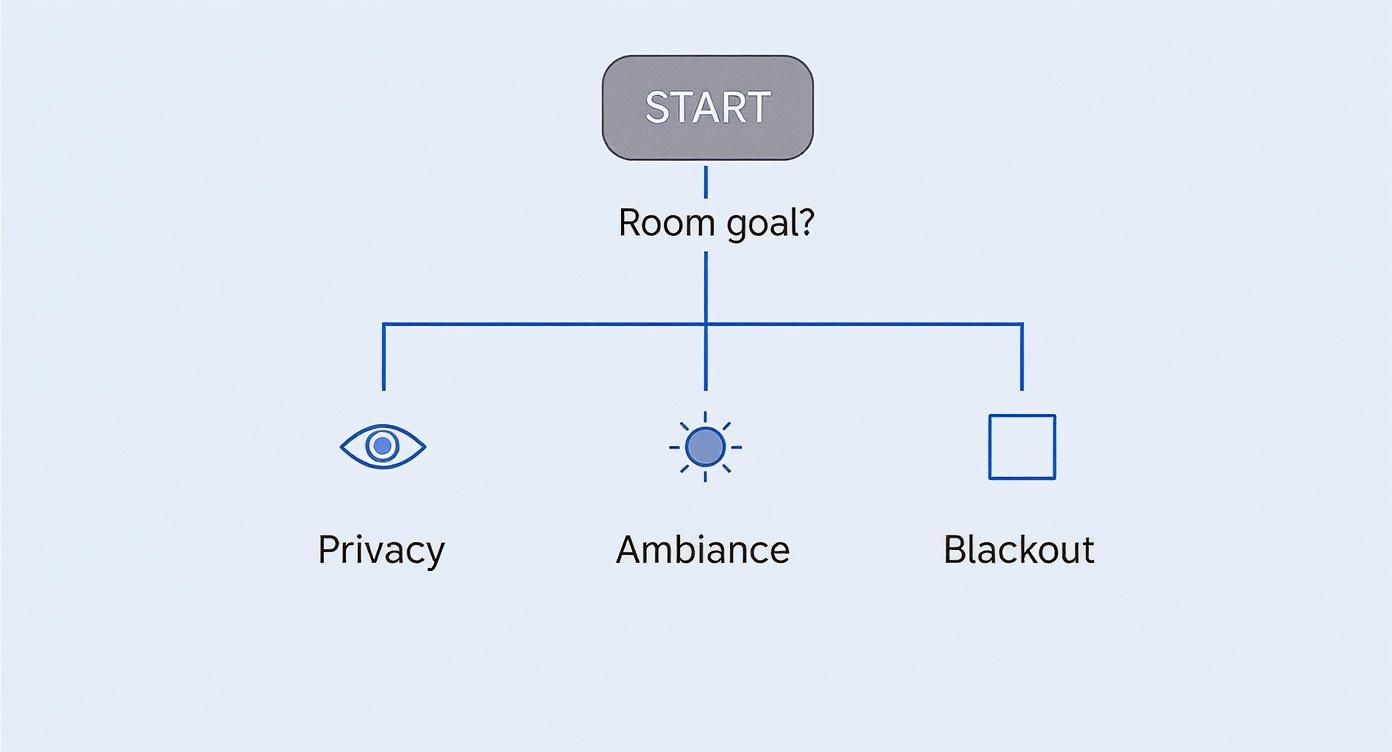
As you can see, the flowchart simplifies things, showing a clear path from what you want to achieve to the fabric or lining that will get you there.
Proportions for Window Types
The size and shape of your windows are just as crucial as the room's purpose. The right fabric will enhance a window's best features, but the wrong one can easily overwhelm it.
A heavy, opulent velvet can look absolutely stunning on large, tall windows, creating a grand, sweeping effect. However, that same fabric can easily swamp a smaller window, making it feel crowded and diminished.
For smaller windows, lighter materials like cotton, linen, or sheer fabrics are a much better fit. They let more light filter through and don't add visual bulk, which helps both the window and the room feel larger and more open. For those curious about visualising different fabrics in their own space, it's interesting to see how AI tools for interior design are offering new ways to preview these choices.
Getting the proportions right is essential for that polished, high-end look. This isn't just about the fabric type, but also about the amount of fabric you use. We have a detailed guide on how to measure for curtains that walks you through getting the fullness just right—an absolute must for custom curtains. It’s the key to ensuring your final choice is not only beautiful but perfectly scaled to its setting.
Caring For Your Luxury Curtain Fabrics
Choosing beautiful, custom-made curtains is a real investment in your home’s atmosphere and comfort. With the right care, they’ll look stunning for years to come, so it’s worth getting it right from the start.
The first thing to understand is that how you clean your curtains depends entirely on the fabric. The specific fibres dictate everything.
Durable fabrics like polyester or even some cottons might be fine with a gentle machine wash. But when you’re dealing with more delicate materials, a specialised touch is needed. The unique structures that give silk its lustre or velvet its plush feel can be completely ruined by water and the agitation of a washing machine. For these, professional dry cleaning is non-negotiable if you want to preserve their beautiful finish and shape.
Routine Maintenance and Protection
A little bit of regular, gentle upkeep goes a long way in keeping your curtains looking pristine and extending their life. Over time, dust and everyday debris can settle into the weave, which not only dulls the colour but can slowly degrade the fibres themselves.
- Gentle Vacuuming: About once a month, grab the soft brush attachment for your vacuum. Lightly run it down the length of the curtains, always working from top to bottom. This lifts away dust without any risk of stretching or snagging the fabric.
- Airing Out: Pick a dry, breezy day and throw open the windows. This is a brilliant, simple way to freshen up your curtains, especially natural fibres like wool and linen which breathe so well.
Beyond dust, the single biggest threat to your curtain fabric is direct sunlight. Those UV rays are relentless; they are the primary culprit behind faded colours and can cause delicate fibres like silk to become brittle over time.
The most effective defence against sun damage is a high-quality lining. Think of it as a protective shield. It takes the brunt of the sun's rays, preserving the integrity and colour of your beautiful face fabric for the long haul.
Some materials, like pure linen, have their own specific quirks when it comes to care. For an in-depth look, our complete guide on washing and caring for luxury European linen has all the expert advice you'll need.
Still Have a Few Questions?
Choosing the right fabric can feel like the final, most crucial step. It's completely normal to have a few last-minute questions before making a decision you'll live with and love for years. We get it.
Let's walk through some of the most common things people ask us, just to make sure you're feeling 100% confident in your choice.
What’s Genuinely the Best Fabric for Blocking Out Light?
If you're after serious light-blocking power, you can't go wrong with heavy, dense fabrics. Think rich velvets or a really tightly woven polyester – their natural weight and structure do a great job of keeping light at bay.
But the real secret weapon? Adding a specialised blackout lining to the curtain fabric you've fallen for.
This is a game-changer. It means you don't have to compromise. You can have the soft, elegant look of linen or silk on the front, but with the total darkness you need for a bedroom or media room. It’s truly the best of both worlds.
How Can I Stop My Curtains From Fading?
Sun fade is a real problem, especially here in New Zealand. Natural fibres like silk and cotton are particularly susceptible to UV damage. The absolute best defence you have is a quality lining.
A good lining acts like sunscreen for your curtains, taking the hit from the harsh UV rays before they can bleach the colour from your beautiful face fabric. If you have a room that gets blasted with direct sun all day, you might also consider a fade-resistant synthetic like polyester or an acrylic blend for ultimate peace of mind.
Can I Put Linen Curtains in My Bathroom?
As gorgeous as they are, we'd gently steer you away from using natural fabrics in steamy, high-moisture areas like bathrooms or laundries. Materials like linen and cotton just love to soak up moisture from the air, which can unfortunately lead to mildew over time.
For these wetter spots, a moisture-resistant fabric is a much smarter choice. Polyesters or specially treated blends are built to handle the humidity, so they’ll stay looking beautiful for the long haul without any worry.
At The Foxes Den, we believe the perfect curtains are born from a blend of exquisite material and flawless function. Explore our curated collection of luxury fabrics to find the ideal foundation for your custom-made curtains.