


Choosing Cushions for Sofas A Definitive NZ Styling Guide
The real secret to a truly comfortable and stylish sofa isn't just about the colour of your cushions; it's what's inside that makes all the difference. The cushion fill dictates everything from how plush it feels when you sink in, to its overall support, and even how much time you'll spend plumping it back into shape.
Get this part right, and you’ve created a genuine haven of comfort. Get it wrong, and you’ll be stuck with sad, limp cushions that do nothing for your space.
Choosing the Right Cushion Fill and Fabric
Let's be real—the moment someone sits on your sofa, the very first thing they experience is your cushions. That initial sink-in feeling, the support it gives, the texture of the fabric... it all creates an immediate impression. This is exactly why it’s worth going deeper than just surface-level looks to create a space that feels every bit as good as it looks.
Unpacking Cushion Fill Options
The world of cushion fills might seem a bit overwhelming at first, but it really just boils down to a few key types, each with its own pros and cons. Your lifestyle is the best guide here. Think about whether you've got a busy family with kids and pets, or if your living room is a more formal, quiet space.
- Feather and Down: If you’re chasing that classic, cloud-like sink, you simply can't beat a feather and down blend. These cushions are incredibly soft and easy to mould, perfect for getting that relaxed, "karate-chopped" look you see in magazines. The trade-off? They need a good fluffing pretty regularly to keep their loft and can sometimes be a problem for those with allergies.
- Foam: High-density foam is the trusty workhorse of the cushion world. It’s known for its firm support and impressive durability, holding a crisp, clean shape with almost no maintenance. For back cushions, you'll often find a softer foam or a foam core wrapped in fibre, which offers a more forgiving feel without losing that essential structure.
- Fibre Fill (Polyester): This is a great budget-friendly and hypoallergenic alternative to down, offering a soft, bouncy feel right out of the gate. While it’s comfortable at first, fibre fill is known to compress over time, which can lead to a flatter, less supportive cushion that you might need to replace sooner than other options.
- Feather-Wrapped Foam: This clever hybrid gives you the best of both worlds. It starts with a supportive foam core that's then wrapped in a generous layer of feather and down. The result? You get the structure and resilience of foam, plus the luxurious comfort of feathers. It’s a fantastic choice for seat cushions that get a lot of daily use but still need to feel incredibly inviting.
To really get to grips with which inner will be the perfect fit for you, taking a look at a detailed comparison of cushion inners available in NZ can give you that extra bit of clarity before making a decision.
To help you visualise the trade-offs, here’s a quick comparison of the most common fill materials.
Comparing Common Cushion Fill Materials
This table breaks down the key differences to help you decide based on comfort, durability, maintenance, and your budget.
| Fill Material | Comfort Level | Durability | Maintenance Needs |
|---|---|---|---|
| Feather & Down | Very High (soft, sink-in) | Moderate (loses shape) | High (requires frequent fluffing) |
| Foam | Moderate to High (firm, supportive) | Very High (retains shape well) | Low (minimal maintenance) |
| Fibre Fill | Moderate (soft, bouncy) | Low (compresses over time) | Moderate (may need periodic refluffing) |
| Feather-Wrapped Foam | High (supportive core, plush feel) | High (combines best of both) | Low to Moderate (less fluffing than pure feather) |
Ultimately, the best choice balances how you live with the look and feel you want to achieve.
Selecting the Perfect Fabric
Once you’ve sorted out the internals, it’s time to think about the fabric. The material you choose has a huge impact on not just the look, but also the durability and feel of your cushions, which is especially important in New Zealand's variable climate.
Linen, for example, is an absolutely timeless choice. Its beautiful, natural texture brings an effortless elegance to any room, and because it's so breathable, it’s comfortable all year round. Velvet, on the other hand, adds a touch of opulence and incredible softness, making it perfect for creating a cosy, sophisticated vibe. For busy family homes, durable cotton blends or modern performance fabrics can offer real peace of mind, as they’re designed to resist stains and everyday wear and tear.
Your cushion fabric is a tactile statement. Mixing textures—like pairing a smooth, cool linen with a chunky knit or a plush velvet—adds a layer of depth and sensory richness that colour alone just can't achieve. It turns your sofa from a simple piece of furniture into an experience.
If you're thinking about a major update that involves both the fill and the fabric, looking into the benefits of furniture reupholstering can be a wonderfully sustainable and personal option. It’s a chance to breathe new life into a beloved sofa, tailoring it precisely to your comfort and style.
Getting Cushion Size and Scale Just Right
This is where the real artistry comes in. Getting the size and number of cushions right is the difference between a sofa that looks thoughtfully curated and one that just looks cluttered. There are no hard-and-fast rules, but understanding a few principles of scale and proportion will give you the confidence to pull together an arrangement that feels both balanced and inviting.
The aim is to complement your sofa, not overwhelm it. I often see people use cushions that are far too small for their sofa's frame, which can make a large, generous piece look oddly undersized and the cushions feel like an afterthought. On the flip side, huge cushions on a petite loveseat will completely dominate it.
Start with a Strong Anchor
The foundation of any great cushion arrangement begins with the anchor cushions. These are your largest ones, and they’re best placed at the far ends of the sofa, right up against the arms. For most standard three-seater sofas, a 60x60cm or at least a 55x55cm square cushion is the perfect starting point.
These larger cushions do a critical job: they establish the scale for the entire look. By starting with a substantial size, you create a visual boundary that stops the smaller, more decorative cushions from looking lost or random. Think of them as the pillars of your design; everything else gets layered in front.
This simple process shows how the key decisions flow from one to the next.
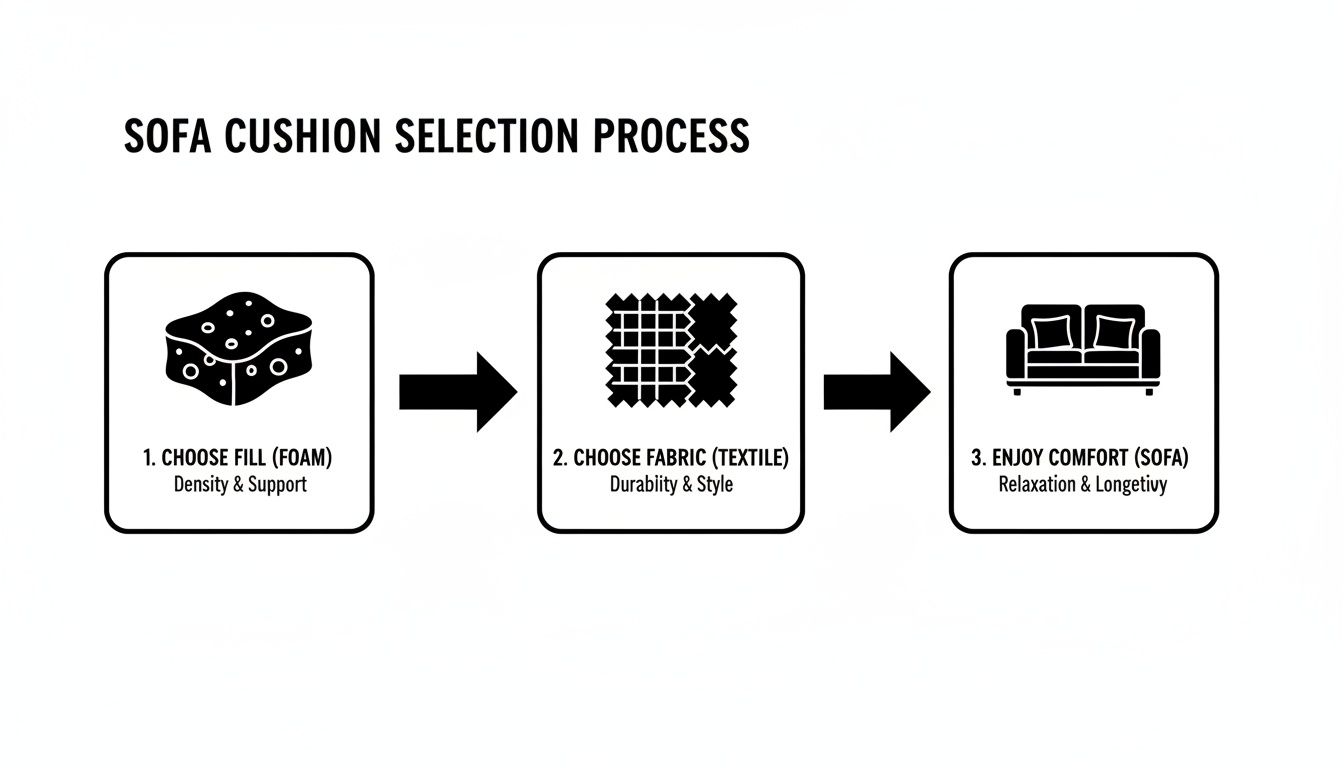
It’s a great reminder that creating comfort is a series of deliberate choices, starting with the internal feel (the fill) and moving outwards to the aesthetic (the fabric).
Layering for Depth and Interest
Once your anchor cushions are in place, you can start layering in smaller sizes to add visual depth. This is your chance to introduce different shapes and textures to build a more dynamic, interesting arrangement.
A tried-and-true method is to decrease the size with each layer. For instance, in front of your 60x60cm anchors, you could place a pair of 50x50cm or 45x45cm cushions. This gradual step-down in size is what draws the eye inward and creates that lush, multi-dimensional feel.
Here are a few combinations that I’ve found work beautifully:
- For a Standard Sofa: Start with two 60x60cm cushions, add two 50x50cm cushions in front, and finish with one central lumbar cushion (something like a 30x50cm).
- For a Deep Sofa: You’ve got more room to play with here. Try two 65x65cm cushions, followed by two 55x55cm ones, and maybe even a pair of smaller 40x40cm cushions for that extra touch of luxury.
- For a Compact Loveseat: Just scale everything down. Begin with two 50x50cm cushions and add a single 45x45cm or a lumbar cushion in the middle.
The rule of odd numbers isn’t just an old design cliché—it’s actually rooted in how our brains perceive balance. Groupings of three, five, or seven items tend to create more visual interest and feel less rigid than even-numbered arrangements.
Tailoring to Your Sofa Style
The number of cushions you use should absolutely be guided by the type of sofa you have. A sprawling sectional requires a completely different approach to a classic two-seater.
- Three-Seater Sofa: Five is often the magic number. A classic arrangement is the 2-1-2 formation: two large cushions on the outside, two slightly smaller ones next, and a single feature cushion right in the centre.
- Two-Seater Sofa (Loveseat): Three cushions usually work best. Try two matching squares at each end and a smaller, contrasting cushion in the middle for a clean, balanced look. Four can also work if you layer them (two behind, two in front).
- Large Sectional Sofa: Sectionals can handle more cushions, anywhere from five to nine. My advice is to treat the corner as the focal point. Place your largest cushion there and then arrange smaller cushions out to either side, following the odd-number rule for each section of the sofa.
Ultimately, getting the scale right is about finding a sense of visual harmony. Don't be afraid to stand back, squint your eyes, and just assess the proportions. The cushions should feel like an integral part of the sofa, enhancing its comfort and style without overpowering its design.
Building a Cohesive Colour and Texture Palette
This is where the real magic happens. Once you’ve sorted out the practicals like size and fill, crafting a thoughtful colour and texture palette is what gives your sofa its personality. It’s how you turn a simple seating area into a curated, inviting space that truly reflects your style.
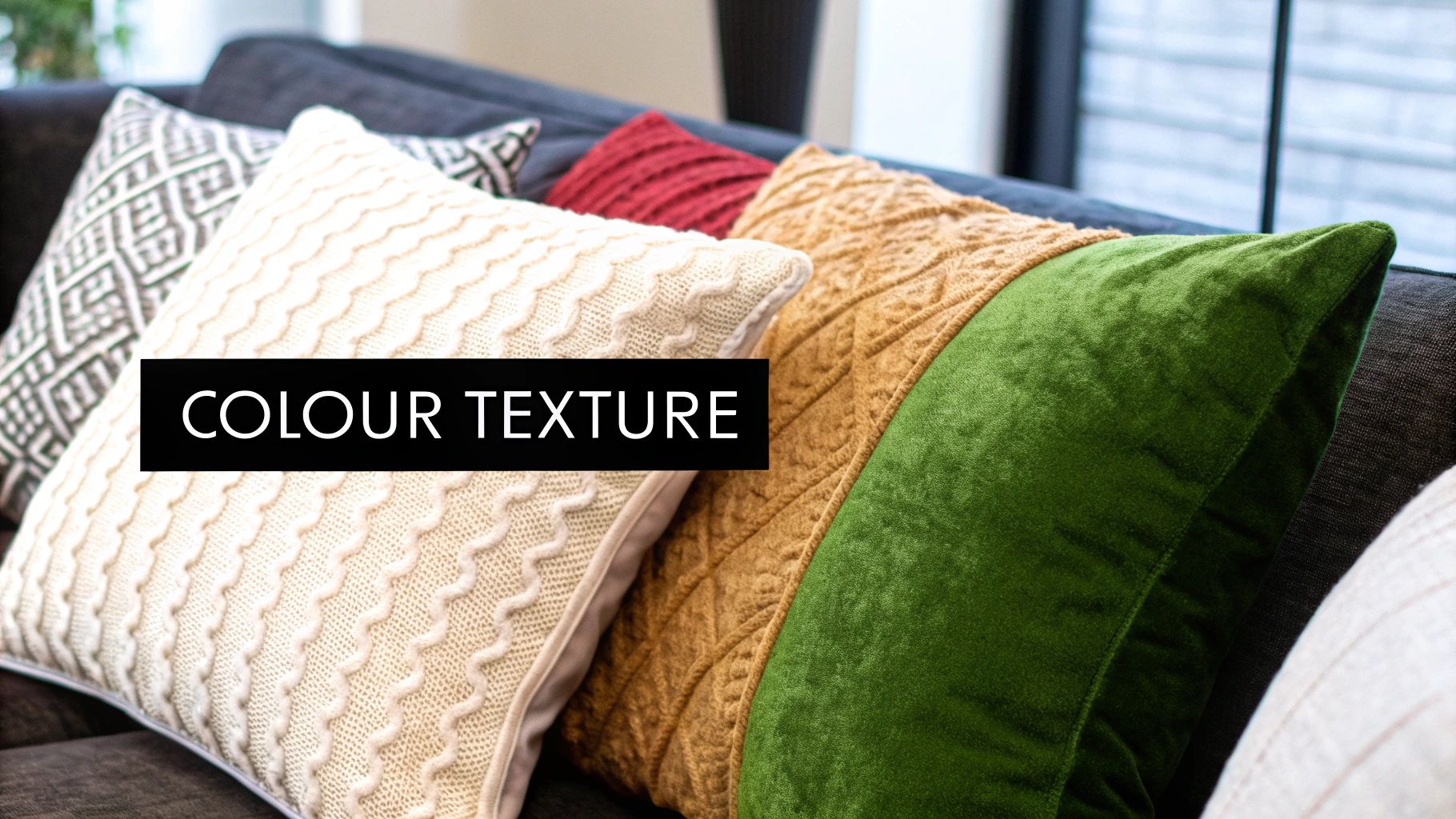
The idea is to create a collection that looks intentional, not like a random assortment of impulse buys. A well-chosen palette makes sure your cushions work with your existing decor, rather than fighting against it, creating a look that feels both professional and deeply personal.
Anchoring Your Colour Choices
The easiest way to build a colour scheme that works is to borrow from what’s already in the room. Take a good look around. Your starting point could be hiding in your rug, curtains, a favourite piece of art, or even the tones from the garden outside your window. This approach is a shortcut to a cohesive look because you're using colours that are already part of your home's DNA.
A brilliant rule of thumb I always come back to is the 60-30-10 rule. It's typically for decorating a whole room, but it works just as well on a smaller scale for your sofa cushions.
- Dominant Colour (60%): This is your base. If your rug has a deep navy blue, that’s the colour for your largest cushions.
- Secondary Colour (30%): Next, pick a supporting shade from the same inspiration piece—maybe a softer grey or a warm tan. This works perfectly for your medium-sized cushions.
- Accent Colour (10%): Lastly, choose a bold colour for your smallest cushion. A pop of burnt orange or mustard yellow can inject just the right amount of energy.
This simple method gives you a framework to follow, stopping the final look from feeling messy or accidental.
The Power of Tactile Richness
Colour is only half the equation. Texture is what makes a cushion arrangement feel complete and inviting. Mixing up different materials adds a sensory depth that colour alone just can’t achieve. It’s that richness you can feel that makes a sofa scream "come and get comfortable."
Think about pairing the cool, crisp feel of pure linen with the deep softness of velvet. Or imagine a chunky, hand-knitted wool cushion sitting next to a smooth cotton one. Each material brings its own unique character to the party.
Texture is the secret language of interior design. It communicates comfort and luxury in a way that visuals cannot. A well-curated mix of textures invites touch, turning your sofa into a sanctuary you can’t wait to sink into at the end of the day.
This interplay of different surfaces creates incredible visual interest, stopping a simple or even all-neutral colour scheme from looking flat. For example, a collection of cushions in cream, beige, and taupe can look stunningly dynamic if you mix linen, boucle, faux fur, and knits. Exploring a range of high-quality fabrics, like those in this guide to linen cushion covers, can really open your eyes to the textural possibilities.
If you want to get it just right, learning how to create a moodboard for interior design is a game-changer. It lets you see how your chosen colours and textures will actually look together before you spend a cent.
Bringing It All Together
Let’s put this into practice. Imagine you have a neutral grey sofa and a rug with shades of sage green, cream, and a hint of dusty rose.
- Start with your dominant colour. Your two largest cushions (60x60cm) could be in a solid sage green linen, pulling that main colour straight from the rug.
- Add the secondary shade. Next, layer in two slightly smaller (50x50cm) cushions in a creamy white boucle. This brings in your secondary colour and a gorgeous, inviting texture.
- Introduce the accent. Finish it off with a single lumbar cushion in a dusty rose velvet. This delivers that final pop of colour and a touch of luxe softness.
The result? A combination that feels perfectly cohesive because the colours are anchored to the room's decor, while the varied textures—smooth linen, nubby boucle, and plush velvet—create a sophisticated, multi-layered look. It’s curated, comfortable, and completely unique to your home.
Arranging Sofa Cushions Like an Interior Designer
You’ve done the hard yards—choosing the perfect fills, fabrics, sizes, and colours. Now for the fun part: styling your cushions to create a look that feels intentional and incredibly inviting. This is where a collection of beautiful cushions transforms into a cohesive, designer-inspired display.
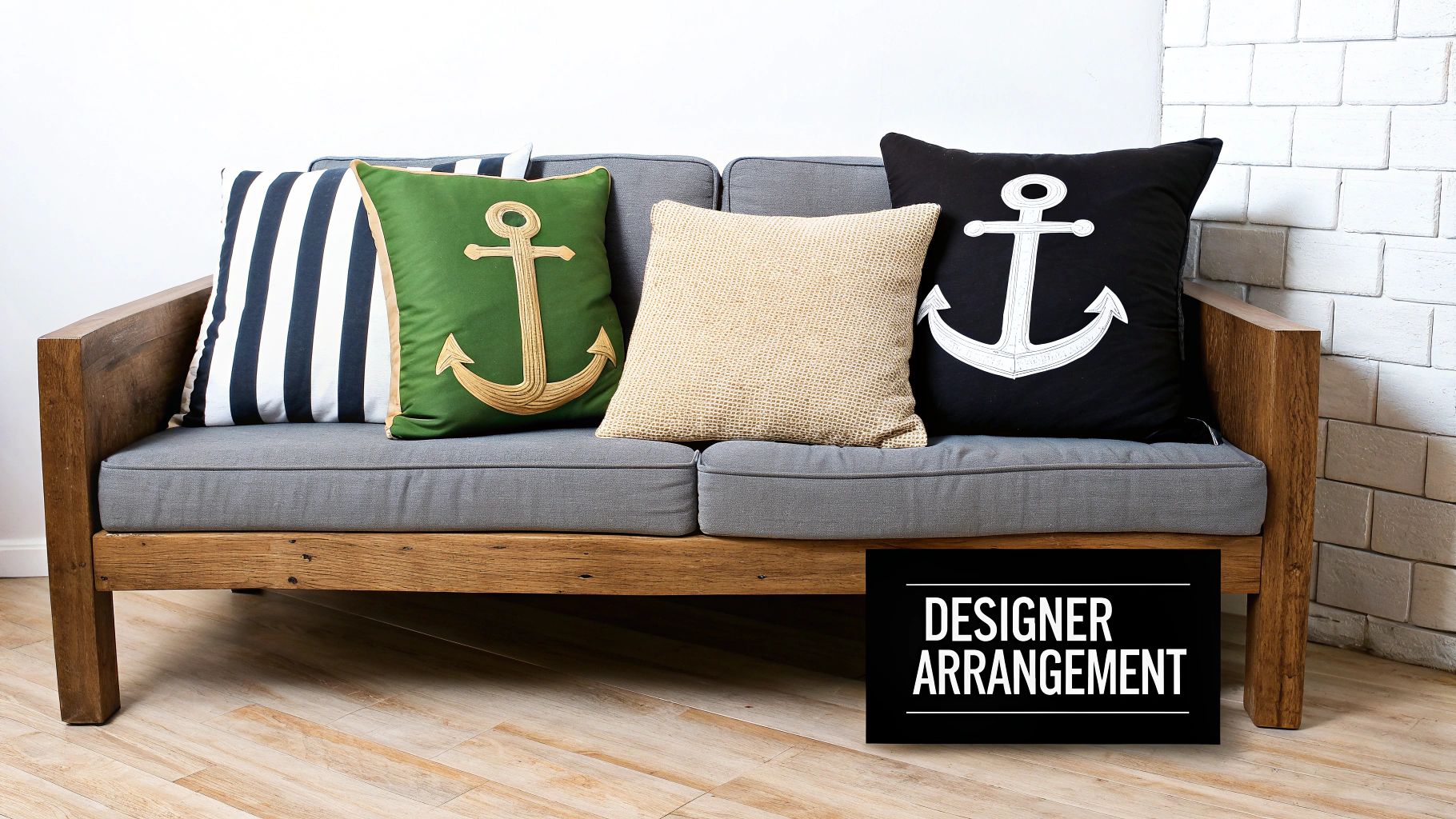
Think of arrangement as storytelling. It sets the mood for the whole room. Whether you’re chasing formal elegance or a relaxed, kick-your-feet-up vibe, the way you place your cushions makes all the difference.
The Symmetrical Standard
For a timeless, formal, and beautifully balanced look, symmetry is your best friend. This classic approach creates a sense of order and calm that feels right at home in more traditional living rooms. It's a foolproof method that always looks polished.
The trick is to start from the outside and work your way in, mirroring each side perfectly. Begin by placing your largest cushions against the sofa arms. Next, layer in a pair of slightly smaller cushions, and finish with a single, standout piece—often a lumbar or a unique round cushion—right in the centre.
This layered effect not only looks sophisticated but feels incredibly plush. The key is strict mirroring; every cushion on the left must have an identical partner on the right.
Embracing Relaxed Asymmetry
If your style leans more modern, eclectic, or just plain relaxed, an asymmetrical arrangement is the way to go. This approach feels more organic and dynamic, breaking free from rigid rules to build visual interest. It’s perfect for creating that welcoming, lived-in feel.
You’ll still use your largest cushions as anchors at each end, but the layers that follow are intentionally different. On one side, you might pair a medium square with a small rectangular cushion. On the other, maybe just a single, medium-sized cushion with a bold pattern is all you need.
The goal is to achieve balance without exact mirroring. A common formula I love is a 3-2 arrangement: a cluster of three cushions on one side and two on the other. It creates a visually engaging composition that encourages the eye to move across the sofa.
The "karate chop" is more than just a styling quirk; it’s a pro trick for making feather or down-filled cushions look their absolute best. A gentle chop to the top creates an inviting crease that breaks up the solid shape, signalling ultimate comfort and softness.
This focus on creating stylish, inviting arrangements has really taken off. In New Zealand, the way people style cushions for sofas is becoming a true statement of personal taste. It’s been fuelled by incredible online access, where 30-35% of local furniture market revenue now comes from online sales. This makes it easier than ever for Kiwis to experiment with bold patterns and beautiful, sustainable materials right from home. For a closer look at these shifts, you can explore more insights on the NZ furniture market's evolution.
Conquering the Sectional Corner
That corner of a sectional sofa can be a tricky spot. Too often, it becomes a no-man's-land for forgotten cushions. Instead, let's treat it as the powerful focal point of your entire arrangement.
Start by placing your largest, most impactful cushion right in the corner—a lush 65x65cm square works beautifully here. From this central anchor, build outwards along each side of the sectional. You can go symmetrical by adding two cushions on each side, or create an asymmetrical look by arranging three on one side and two on the other.
This simple technique grounds the entire seating area and transforms an awkward space into a stylish, deliberate feature.
Keeping Your Cushions Looking Their Best
So you’ve found the perfect cushions for your sofa—the ideal fill, the right sizes, and a stunning palette of colours and textures. Now, how do you keep them looking that good? Think of quality cushions as an investment in your home's comfort and style. A little bit of regular care is all it takes to keep them looking plush and inviting for years.
This isn’t about adding a long list of chores to your weekend. It’s about building a few simple habits into your routine to stop things like flattened fills, uneven wear, and faded fabric before they even start. With the right approach, you’ll easily extend the life of your collection and make sure your sofa stays the beautiful centrepiece of your living room.
The Foundation of Cushion Care
The single most effective thing you can do for your cushions is also the simplest: give them a regular fluff and rotation. It sounds almost too basic, but this small act makes a world of difference, especially for cushions filled with feather or down that naturally compress over time.
Think of it like plumping the pillows on your bed; it’s a quick reset that instantly makes everything look better. A good, vigorous fluff redistributes the inner fill, brings back that lovely loft, and stops permanent flat spots from forming.
Beyond that, rotation is your secret weapon. We all have a favourite spot on the couch, which means some cushions get a lot more love than others. To balance things out, get into the habit of moving your cushions around about once a week.
- Swap them side to side: Switch the cushions from the left and right ends of the sofa.
- Flip them over: If your cushion covers are the same on both sides, turn them over completely.
- Shuffle your decorative cushions: Rearrange the smaller, layered cushions so they all get equal exposure to light and wear.
A weekly "fluff and flip" is the best five-minute investment you can make in your sofa's longevity. It prevents the dreaded permanent sag, ensures even wear across all your beautiful fabrics, and keeps everything looking plump and welcoming.
Decoding Care Labels and Handling Spills
Life happens, and spills are inevitable—whether it’s a splash of coffee or a muddy paw print. Knowing how to clean your cushion covers correctly is crucial, and the care label is your ultimate guide. Always check it before you do anything else.
Different fabrics need very different handling. For instance, delicate materials like velvet or silk almost always call for professional dry cleaning to avoid damaging their texture or colour. On the other hand, hardwearing cotton or linen blends are often machine washable, which is a lifesaver in a busy home.
If you have luxury European linen, understanding its specific needs is key to maintaining its beauty. You can find everything you need to know in our detailed guide on washing and caring for luxury European linen.
When a spill does occur, time is of the essence. The faster you act, the better your chances of avoiding a permanent stain.
- Blot, Don’t Rub: Immediately grab a clean, dry cloth and blot the spill to soak up as much as you can. Rubbing only grinds the stain deeper into the fabric fibres.
- Spot-Clean Carefully: For small marks, use a damp cloth with a tiny amount of mild, clear detergent or a proper upholstery cleaner. Always test it on a hidden spot first to be safe.
- Let It Air-Dry: After cleaning, let the cover air-dry completely before you put the inner back inside. A machine dryer can cause some fabrics to shrink or lose their shape.
Simple Tricks to Refresh Your Look
Every now and then, you might feel the need for a change without wanting to start from scratch. The good news is you don’t have to. A few clever custom touches can breathe new life into your existing cushions.
Consider adding custom piping in a contrasting colour to the edges of a plain cushion. It’s a simple detail that adds a sharp, tailored finish and looks incredibly high-end. For a more playful, bohemian feel, you could add tassels or pom-poms to the corners. These small updates are a fantastic, cost-effective way to evolve your decor and keep your sofa feeling fresh season after season.
Got Questions? We've Got Answers
Even with a solid plan, a few little questions always pop up when you're in the middle of styling your sofa. It's completely normal. To wrap up, I want to tackle some of the most common decorating dilemmas we hear from our clients all the time. Think of these as the finishing touches that will help you solve those final styling puzzles and feel great about your choices.
This is your final checklist before you get to sit back and enjoy the view. Getting these small details right is what makes a space feel intentional and professionally pulled together.
How Many Cushions Should I Put on a Three-Seater Sofa?
This is easily the question I get asked most often, and the answer really depends on the vibe you’re going for. For a standard three-seater sofa, an odd number is almost always your best bet — usually three or five cushions. It just creates a more relaxed and visually interesting look than even numbers, which can sometimes feel a bit stiff and formal.
If you’re drawn to a clean, minimalist feel, three cushions is perfect. A classic layout is to place two matching larger squares (think 55cm or 60cm) at each end, then pop a contrasting lumbar cushion right in the centre. This keeps things uncluttered while still adding that essential layer of comfort and style.
But if you want that plush, layered, "sink right in" feeling, then five is your magic number. This gives you enough room to play with a beautiful mix of sizes, colours, and textures.
A fantastic and foolproof formula for five cushions is the 2-1-2 arrangement. Start with your two largest cushions at the ends, layer two slightly smaller ones in front, and then place one unique accent cushion in the middle to tie it all together. This little trick creates so much depth and sophistication.
Should My Sofa Cushions Match?
While perfectly matching cushions can create a very formal, traditional look, modern styling really leans into a more coordinated, but not identical, approach. When every cushion is the same, it can make a sofa feel a little generic—like it came straight off a showroom floor—and you miss out on that personal touch that makes a space truly yours.
Instead of matching, think cohesion. Your cushions should absolutely have a common thread, whether that’s a shared colour palette or a similar design style, so they feel like they belong together. The trick is to let them vary in size, texture, and pattern.
For example, you could pull together:
- Two solid-coloured velvet cushions.
- Two linen cushions with a subtle geometric print.
- One uniquely shaped wool or bouclé cushion.
See? They don't "match" in the old-school sense, but they work beautifully because their colours are complementary and the mix of textures is so inviting. This approach creates a far more dynamic, interesting, and personal look that tells a story.
How Do I Mix Cushion Patterns and Colours?
Mixing patterns and colours sounds more daunting than it is, I promise. It all comes down to a simple formula that creates harmony without everything looking the same.
First, lock in a tight colour palette of three to four shades. As we've talked about, the easiest way to do this is to pull those colours directly from something already in your room—your rug, a piece of art, or your curtains. This instantly grounds your choices and makes everything feel connected.
Next, choose three different patterns that vary in scale. This is the most important part of the whole process.
A classic combination that always works includes:
- One large-scale pattern: This is your hero. Think a bold floral, a wide stripe, or a big geometric design.
- One medium-scale pattern: This could be something like a smaller stripe, a classic check, or a simple dot.
- One small-scale, subtle pattern: A tiny print or even a solid-coloured fabric with a noticeable texture (like a herringbone weave) is perfect here.
Now, just distribute these patterns across your cushions. For instance, your two large anchor cushions might feature the bold, large-scale pattern. The next pair could have the medium stripe, and your final accent cushion could be that lovely solid texture. It’s this variation in scale that stops the patterns from fighting for attention, ensuring they complement each other for a polished and curated finish.
At The Foxes Den, we believe the right cushions can transform your living space into a true sanctuary. Explore our collection of luxury linen and homewares to find the perfect pieces to complete your vision. Discover more at The Foxes Den.