


Linen for Clothing: Your Guide to linen for clothing
Linen isn't just a fabric for a summer fling; it's the beginning of a long-term love affair with your wardrobe. It embodies a kind of conscious luxury and a style that doesn't shout, but confidently endures. This beautiful, natural fibre comes from the flax plant, and people who truly appreciate quality clothing value it for its breathability, its surprising strength, and the unique way it softens and settles with every wear.
Why Linen Is a Cornerstone of Sophisticated Wardrobes
When you choose linen, you're choosing more than just a piece of clothing—you're embracing a lifestyle built on thoughtful elegance. It's a fabric with a real story, woven with heritage, craftsmanship, and a deep connection to the earth. For thousands of years, it’s been the textile of choice, from ancient Egyptians seeking relief from the desert heat to contemporary designers who adore its effortless grace.
This guide is designed to take you deeper, past the surface-level charm, to really understand why linen is such a fundamental part of a truly sophisticated and sustainable wardrobe. We’ll journey from the historic flax fields of Europe to the talented hands of New Zealand artisans, looking at linen not as a seasonal buy, but as a genuine investment in your personal style.
A Fabric That Breathes and Lasts
The secret to linen’s comfort lies in its very structure. The fibres are naturally hollow, which allows air to circulate freely and wicks moisture away from your skin, keeping you cool and collected on the warmest days. But it’s not just for summer. Unlike synthetics that can feel stifling, linen is a natural insulator, making it surprisingly wearable year-round with the right layering.
Linen is one of the very few fabrics that genuinely improves with age. Each wash softens the fibres, allowing the garment to develop a unique, lived-in character that simply can't be faked.
This inherent durability means a well-crafted linen piece won't just last a season; it can be a beloved part of your wardrobe for decades. It becomes a staple, not a throwaway trend.
What You Will Discover
Think of this as your complete resource for bringing this exceptional fabric into your life. We'll be covering everything you need to know.
- The Journey from Plant to Fabric: We'll trace the fascinating path from a humble flax seed to a luxurious finished textile.
- Choosing the Perfect Linen: You'll learn how to tell the difference between various weights, weaves, and finishes to pick the perfect fabric for any piece, from a crisp shirt to a flowing dress.
- Sustainability and Craftsmanship: Discover what makes linen such an environmentally sound choice and, just as importantly, how to spot true, lasting quality.
- Lifetime Care and Styling: We'll show you the simple rituals for looking after your linen and give you ideas for building a timeless wardrobe around these beautiful pieces.
From Flax Plant to Luxury Fabric
The story of linen is one of patient transformation. It’s a journey that takes a humble flax plant and, with the help of nature and skilled hands, turns it into one of the world's most beautiful textiles. This process has more in common with cultivating a fine wine than it does with typical manufacturing; the quality of the final cloth is intrinsically linked to its origins—especially the unique soil and climate of Europe, where the world’s most revered flax is grown.
Unlike cotton, which bursts from a fluffy boll, linen fibres are tucked away inside the woody stalk of the flax plant. Getting them out involves a series of careful, traditional steps that have been perfected over centuries. This meticulous process is what gives linen clothing its signature strength, texture, and incredible longevity.
The Art of Retting and Scutching
Once the flax is harvested, the first essential step is retting. This is simply a natural process where the flax stalks are left exposed to moisture, allowing microorganisms to break down the gummy pectin that glues the precious fibres to the plant’s woody core. Think of it as gently loosening the treasure from its casing.
There are two main ways to do this:
- Dew Retting: The stalks are laid out in the fields for several weeks, letting the morning dew and rain do all the work. It’s the most eco-friendly method and even returns nutrients to the soil.
- Water Retting: The stalks are submerged in slow-moving rivers or vats. This speeds things up but requires careful management of the water.
After retting, the dried stalks move on to scutching. This is a noisy, dusty, but vital mechanical process where the brittle, woody parts of the stalk are crushed and beaten away. What’s left behind are the long, lustrous raw linen fibres, finally ready to be spun.
Understanding Linen Fibre and Yarn
So, what makes these fibres so special? It all comes down to their remarkable staple length. Cotton fibres are quite short, but flax fibres can be incredibly long—sometimes running the entire length of the stalk. This length is the secret to linen’s legendary strength and durability. When you spin these long fibres into yarn, you get a smooth, strong thread with very few weak points.
The longer the flax fibre, the stronger and smoother the linen yarn. This is exactly why high-quality European flax, which is harvested carefully to keep the fibres intact, produces a superior fabric that’s far less prone to pilling.
This is also where we see one of linen's most well-known characteristics: slubs. These are the small, naturally occurring thick-and-thin spots in the yarn. They aren't flaws at all—they’re the authentic fingerprint of real linen, adding a depth and texture that synthetic materials just can't replicate.
Spinning and Weaving the Final Fabric
Now ready for spinning, the cleaned fibres are combed to align them all in the same direction (a process known as hackling) before being spun into yarn. The exact technique and tension used here will shape the final character of the yarn, creating everything from fine threads for delicate shirting to more robust yarns for hard-wearing trousers.
Finally, this yarn is woven into fabric. For linen clothing, the most common structure is a simple over-and-under plain weave. It creates a balanced, durable cloth that beautifully showcases linen’s natural texture. The result is a textile that is crisp but soft, strong yet breathable, and ready to be made into a garment that will last a lifetime. To see these steps in more detail, you can explore our complete guide on how linen is made.
But the magic of linen doesn't stop at the loom. With every wash and every wear, the fibres relax and soften, becoming more comfortable and gaining a beautiful lustre over time. This beautiful evolution is the ultimate reward for a process so deeply rooted in nature, patience, and craftsmanship.
Choosing the Right Linen for Your Wardrobe
Stepping into the world of linen clothing can feel a bit like learning a new language. You'll hear terms like "gsm," "weave," and "finish" thrown around, and they're the keys to understanding how a garment will hang, feel, and last. Getting to grips with these basics is the difference between buying a piece that just looks nice on the hanger and one that feels incredible to wear.
I like to think of it like choosing flour for baking. A delicate cake needs a very fine, light flour, while a rustic loaf demands something with more body. It's the same with linen. The right fabric depends entirely on what you want to make, whether that's a floaty summer dress or a pair of structured trousers that will see you through the seasons.
Let’s break it down so you can move from the theory of flax fibres to making smart, tangible choices for your wardrobe.
Decoding Fabric Weight
The first and most important thing to understand is fabric weight, measured in grams per square metre (gsm). This number simply tells you how dense the fabric is. A lower gsm means a lighter, more delicate linen, while a higher gsm points to a heavier, more substantial material.
-
Lightweight Linen (under 120 gsm): This is often called handkerchief linen for a reason. It's incredibly light and semi-sheer with an airy, almost floating drape. It's the perfect choice for summer blouses, scarves, or light overlay pieces where you want maximum breathability.
-
Light-to-Mid-Weight Linen (120-150 gsm): Here's the sweet spot for much of your classic summer clothing. It’s got enough substance for dresses and skirts without feeling heavy, all while keeping you exceptionally cool.
-
Mid-Weight Linen (150-200 gsm): This is the true workhorse of the linen family. It offers a beautiful balance of softness and strength, making it the go-to for everyday shirts, relaxed trousers, and casual jackets.
-
Heavyweight Linen (over 200 gsm): Robust and durable, this linen has a more structured drape and a satisfying heft. It’s ideal for tailored blazers, outerwear, and even upholstery.
Considering linen's versatility, you'll find it in everything from elegant clothing to comfortable and stylish footwear, like these Kickabout Blue Linen shoes.
A Guide to Linen Weights and Weaves
To make it even clearer, here’s a simple table to help you match the right linen to the garment you have in mind. It brings together the weight and the way it’s woven to give you a complete picture.
| Garment Type | Ideal Weight (gsm) | Common Weave | Characteristics and Feel |
|---|---|---|---|
| Sleepwear, Scarves | 100-130 gsm | Plain Weave | Very soft, breathable, slightly sheer, and airy. |
| Summer Dresses, Blouses | 130-150 gsm | Plain or Twill | Light and breezy with a fluid drape, offering good coverage. |
| Everyday Shirts, Trousers | 150-180 gsm | Plain or Herringbone | Durable yet soft, holds its shape well, perfect for daily wear. |
| Structured Trousers, Jackets | 180-220 gsm | Twill or Damask | Substantial feel, beautiful structure, opaque, and hard-wearing. |
This table is your cheat sheet for picking the perfect fabric, ensuring the final piece not only looks right but feels right, too.
The Impact of Fabric Finish
Beyond its weight, the 'finish' of a linen fabric can completely change its texture and personality. A finish is simply a treatment applied after weaving that can soften, smooth, or add a bit of shine, tailoring the fabric for a specific look and feel.
Two of the most common finishes create wonderfully different results.
Airo-Washed Linen: This finish involves tumbling the fabric with air and water. The process relaxes the fibres, creating an exceptionally soft, supple feel with a beautifully lived-in texture. It’s the secret behind our signature sleepwear here at The Foxes Den.
Calendared Linen: In contrast, this process presses the fabric through heated rollers. This flattens the fibres and gives the linen a crisp, smooth surface with a subtle sheen. It's what you want for more formal pieces, like a sharp blazer or a structured dress that needs a polished look.
This is where provenance also comes into play. The very best linen starts with the best flax, which, as this shows, is all about the climate.
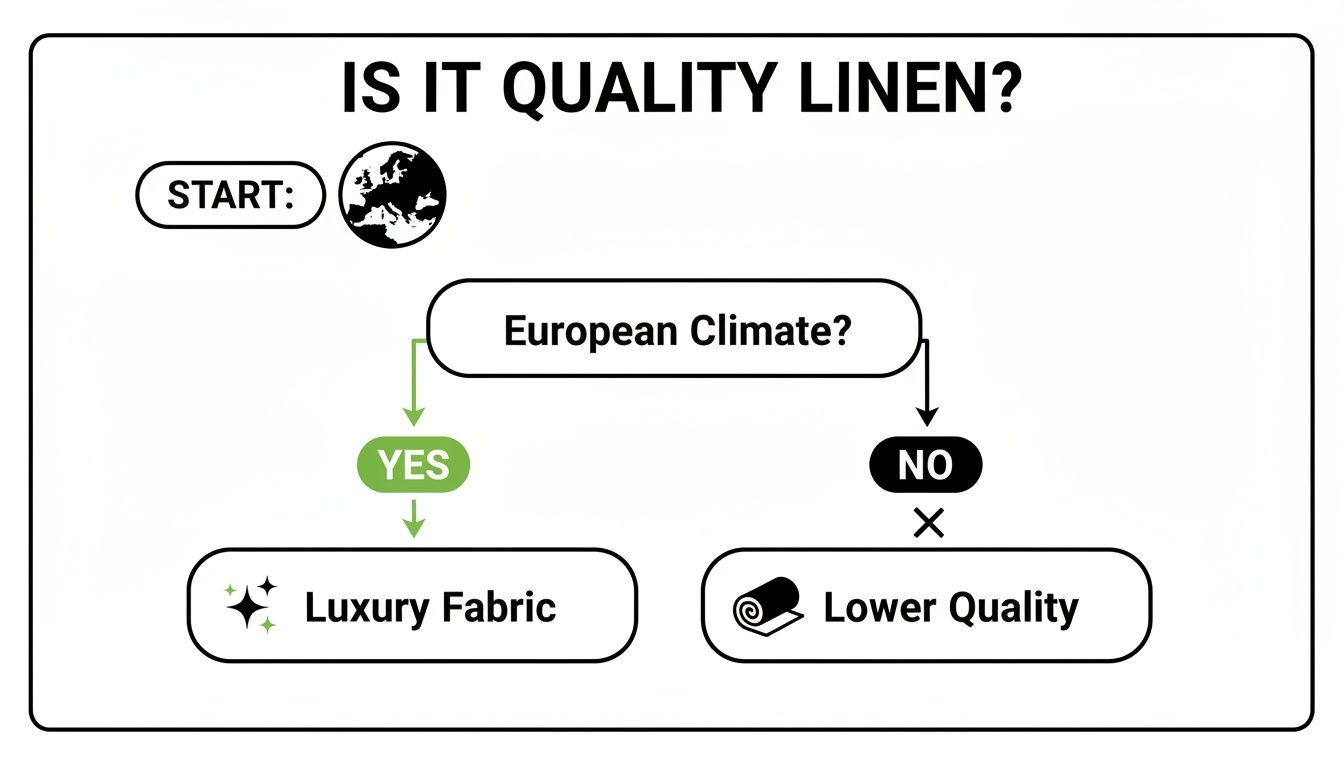
As you can see, the superior growing conditions in Europe are the foundation for producing true luxury-grade linen.
Once you understand how weight and finish work together, you can choose with real confidence. You'll know exactly why you're picking a feather-light, airo-washed linen for a gentle sleep shirt, or a crisp, mid-weight calendared linen for trousers that will hold their shape beautifully. It's this knowledge that empowers you to build a wardrobe where every single piece feels perfectly suited to its purpose.
Why Linen Is a Sustainable Luxury
In a world where we're all trying to make more thoughtful choices, linen has become more than just a beautiful fabric. It’s a quiet statement. Choosing linen is a conscious move towards a wardrobe built on quality and longevity, one that feels luxurious and leaves a lighter footprint on the planet.
It all starts with the flax plant, which is a bit of an unsung hero in the world of textiles. It’s a tough little crop that flourishes across Europe, often needing little more than what the rain clouds provide. This is a big deal when you compare it to something like conventional cotton, which is notoriously thirsty.
What’s more, flax isn't fussy. It can grow in poor-quality soil without demanding a lot of chemical fertilisers or pesticides. This hands-off approach to farming is better for the soil and the surrounding ecosystem, meaning linen's journey begins in a way that respects nature's own efficiency.
A Zero-Waste Philosophy
One of the most elegant things about flax is how completely it’s used. There's a real zero-waste ethos built right into the process; after the harvest, absolutely nothing is left behind. It’s a perfect illustration of a circular system in action.
- Long Fibres: These are the stars of the show. They’re carefully pulled from the stalk and spun into the strong, beautiful yarn that becomes our high-quality linen clothing.
- Short Fibres: The shorter fibres aren’t discarded. Instead, they're used to create things like paper, twine, or more rustic textiles.
- Seeds and Oil: You’ll know these as flaxseeds or linseeds. They're harvested for food and also pressed into linseed oil, which you’ll find in everything from paints to wood polish.
- Stalk Shives: Even the leftover woody bits of the stalk get a second life, often compressed into particleboard for construction.
This whole-plant approach means that creating linen is a process of creation, not depletion. It’s a powerful story connecting the shirt on your back to the health of the field it came from.
Durability and End of Life
Linen's sustainability credentials don't stop at the farm gate. The flax fibre is one of the strongest natural fibres on earth, which means linen clothing is made to last. This incredible durability is the essence of the "buy less, buy better" mindset. A well-crafted linen piece will be with you for years, long after its fast-fashion counterparts have been thrown away.
When you care for it properly, linen doesn’t just last—it gets better. The fabric grows softer, smoother, and more beautiful with every wash, developing a unique character that tells its own story.
This deepens our connection to our clothes, shifting them from trendy purchases to treasured investments. If you're interested in the wider world of ethical fashion, it's worth exploring smart and stylish fast fashion alternatives.
And when a pure linen garment finally does reach the end of its very long life? It can return to the earth. As a natural, plant-based material, 100% linen is completely biodegradable. If composted, it will break down without leaving any nasty residues behind.
This beautiful, circular journey—from a low-impact plant to a long-lasting garment and back to the soil—is what truly makes linen a sustainable luxury. It's a choice that reflects a deeper appreciation for integrity and harmony, not just in our wardrobes, but in our lives.
How to Identify Premium Quality Linen
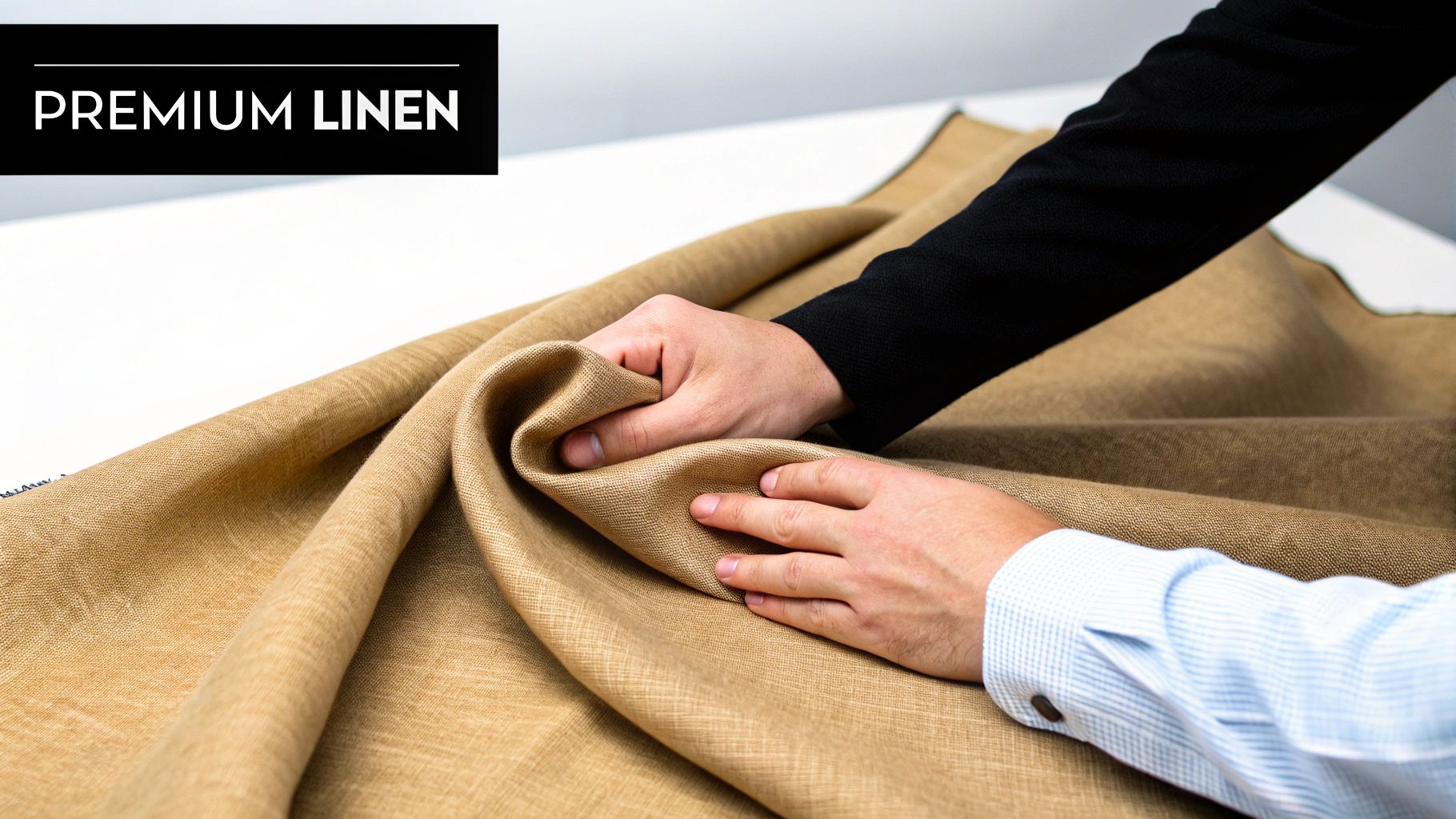
Becoming a true linen connoisseur isn't about knowing buzzwords; it's about learning to see and feel the subtle cues that separate an exceptional fabric from a merely average one. It’s a skill that completely changes how you shop, helping you choose pieces that offer genuine, lasting value. With just a little know-how, you can train your eyes and hands to spot the real deal.
Think of it like grading a diamond. An expert assesses a stone's clarity and cut, and in the same way, you can learn to evaluate linen based on its feel, weave, and where it comes from. This ensures the garment you choose isn't just beautiful today, but is crafted to last a lifetime, growing softer and more personal with every wear.
Feel the Difference with Your Hands
Your sense of touch is your most powerful tool here. When you run your hand over high-quality linen, it should feel smooth and surprisingly cool. While new linen always has a certain crispness, it should never feel harsh, scratchy, or brittle.
Instead, you're looking for a fabric that feels substantial yet supple. Inferior linen often feels flimsy or overly coarse, a dead giveaway that it was made from shorter, lower-grade flax fibres. Premium linen has an inherent strength you can feel, promising durability and that signature softening process with every wash.
A key takeaway is that true quality linen has a natural, subtle lustre. Hold the fabric up to the light—you should see a gentle sheen, not a dull, flat surface. This soft glow is the visual proof of healthy, long flax fibres.
This appreciation for high-quality natural fibres is clearly growing. In New Zealand, the home bedding market, which relies heavily on linen, is projected to expand at a healthy rate of 6.4% annually from 2025 to 2035. It's a clear signal that people are actively seeking out the comfort and eco-friendly credentials of materials like linen. You can explore more insights on this market growth.
Examine the Weave and Consistency
Next, bring the fabric closer and have a good look at its construction. A premium linen weave should be relatively tight and consistent. All genuine linen has natural variations called slubs—those charming little thicker spots in the yarn—but they shouldn't be overwhelming or overly frequent.
A fabric that is too slubby can indicate the use of short, broken fibres, which can create weak points in the garment over time. The best linen for clothing will have a balanced, uniform appearance where the slubs add character without compromising the fabric's integrity. On the flip side, be wary of any fabric that seems too perfect, as this can sometimes mean it’s been blended with synthetic fibres.
A common mistake is trying to judge linen by its thread count. While that's a key metric for cotton, linen is graded by weight (gsm) and fibre quality, not the number of threads. You can learn more about why linen doesn't have a thread count in our detailed guide on the topic.
The Ultimate Guarantee: European Flax Certification
Perhaps the single most reliable indicator of quality is its origin. The world’s finest flax is grown in a specific coastal band of Western Europe stretching from France through Belgium to the Netherlands. The unique mix of rich soil, ocean air, and generations of farming expertise creates the perfect conditions for growing long, strong flax fibres.
To be certain you’re getting the best, look for one key certification:
- European Flax®: This is a registered trademark that guarantees the linen was grown and processed in Western Europe. It's a mark of traceability and quality, assuring that the flax was farmed with zero irrigation, is GMO-free, and has no waste, as the entire plant is used.
This certification is your guarantee that the fabric's journey began with the best raw material possible. It’s a promise of superior durability, softness, and environmental responsibility, making it the gold standard for anyone seeking top-tier linen for clothing. When you see this label, you can invest with absolute confidence, knowing your garment is built on a foundation of excellence.
Caring for Your Linen for a Lifetime of Wear
When you bring a beautiful piece of quality linen clothing into your life, you're starting a long-term relationship. One of the biggest myths I hear is that linen is fussy or difficult to look after. The truth is, it’s an incredibly resilient fabric. With a few simple habits, you’ll not only maintain its beauty but actually improve it over time, encouraging that sought-after softness to emerge.
Think of caring for your linen as a gentle ritual, not a chore. With just a little attention, your garments will give back with decades of comfort and effortless style. You can forget about harsh chemicals and complicated laundry routines; the best approach honours the natural fibres with simplicity.
The Washing Ritual
The golden rule for washing linen? Be gentle. The natural flax fibres respond best to mild treatment, which protects their structure and prevents any unnecessary stress. For most of your linen pieces, a cool, gentle machine cycle is all they need.
Here’s how to get it right every time:
- Use a Mild Detergent: Opt for a gentle liquid detergent. Steer clear of anything with harsh chemicals or optical brighteners, as these can weaken the fibres and dull the colour over time.
- Keep it Cool: Wash your linen in cool or lukewarm water, ideally around 30°C. Hot water can cause the fibres to shrink and break down.
- Don’t Overcrowd: Give your linen plenty of space to move around in the machine. This helps prevent severe wrinkling and ensures a thorough yet gentle clean.
When you avoid harsh detergents and high heat, you're doing more than just cleaning your clothes—you're preserving the very integrity of the flax fibres. This simple act is what allows your linen to grow softer and more beautiful with every single wash.
Drying and Finishing Your Linen
How you dry your linen is just as crucial as how you wash it. The best method, hands down, is letting nature do the work. Air-drying is the kindest option, helping to maintain the garment's shape and preventing the damage high heat can cause. Just hang your pieces on a padded hanger or lay them flat to dry, away from direct sunlight.
If you love that classic, crisp finish, the trick is to iron while the garment is still slightly damp. Use a medium-hot iron to press the fabric for a polished look. Of course, many of us prefer to embrace linen’s natural, relaxed texture and skip the ironing altogether—it’s entirely up to you.
Proper care is the secret to unlocking the full potential of your investment. To help you master every step, from dealing with stubborn stains to seasonal storage, our comprehensive linen care guide offers detailed advice to keep your pieces looking impeccable for a lifetime.
Your Linen Clothing Questions Answered
When you're first getting to know linen, a few questions always pop up. It’s a natural fibre with a real personality, so understanding its quirks is the key to falling in love with it and making it a true staple in your wardrobe. Here are some of the most common queries we get, with simple, straightforward answers.
Does Linen Wrinkle Easily, and Can I Stop It?
Yes, it absolutely does – and that’s part of its charm! That tendency to crease isn't a flaw; it's a natural result of the crisp flax fibres linen is made from. Many of us actually embrace that soft, lived-in texture as a sign of authentic, high-quality linen.
While you can't stop it from wrinkling altogether, you can definitely manage it. The best approach is to wash your linen on a gentle cycle, making sure not to overcrowd the machine. As soon as it’s done, pull it out and hang it to air-dry on a good-quality hanger. If you prefer a sharper look, just iron it while it’s still slightly damp.
Is Linen Just for Summer, or Can I Wear It in Winter?
Linen’s reputation as the ultimate summer fabric is well-earned, but it’s surprisingly brilliant for the cooler months too. The secret lies in its natural thermoregulating properties. This just means the fibres breathe to keep you cool in the heat, but they also offer a layer of insulation when the temperature drops.
Heavier-weight linen pieces are perfect for layering. Think of a structured linen blazer or a great pair of trousers paired with soft merino or cashmere – it's an effortlessly stylish combination for those in-between seasons. Linen is a true year-round investment, far more versatile than just a summer fling.
It's clear Kiwis have a real love for natural fibres. In 2023, the household linen market in New Zealand hit a value of US$418.77 million. This steady appreciation shows a deep-seated commitment to quality materials like linen that feel as good as they look. You can discover more insights about the NZ linen market.
How Do I Know if Linen Is Good Quality Before I Buy?
Spotting premium linen is all about using your senses.
- Look at the label: First, check the origin. Fabric with a ‘European Flax’ certification is a great sign, as it guarantees high standards from the farm to the finished cloth.
- Feel the fabric: High-quality linen feels smooth and substantial, with a subtle crispness and a gentle lustre. It should never feel rough, scratchy, or brittle.
- Examine the weave: A consistent, relatively dense weave is a mark of quality. You might see small, natural variations called ‘slubs,’ which are totally normal, but the overall fabric should look and feel well-constructed.
Ultimately, the best test for quality linen is time. It's one of the few fabrics in the world that gets better, softer, and even stronger with every wash. It’s a beautiful investment that truly rewards you for years.
At The Foxes Den, we’re passionate about the enduring style and sustainable luxury of pure linen. We invite you to explore our collection of premium European linen clothing and homewares, all designed to bring a little effortless sophistication into your everyday life. Discover your next favourite piece today.