


The Ultimate Guide to Buying a Sheepskin Rug NZ
Step inside almost any stylish New Zealand home, and you’re bound to find one: the iconic sheepskin rug. It’s far more than just a piece of decor. It’s a slice of Kiwi heritage, a quiet symbol of comfort, and a nod to our country's deep pastoral roots. An authentic New Zealand sheepskin rug isn't just a purchase; it's an investment in natural, long-lasting luxury.
The Timeless Allure of New Zealand Sheepskin Rugs
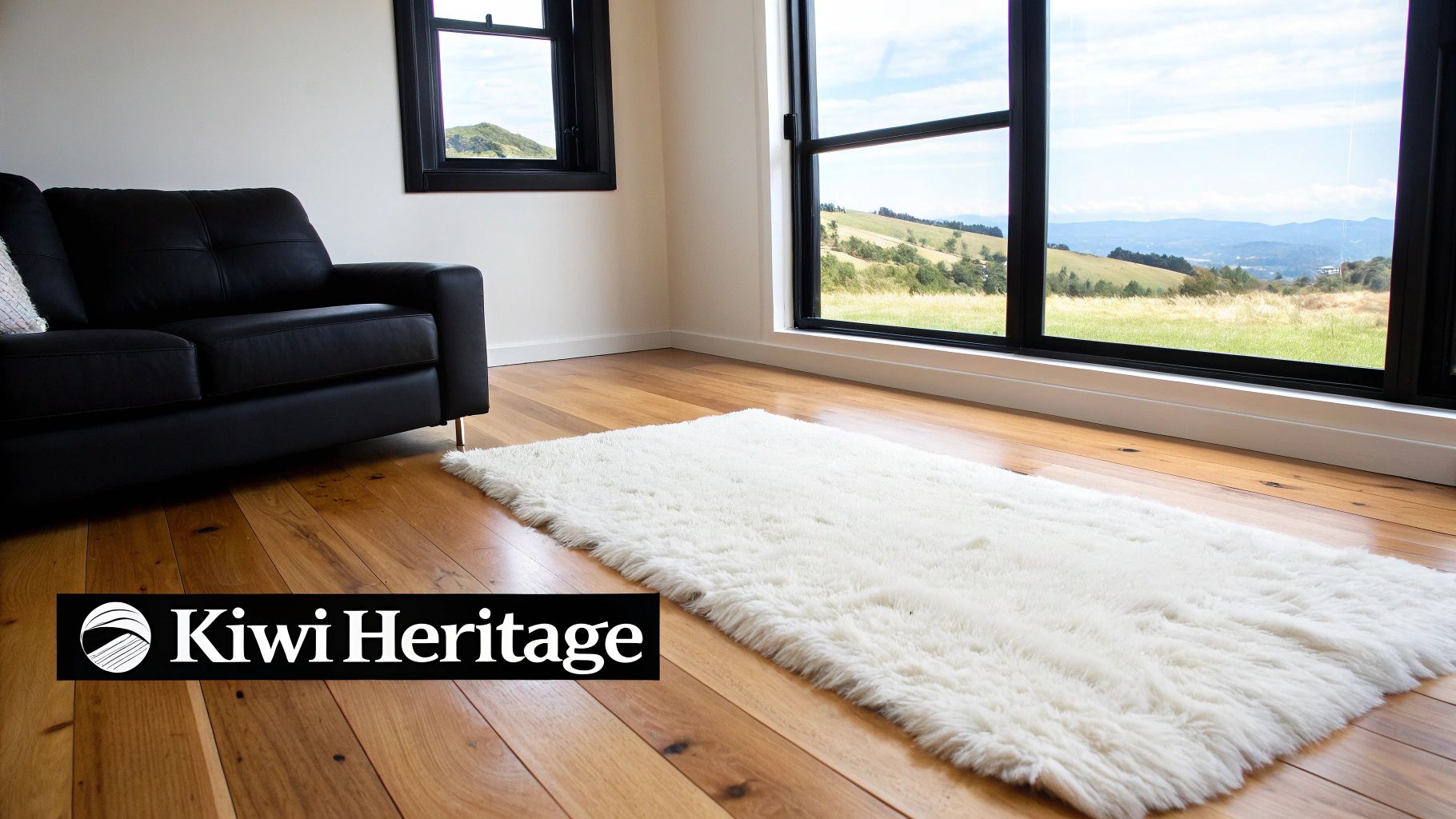
The story of New Zealand and its world-class wool is completely intertwined. For generations, our rolling green hills and mild climate have been the perfect backdrop for raising sheep that produce some of the finest, softest, and most durable wool fibres anywhere on earth. This incredible natural resource is the very heart of the sheepskin rugs loved here at home and across the globe.
But these rugs aren't just about good looks; they’re a full sensory experience. The dense, plush pile feels like a cloud under your feet, bringing instant warmth and a rich texture to any space. It’s nature’s perfect insulator—incredibly cosy through a cold winter, yet surprisingly breathable and cool when summer arrives. This makes a genuine sheepskin rug a true year-round addition to your home.
A Piece of Kiwi Heritage in Your Home
Beyond its beauty and comfort, a New Zealand sheepskin rug carries a story of quality and resourcefulness. Sourced as a natural by-product of the meat industry, it reflects a deep-seated Kiwi value: making use of every part of the animal, minimising waste, and respecting our resources. This mindful, nose-to-tail philosophy is a cornerstone of New Zealand's farming heritage.
In this guide, we'll walk you through everything you need to know to choose the perfect New Zealand sheepskin rug. We’ll cover:
- How to spot the difference between an average rug and a truly superior one.
- The various types, shapes, and sizes you'll come across.
- Simple care tips to make sure your beautiful investment lasts for decades.
By the time you're done, you'll feel confident picking out an authentic, high-quality sheepskin that will bring timeless style and comfort into your life for years. Let’s get into what makes these treasured pieces so special.
What Makes NZ Sheepskin a Mark of Quality
When you see a rug labelled "New Zealand sheepskin," it's more than just a nod to where it came from. It's a hallmark of quality, a standard recognised around the world. Not all sheepskin is created equal, and the difference comes down to a special blend of genetics, climate, and the very structure of the wool fibres themselves.
Think of each wool fibre as a tiny, perfectly coiled spring. This natural "crimp," as it's known in the industry, is what gives a premium New Zealand sheepskin its incredible bounce-back. It’s the reason the pile stays lofty and cloud-like for years, resisting that flattened, matted look you see in lower-quality rugs.
The Bedrock of Strong Wool Breeds
The secret behind this resilience starts on the farm with the sheep themselves. Breeds like the Romney and Perendale are famous for their ‘strong wool’ – a fibre that's thicker and far more robust than the fine merino used for sweaters. This strength is exactly what you want for a rug that’s meant to be lived on.
These fibres aren't just strong; they're also long and grow in incredible density. This is what creates that deep, luxurious pile that feels so supportive and soft underfoot. When you run your hands through a genuine NZ sheepskin, you feel a real substance and fullness that synthetics and inferior skins just can't imitate.
This isn't just a niche product; it's the backbone of New Zealand's agricultural identity. The local industry is built on a strong wool sector where about 80% of the nation's 23.3 million sheep produce this specific type of wool. With around 10,746 sheep farms across the country, breeds like Romney (making up about 50% of all sheep), Perendale, and Coopworth are the unsung heroes behind these beautiful rugs. You can get a deeper look into this cornerstone of the Kiwi economy in this NZ Wool Industry Fact Sheet.
The Built-In Benefits of NZ Wool
The magic of New Zealand sheepskin goes well beyond just its feel and durability. The wool itself is a bit of a natural wonder, packed with performance features that make it perfect for the home.
A single wool fibre can be bent back on itself over 20,000 times without breaking. This is why a well-cared-for NZ sheepskin rug can easily last for decades, becoming a family heirloom rather than just another piece of decor.
This incredible resilience brings a whole host of practical advantages into your living space:
- Natural Temperature Control: Wool is a brilliant insulator because it's so breathable. It traps air, keeping you warm and cosy in winter, but it also wicks moisture away, so it feels comfortable and cool underfoot in the summer.
- Fire Resistant: Unlike synthetics that can melt and burn frighteningly fast, wool is naturally flame-resistant. If exposed to a flame, it smoulders and typically extinguishes itself once the source is removed, making it a much safer choice for any home.
- Stain and Odour Resistant: Each wool fibre has a natural, waxy coating of lanolin. This clever barrier helps repel dirt and spills, giving you time to clean them up before they can set in as stains. It also naturally inhibits the bacteria that cause odours.
- Hypoallergenic: Genuine, high-quality sheepskin is naturally hypoallergenic. It’s resistant to dust mites, mould, and mildew, which helps create a healthier indoor environment for everyone, especially those with allergies.
How to Choose the Perfect Sheepskin Rug for Your Home
Choosing the right sheepskin rug is less about shopping and more about a sensory experience. It’s a decision guided by touch, sight, and a bit of practical know-how. With a little insight, you can find a piece that doesn't just fill a space but truly completes it, reflecting your style and values.
Let's walk through the key things to look for. It’s simpler than you might think.
Consider Size and Shape First
Before you fall in love with a particular rug, think about where it’s going to live. The dimensions of your sheepskin will completely change the atmosphere of a room. A small, single pelt rug is perfect for adding a cosy accent. Imagine it draped over your favourite armchair or as the first thing your feet touch when you get out of bed. It’s a little touch of luxury.
For bigger areas, multi-pelt rugs make a real statement. These are crafted by expertly stitching individual hides together to create a larger, seamless piece.
- Double Pelt: Two skins joined end-to-end, making an elegant runner for a hallway or alongside your bed.
- Quarto Pelt: Four skins (a two-by-two formation) create a beautiful area rug, ideal for placing under a coffee table or anchoring a reading nook.
- Sexto and Octo Pelts: Made from six or eight skins, these substantial rugs can define an entire living room or bedroom seating area.
The shape is just as important. The organic, natural outline of a single pelt is brilliant for softening the hard lines of modern furniture. On the other hand, a more traditional rectangular rug gives you that classic area-rug feel, but with the unmistakable softness of genuine sheepskin.
Decoding Pile Density and Length
Once you've settled on a size, it's time to think about the feel. This all comes down to two things: pile density and length.
Think of pile density as how many wool fibres are packed into every square centimetre. A rug with high density feels incredibly plush and supportive underfoot. The fibres spring right back when you walk on them, which is a sure sign of quality.
Here's a pro tip: When you part the wool on a top-quality sheepskin, you should barely be able to see the leather backing. It should look like a dense forest of fibres. This is one of the key indicators of a premium NZ sheepskin.
The length of the wool, known as pile height, defines the rug's look and feel. Long-wool rugs, with fibres often reaching 5-8 cm, have that classic, shaggy aesthetic that just begs you to sink your toes into it. They're incredibly indulgent and make a bold statement.
Shorn-wool rugs, in contrast, have a shorter, clipped pile that feels more like velvet. This style is fantastic for higher-traffic areas because it’s extremely durable and less prone to flattening over time. The choice is purely down to what you prefer—a cloud-like shag or a plush, velvety carpet?
This decision tree helps visualise the key elements that contribute to a premium New Zealand sheepskin.

As the diagram shows, a world-class sheepskin starts with the right breed of sheep living in the right climate, which together produce exceptional wool fibres.
To help you decide, here’s a quick comparison of the key features to look for.
Sheepskin Rug Feature Comparison
| Feature | What to Look For | Best For |
|---|---|---|
| Pile Density | A thick, lush feel where the leather backing is barely visible. | High-traffic areas and creating a supportive, luxurious feel underfoot. |
| Pile Height | Long wool (5-8 cm) for a shaggy look; shorn wool for a velvety finish. | Long wool is great for bedrooms and cosy nooks; shorn wool is ideal for living rooms. |
| Backing (Leather) | Soft, supple, and suede-like with no chemical odour. | A flexible backing prevents cracking and ensures the rug drapes beautifully. |
| Colour | Even, rich colour that penetrates the fibres without feeling stiff. | Natural ivory for versatility; dyed tones for adding a specific design element. |
This table should give you a good starting point for assessing the different options when you're browsing for a new rug.
The Importance of the Tanning Process
What you don't see is just as important as the wool you do. The tanning process is what turns a raw hide into the soft, supple leather backing of your rug, and it’s absolutely critical for its durability and safety.
In the past, tanning often involved some pretty harsh chemicals. Thankfully, things have changed. Many New Zealand tanneries now lead the way with eco-friendly methods that avoid nasty substances like chromium and formaldehyde. This results in a product that’s not only kinder to the planet but also much safer to have in your home.
When you're looking for a sheepskin rug in NZ, check for details on the tanning process. A high-quality, eco-tanned rug will have a lovely, suede-like backing that feels soft to the touch and has no chemical smell. This attention to detail ensures the leather stays flexible for years, without becoming stiff or brittle.
Choosing Your Colour
Now for the fun part—colour! The classic sheepskin comes in a beautiful, natural ivory. These undyed shades are incredibly versatile and work with almost any interior, from minimalist Scandi-inspired rooms to rustic, country-style homes.
But here’s a little-known fact: New Zealand wool is naturally one of the whitest in the world, which makes it the perfect canvas for dyeing. This means you can find sheepskin rugs in a stunning array of colours.
- Earthy Neutrals: Think soft greys, taupe, and charcoal. These shades bring a sophisticated, modern feel to any space.
- Rich Tones: Deep chocolate browns or even a dramatic black can create an incredibly warm and cosy atmosphere.
- Pastel Hues: Gentle pinks and blues are a popular choice for nurseries and kids' rooms, adding a soft, playful pop of colour.
A top-notch dyeing process ensures the colour is even and won't bleed, all while keeping the wool's signature softness intact. Whether you go for a natural shade or a bold custom colour, it's the perfect finishing touch.
Where Your Rug Comes From: Sourcing and Sustainability in NZ
Now more than ever, we want to know the story behind the things we bring into our homes. When you choose a sheepskin rug nz, you're doing more than just buying a beautiful piece of decor; you're connecting with a deeply ingrained Kiwi tradition of resourcefulness.
The journey of a genuine New Zealand sheepskin rug begins as a natural by-product. Here, sheep are raised primarily for meat. The skins are what’s left over, and transforming them into stunning, long-lasting rugs is a perfect example of a circular, ‘nose-to-tail’ approach. It's a practice that ensures nothing of value is wasted, turning what could have been landfill into something treasured.
This philosophy honours the animal and the resources that went into raising it. By giving the hide a second life, the industry adds value and seriously lightens its environmental footprint. It's a world away from industries that create products from scratch, consuming brand-new raw materials in the process.
Tracing Your Rug Back to Its Kiwi Roots
So, how can you be confident that your rug is the real deal, supporting local Kiwi craftsmanship? The answer is transparency. A good retailer will be proud to tell you about their supply chain.
Keep an eye out for details on where the skins are tanned. New Zealand tanneries are known for their high standards and are increasingly adopting eco-friendly processes. Tanning is the critical step that transforms a raw hide into the soft, durable leather backing of a high-quality rug. When a brand talks about its local tanning partners, that's a brilliant sign you're getting an authentic New Zealand product.
This commitment to local production and sustainable practices is a core value for many Kiwi businesses. If you're passionate about building a home with ethically sourced items, you can find more inspiration in our guide to sustainable homeware brands.
By choosing a rug with a clear link to New Zealand tanneries and manufacturers, you are directly supporting local jobs and expertise. This ensures the continuation of a craft that has been refined over generations, keeping valuable skills within the country.
How Farming Affects Supply and Quality
The supply of top-tier sheepskins is tied directly to the health of New Zealand’s sheep farming sector. The number of sheep in the country isn't static; it ebbs and flows with economic pressures, weather events, and changes in how land is used. These shifts have a real-world knock-on effect on the availability of high-quality skins for rugs.
For instance, New Zealand's total sheep flock has been on a downward trend for a while. Stats NZ reported that sheep numbers fell to 23.6 million in June 2024. That’s a 3% drop from the previous year and a hefty 21% decrease from the 29.8 million we had back in 2014. This long-term decline, driven by factors like low wool prices and land being converted to dairy or forestry, simply means fewer skins are available. You can dig into the full livestock data in this report on agricultural trends from Stats NZ.
This shrinking supply naturally makes the best-grade pelts—the ones with the thickest wool and cleanest hides—even more valuable and harder to come by. It really highlights why it’s so important to buy from a trusted source that has solid relationships with farmers and tanneries. When you invest in a quality sheepskin rug nz, you're not just buying a rug; you're acquiring a piece of a finite, precious resource shaped by the rhythms of New Zealand's unique agricultural landscape.
Essential Care Tips to Preserve Your Rug
A beautiful, high-quality sheepskin rug is an investment. It’s a piece you buy for life, and the good news is, with a bit of care, it will easily last that long. Keeping it looking its best is far simpler than most people think, thanks to the incredible natural properties of wool.
The fibres in a sheepskin rug nz are naturally resilient. They’re coated in a waxy substance called lanolin, which works as a built-in stain and dirt repellent. This means you don't need a complicated cleaning routine; a little proactive care goes a very long way in keeping your rug feeling soft and looking luxurious for years to come.
Simple Daily and Weekly Routines
The single most effective thing you can do for your rug is also the easiest: give it a good, hard shake outside once or twice a week. This simple act is brilliant for dislodging dust and everyday grit, instantly fluffing up the wool fibres and bringing back their volume.
To keep the pile from getting tangled or matted, especially if the rug is in a spot with a bit of foot traffic, a gentle brush now and then does wonders. A wire pet brush or a proper carding comb works perfectly. Just gently work through the fibres to detangle them and restore that signature fluffy, cloud-like feel.
When it comes to vacuuming, less is more. Never use a vacuum with a beater bar or a rotating brush head. These are far too aggressive and will tear and damage the delicate wool fibres. A simple suction-only nozzle is all you need. A light pass is usually enough to freshen it up.
Tackling Spills and Spots
Life happens, and so do spills. But a little accident doesn’t have to spell disaster for your rug. The trick is to get onto it straight away.
The natural lanolin in the wool gives you a bit of a grace period. It creates a temporary barrier, stopping spills from immediately soaking in. Acting quickly is your best defence against a permanent stain.
If you’ve spilled a liquid, grab a clean, dry cloth and blot the area immediately. Start from the outside of the spill and work your way in to stop it from spreading. Whatever you do, do not rub. Rubbing just grinds the liquid deeper into the pile and can damage the texture of the wool.
For spots that have dried or are a bit more stubborn, you'll need to do some spot cleaning.
- Dampen a soft cloth with a bit of lukewarm water.
- Gently blot the stain. Try not to completely soak the leather backing underneath.
- If water alone won’t shift it, add a tiny drop of a pH-neutral, wool-safe detergent.
- Rinse by blotting again with a fresh cloth dampened with clean water.
- Let it air dry completely, well away from direct sunlight or any heaters.
Washing and Professional Cleaning
For a really deep clean, most natural, undyed sheepskin rugs can be washed by hand. Just fill a tub with lukewarm water (no hotter than 38°C) and add a splash of proper wool wash. Gently squeeze the suds through the wool, then rinse it thoroughly with cool, clean water until the water runs clear.
However, if your rug is coloured or you’re just not feeling confident, a professional dry cleaner is always the safest bet. Make sure you find one that specialises in leather and fur so they know how to treat both the wool and the hide correctly.
If you’re on the hunt for dedicated cleaning products, it’s worth looking into ranges developed specifically for delicate homewares. You can find out more about the advantages of using specialist cleaners in our article introducing our new cleaning product line.
Ultimately, keeping your rug beautiful comes down to simple, consistent care. And learning more about proactive stain protection for textiles is a great way to look after not just your sheepskin, but all the soft furnishings in your home.
How to Style a Sheepskin Rug in Any Room

A sheepskin rug is one of the most adaptable pieces you can bring into your home. It's a designer's secret weapon for adding instant warmth and a layer of sophisticated texture to just about any space. Its real magic is in its ability to soften sharp, modern lines or make a cosy corner even more inviting.
While its natural home is on the floor, don't feel limited to that. Thinking outside the box can open up a world of styling possibilities.
Imagine draping a single pelt over your home office chair. It's a simple move, but it adds both ergonomic comfort for those long hours and a touch of organic luxury to a purely functional space. Likewise, placing one at the foot of your bed creates an incredibly decadent spot for your feet to land each morning.
Creating Layers and Texture
One of the most powerful ways to style a sheepskin rug in NZ is to think in layers. It’s a technique we use all the time in interior design to build visual depth and stop a room from feeling flat. A sheepskin, with its gorgeous, rich texture, is the perfect piece for this.
- On Top of Existing Rugs: Try placing a smaller, organically shaped sheepskin over a larger, low-pile rug like jute or sisal. The contrast between the rugged, natural fibre of the base rug and the cloud-like softness of the sheepskin is absolutely stunning.
- On Furniture: Toss a sheepskin throw over a sleek leather sofa. It immediately breaks up that uniform surface, adding warmth and making the whole piece feel more approachable. It works just as well on a minimalist fabric couch, creating a beautiful focal point of texture.
A well-placed sheepskin rug acts as a textural counterpoint. In a room with cool elements like concrete floors or metal accents, the rug introduces a necessary softness and warmth, creating a more balanced and welcoming atmosphere.
Sheepskin rugs are also a brilliant choice for nurseries, complementing a wide range of neutral nursery designs. Their natural softness and warmth help create that calm, gentle environment every parent wants for their little one.
Matching Different Interior Aesthetics
The beauty of a genuine sheepskin rug is its ability to chameleon its way into almost any design style, from starkly modern to richly bohemian. The secret is its natural, timeless appeal.
In a Scandinavian-inspired home, an ivory sheepskin is a must. It enhances that clean, light, and cosy (hygge) feeling, pairing beautifully with pale woods, simple lines, and a neutral colour palette. For a more rustic or bohemian look, a sheepskin adds to the layered, collected vibe. It looks right at home with other natural materials like reclaimed wood, linen, and hand-woven textiles.
This versatility is a direct result of the enduring quality of New Zealand’s wool industry. While the national flock has decreased from its peak of over 70 million sheep in the 1980s to around 26 million today, this has led to a much stronger focus on efficiency and quality. It ensures that the sheepskins available for high-end rugs are truly exceptional, even with a tighter supply.
When it comes to your bedroom, think about how a sheepskin can be the final touch that ties the whole room together. For more inspiration on introducing texture and comfort, explore our other bedroom decor ideas and start creating your perfect sanctuary.
Your Questions About Sheepskin Rugs Answered
Stepping into the world of luxury homewares can feel a bit overwhelming. To help you feel completely confident in your choice, we’ve put together some straightforward answers to the questions we hear most often about finding the perfect sheepskin rug NZ.
Are Sheepskin Rugs an Ethical Choice?
Absolutely. A genuine New Zealand sheepskin rug is a truly ethical and sustainable addition to your home. The skins are a natural by-product of our local meat industry, a long-standing practice that ensures every part of the animal is valued and nothing goes to waste.
This "nose-to-tail" philosophy is a huge part of Kiwi farming heritage. When you choose a rug tanned with modern, eco-friendly methods, you’re not just buying a beautiful object; you’re supporting a circular system that honours the animal and treads lightly on the environment.
Can Sheepskin Trigger Allergies?
It's highly unlikely. A high-quality, properly tanned sheepskin is naturally hypoallergenic, making it one of the healthiest choices for your home. The wool fibres contain a waxy substance called lanolin, which is a fantastic natural defence against dust mites, bacteria, and mould.
While a very small number of people have a specific allergy to lanolin, for almost everyone else, sheepskin is a wonderfully non-allergenic material that actually helps create a cleaner indoor space. That's why they are so popular and safe for nurseries and kids' rooms.
It’s amazing, really—wool is almost a self-cleaning fibre. It naturally manages moisture and resists static, which means it doesn’t attract dust and dirt like synthetic materials do. This quality alone helps cut down on potential allergens in your living space.
Should I Expect My New Rug to Shed?
Yes, a little bit at first. It’s completely normal for a brand new, natural sheepskin rug to shed a few loose fibres. Think of it as the rug settling in; these are just leftover bits from the tanning and finishing process. A quick shake outside or a short period of use is all it takes for this to stop.
What isn't normal is persistent, heavy shedding. If a rug keeps losing wool, it’s often a tell-tale sign of a low-quality hide or a shortcut in the tanning process. A premium sheepskin rug NZ is prized for its durability and strong wool fibres, so any initial shedding will be minimal and brief.
How Can I Tell if a Rug Is Real Sheepskin?
It’s easier than you think. There are a few simple ways to tell a genuine sheepskin from a synthetic imitation.
- Check the Backing: Flip it over. A real sheepskin has a genuine leather hide on the back—it will look and feel like soft, supple suede. A fake one will have a woven fabric backing, a dead giveaway.
- Part the Fibres: Push the wool apart and look right down at the base. On a real rug, you'll see the wool growing directly from the skin. On a fake, you’ll see a grid-like fabric mesh.
- The Feel Test: Real wool is incredibly dense, soft, and springy. Press your hand into it, and it bounces right back. Synthetics, on the other hand, often have a slippery or even sticky feel and can look unnaturally shiny.
- The Burn Test (Use Caution!): If you can safely snip a few fibres, real wool is naturally flame-resistant. It will smoulder and char when exposed to a flame, but it won’t burst into flames. It also gives off a distinct smell of burnt hair. A synthetic fibre will melt into a hard, plastic-like bead.
At The Foxes Den, we’re passionate about timeless quality and transparent sourcing. We invite you to explore our curated collection of luxurious, authentic New Zealand homewares that bring enduring style and comfort to your home. Discover the difference at https://www.thefoxesden.co.nz.