


Choosing a Double Duvet Cover Made Simple
When you choose a new double duvet cover, you're doing more than just buying another piece of linen. It's a real investment in your comfort, and it has a huge impact on your bedroom's overall feel. We'll walk you through everything you need to know, from decoding NZ and international sizing to feeling the difference between premium fabrics like Supima cotton and airo-washed linen.
This guide is all about showing you how one simple piece of bedding can define your space, protect your duvet, and completely change the way you sleep.
Why Your Duvet Cover Is a Bedroom Centrepiece
Think of your double duvet cover as the hero piece in your bedroom. It's almost always the largest expanse of colour and texture in the room, which means it sets the tone for everything else. A great cover does more than just protect your duvet inner; it turns your bedroom from a functional space into a true sanctuary.
This single item actually juggles a few key jobs:
- Design Anchor: It’s the visual foundation. The right cover makes choosing coordinating cushions, throws, and curtains a breeze.
- Comfort Layer: This is the fabric that lies against your skin all night. Its feel and breathability are crucial for a good night's sleep.
- Hygienic Barrier: It protects your duvet inner—which can be a hassle to clean—from dust, body oils, and general wear and tear.
A Growing Appreciation for Quality
We're seeing a real shift in how people think about their home textiles. It's less about fast-fashion for the home and more about investing in quality. In fact, New Zealand's home bedding market, which of course includes the double duvet cover, is projected to grow at an annual rate of 6.4% from 2025 to 2035.
This isn’t just a random statistic; it points to a wider trend of people wanting premium, long-lasting, and beautiful bedding. You can read more about the home bedding market trends to see how tastes are changing.
Your duvet cover isn't just a practical necessity; it's a statement piece. It’s the easiest way to give your bedroom a fresh new look without having to pick up a paintbrush.
Our goal here is to help you feel confident in choosing a duvet cover that not only feels amazing but also fits your personal style perfectly. Once you get a handle on the key details—size, fabric, styling, and care—you can make a choice that you'll love for years to come.
So, let's start with the most important first step: getting the measurements just right.
Getting the Right Fit for Your Double Duvet Cover
The first step toward a truly beautiful bed is getting the fit just right. Nothing ruins a polished, inviting look faster than an ill-fitting duvet cover. Whether it’s bunched up and tight or swimming in excess fabric, the wrong size can make even the most luxurious bedding look messy.
It’s a surprisingly common trap to fall into, especially with the subtle but significant differences between international sizing.
Understanding these dimensions is the key. What we call a "double" here in New Zealand isn't the same as a double in the UK or the US, and that small difference on paper can lead to a lot of frustration when your new cover arrives.
Decoding International Sizing
Shopping for bedding online has given us access to incredible designs from around the world, but it also means we have to be vigilant about sizing. A standard New Zealand double duvet cover, for instance, is designed to give you that generous drape we all love—it’s a crucial part of creating a plush, welcoming bed.
To avoid the hassle of returns and ensure your duvet inner fits perfectly—not compressed or lost inside—you need to compare the actual measurements.
Let’s quickly look at the numbers.
Here’s a simple reference guide to see how the standard double duvet cover sizes stack up across New Zealand, the UK, and the US.
International Double Duvet Cover Size Comparison (cm)
| Region | Standard Double Duvet Cover Size (cm) | Notes |
|---|---|---|
| New Zealand | 180 x 210 cm | Designed for a standard NZ double duvet, offering a nice overhang on a double mattress. |
| United Kingdom | 200 x 200 cm | A distinctly square shape that simply won't fit a rectangular NZ duvet inner correctly. |
| United States | 229 x 234 cm (Full/Queen) | Often sold as a combined "Full/Queen," which is substantially larger than an NZ double. |
As you can see, the differences are anything but minor. A UK double is perfectly square, while a US "Full/Queen" is significantly wider and longer, built for their thicker mattresses and a more dramatic look. For a flawless fit, always match your cover to your duvet inner's country of origin.
Beyond the Label: Measuring for Loft and Drape
While size charts are a great starting point, the only way to be absolutely sure is to measure your own duvet inner. Labels can fade, and you'd be surprised how often actual dimensions can vary slightly from the standard.
Even more importantly, you have to account for loft—that’s the technical term for the height or fluffiness of your duvet. A thick, high-loft down or wool duvet will fill out a cover far more than a slim, lightweight summer quilt will.
Here’s how to get it right in a few simple steps:
- Lay It Flat: Place your duvet inner on the floor or another large, flat surface.
- Smooth It Out: Gently pat it down to remove any major lumps, but don't stretch or pull the fabric. You want its natural resting size.
- Measure Width and Length: Use a tape measure to get the width and length from edge to edge.
- Add for Loft: For a particularly thick duvet, add 2–4 cm to both your measurements. This little bit of extra room stops the inner from being compressed, which would reduce its warmth and give it that strained, "sausage-casing" look.
For a deeper dive into measurements, feel free to explore our comprehensive guide to NZ duvet cover sizes.
This visual breaks down the three core functions of any quality duvet cover: providing comfort, protecting your duvet, and elevating your style.

Ultimately, a great duvet cover has to balance all three of these elements to deliver a truly superior sleep experience.
A Note on Overhang: The ideal fit allows for a graceful overhang on the sides and foot of the bed. A well-sized double duvet cover should comfortably hide the mattress and sheet layers without dragging on the floor, giving you that clean, professionally styled finish. Getting the measurements right is the foundation of this elegant drape.
Choosing Your Ideal Fabric and Weave
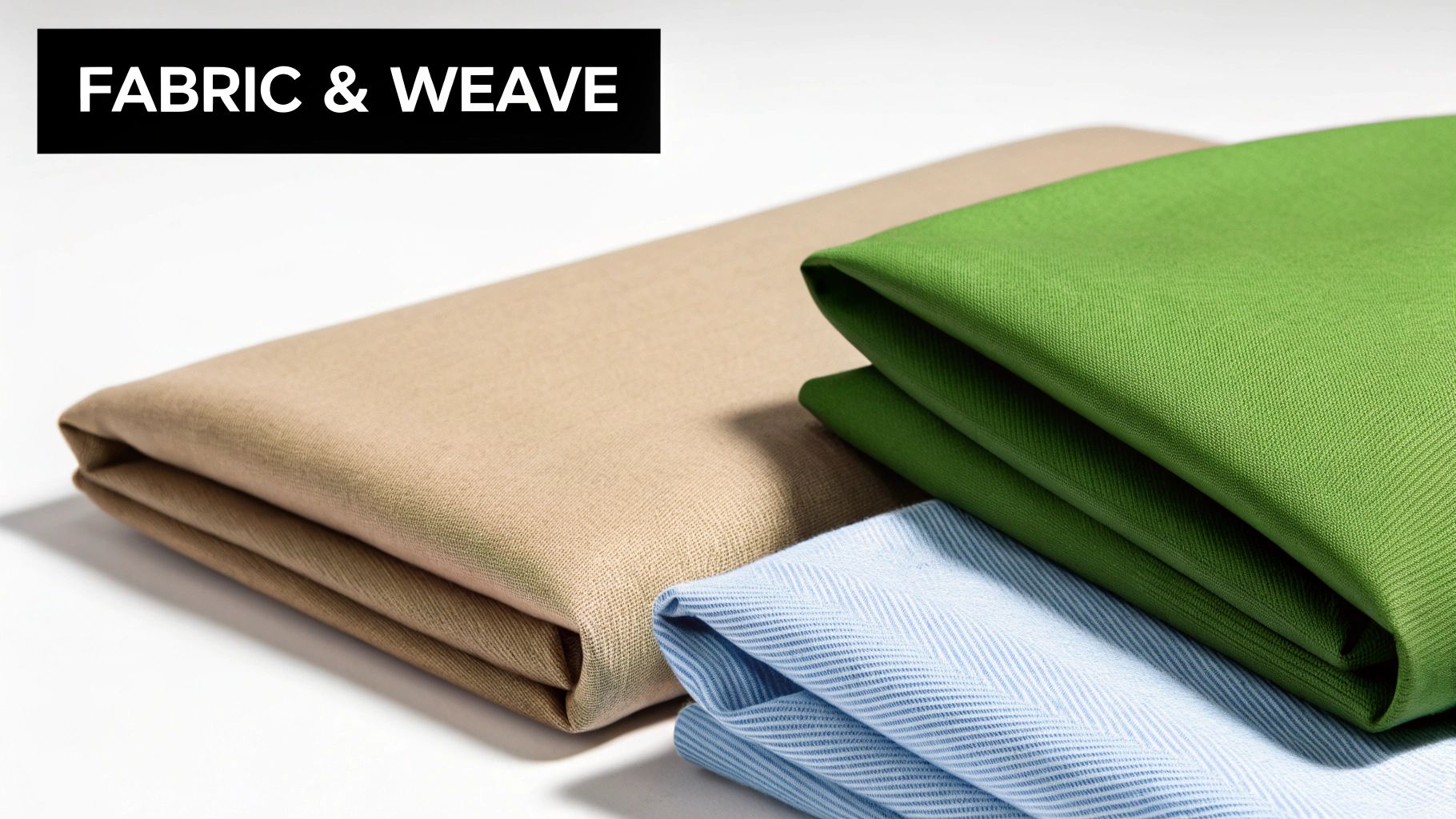
Once you’ve got the measurements dialled in, the real fun begins: choosing the material that will truly define your sleep experience. The fabric of your double duvet cover is where practicality and personal luxury meet. It's what you feel against your skin every single night, so it’s worth getting right.
Looking beyond generic labels like "100% cotton" opens up a world of distinct personalities in premium textiles. Understanding the difference between something exceptional like Supima cotton and the relaxed elegance of airo-washed linen is the key to making a choice you’ll love for years to come. This is all about finding the texture that matches your vision of pure comfort.
The Supima Cotton Difference
Let’s be clear: not all cotton is created equal. Supima cotton is in a class of its own, and it all comes down to its extra-long staple (ELS) fibres. Imagine these fibres are like individual strands of hair—the longer and smoother they are, the stronger and softer the thread you can spin from them.
Supima’s fibres are roughly 35% longer than those of regular cotton. That might not sound like much, but it has a massive impact on the finished fabric. These longer fibres are spun into finer, more uniform yarns, resulting in a material that is:
- Incredibly Soft: The smooth yarn surface creates a silky, luxurious feel against the skin that’s immediately noticeable.
- Exceptionally Durable: With fewer exposed fibre ends, the fabric is far less prone to pilling and breaking down over time.
- Vibrantly Coloured: The finer fibres absorb dye with a deep, lasting richness that resists fading, wash after wash.
A Supima cotton duvet cover is a true investment. It brings that polished, hotel-luxe feel to your bedroom and stays impeccable for years.
The Relaxed Charm of Airo-Washed Linen
Linen, made from the flax plant, offers a completely different world of sensation. Where Supima is smooth and sleek, linen is celebrated for its unique texture, incredible breathability, and effortlessly relaxed look. It has a natural, lived-in elegance that feels both rustic and incredibly refined.
The "airo-washing" is a modern finishing technique that elevates these natural qualities. The fabric is tumbled with air and a little water, which softens the fibres beautifully without harsh chemicals. This gives the linen an exquisitely soft handle and a fluid drape right from the very first use. If this sounds like your kind of thing, you can explore our detailed look into linen duvet covers in NZ for more insights.
Linen is also a high-performance fabric. It’s highly absorbent and a natural temperature regulator, wicking moisture away to keep you cool in summer and cosy in winter. Best of all, it just gets better and better, softening with every wash to develop its own unique character.
Weave The Magic: Percale Versus Sateen
Beyond the fibre itself, the way those fibres are woven together—the weave—is what determines the final texture and feel. For luxury bedding, the two most popular weaves are percale and sateen, and they couldn’t feel more different.
Weave Analogy: Think of the weave as a recipe and the fibre as the core ingredient. You can use the same premium flour (Supima cotton) to bake either a light, crisp cracker (percale) or a rich, dense cake (sateen). Same ingredient, completely different outcome.
Percale Weave
This is a classic, simple grid-like weave: one thread over, one thread under. This structure creates a fabric that is:
- Crisp and Cool: It has that light, airy feel reminiscent of five-star hotel sheeting.
- Matte Finish: It lacks the shine of sateen, offering a more understated, clean aesthetic.
- Highly Breathable: The tight weave lets air circulate freely, making it a dream for hot sleepers.
Sateen Weave
This weave uses a one-thread-under, four-threads-over pattern. By exposing more of the thread’s surface area, you get a fabric that is:
- Silky and Smooth: It feels buttery soft and has a beautiful, elegant drape.
- Lustrous Sheen: The surface reflects light, giving it a subtle, luxurious gloss.
- Slightly Warmer: Its denser structure feels a little heavier and cosier against the skin.
There’s a clear trend towards investing in high-quality home goods. Revenue in New Zealand's bedding market—which includes the ever-popular double duvet cover—is projected to hit US$63.87 million in 2025. This growth is driven by a renewed focus on home comfort and quality.
Ultimately, the choice between percale and sateen is purely down to you. Do you love sliding into a cool, crisp bed, or do you prefer being enveloped in silky softness? Your answer will lead you straight to the perfect double duvet cover for your personal sanctuary.
Styling and Layering Your Bed Like a Designer
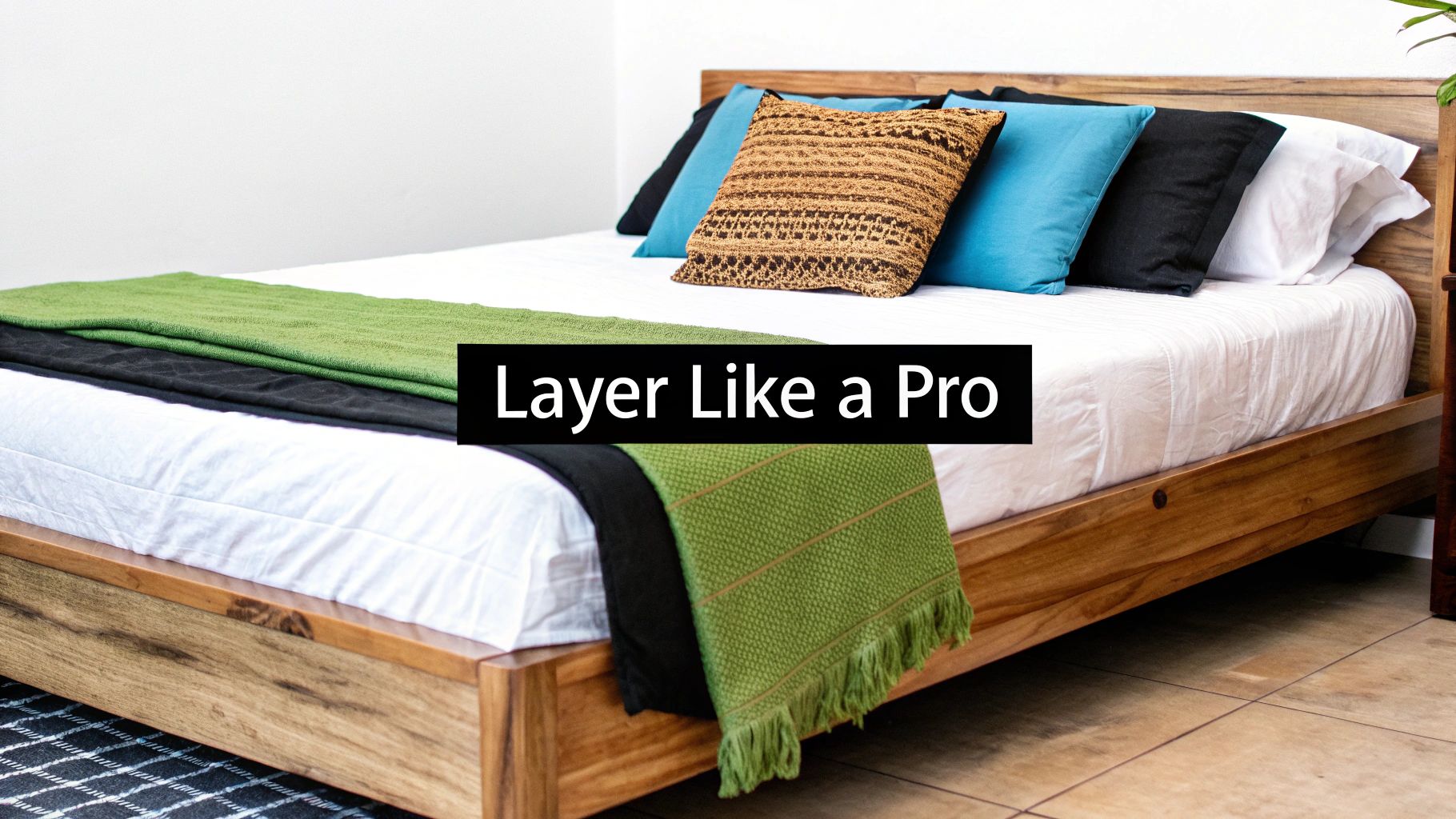
Think of your double duvet cover as the main canvas for your bedroom. It’s the starting point for creating a space that feels truly inviting and polished. Getting that boutique hotel look is all about moving beyond a simple cover and pillow combo—the real secret is in the art of layering.
By thoughtfully adding pillows, cushions, and throws, you introduce depth, texture, and a sense of curated luxury. It’s a trick designers use to make a room feel finished and welcoming, turning your bed from something purely functional into the beautiful centrepiece of the room.
Building Your Colour Palette
Before you even think about cushions, you need a clear colour scheme. Your duvet cover anchors the entire look, so its colour is your most important decision. A neutral cover in white, cream, or a soft grey gives you incredible versatility, letting you bring in seasonal colours with smaller, less expensive accessories.
On the other hand, a richly coloured or patterned duvet cover makes a bold statement all on its own. If you go this route, your layers should pick up on accent colours within the pattern to create a cohesive feel.
- Monochromatic: For a calm, serene vibe, use varying shades of a single colour. Picture a sage green duvet cover paired with deep forest green cushions and a light mint throw.
- Analogous: Choose colours that sit side-by-side on the colour wheel, like blues and greens. This creates a naturally harmonious and restful look.
- Complementary: If you’re after a more dynamic, high-contrast style, pair colours from opposite sides of the wheel—think a deep blue duvet with warm amber or terracotta cushions.
Mastering the Mix of Textures
Texture is the unsung hero of interior design. It’s what makes a space feel interesting and luxurious. A bed layered with different materials feels so much more inviting than one dressed in a single texture, encouraging you to touch and experience the space. The key is to create contrast.
Imagine pairing the silky smoothness of a sateen duvet cover with the rustic, tactile feel of a chunky knit wool throw. That juxtaposition is what creates visual and sensory appeal.
A well-styled bed is a story told through layers. Each texture, from crisp linen to plush velvet, adds a new sentence, creating a rich narrative of comfort and style that makes the entire room feel more considered and personal.
Try some of these textural combinations:
- A crisp percale cotton cover with a soft, fuzzy mohair throw.
- An airo-washed linen duvet cover with plush velvet or faux fur cushions.
- A smooth Supima cotton base with a slubby, handwoven decorative cushion.
For more inspiration on using throws for that perfect finishing touch, our guide on how to style a bed with a throw has plenty of detailed tips and visual ideas.
Arranging Pillows and Cushions
The right pillow arrangement is the final flourish that adds height and structure. A popular designer formula follows a simple rule of layering, working from the largest pillows at the back to the smallest at the front.
- Sleeping Pillows: Start with your two to four standard pillows propped up against the headboard. These are the ones you actually sleep on.
- Euro Pillows: Next, place two large, square Euro pillows in front of your sleeping pillows. They create a solid backdrop and add that touch of hotel-style structure.
- Decorative Cushions: Finish with one to three smaller decorative cushions at the very front. This is your chance to play with bold patterns, unique shapes, or standout textures.
This tiered approach creates a lovely visual slope and makes the bed look full and irresistible. And if you’re looking to elevate your entire space, consider exploring broader strategies for achieving designer style throughout your home to ensure a cohesive, sophisticated aesthetic.
Finally, decide how you want it all to look. A neatly tucked-in duvet gives you a clean, minimalist feel, while leaving it more loosely draped offers a relaxed, 'lived-in' style that’s just as chic. The choice is all yours and depends entirely on the atmosphere you want to create in your personal sanctuary.
Keeping Your Duvet Cover Beautiful for Years to Come
A beautiful double duvet cover, whether it’s crisp Supima cotton or relaxed airo-washed linen, is more than just bedding—it’s an investment in your comfort. To make that investment last, you need to care for it thoughtfully, preserving the feel of the fibres and the richness of the colour.
Proper care isn't just about cleaning. It’s about enhancing the fabric's best qualities. With linen, for instance, each gentle wash actually helps the fibres to relax and soften, making it more luxurious over time. For Supima cotton, the right routine is what prevents the pilling that can dull its signature lustre. You’re working with the material, not against it.
The Ground Rules of Fabric Care
The most critical decision you’ll make for your duvet cover’s lifespan is your choice of detergent. Harsh, chemical-heavy detergents are the enemy of natural fibres; they strip away the essential oils that keep them strong and supple, leading to brittleness and fading.
Always reach for a gentle, pH-neutral liquid detergent. Powdered versions don’t always dissolve fully in the wash, leaving behind a gritty residue that can feel abrasive on delicate threads. And whatever you do, steer clear of fabric softeners and chlorine bleach. These products create a coating on the fibres that suffocates them, reducing breathability and often causing them to yellow.
Think of your luxury linen like a fine silk garment. You wouldn't subject it to harsh industrial cleaners. The same principle applies to your bedding—gentle care is essential to preserve its texture, colour, and overall integrity.
Washing and Drying: A Tailored Approach
Different fabrics have different needs. You can’t treat your Supima cotton like your airo-washed linen and expect both to look their best. By tailoring your method, you ensure each piece stays in pristine condition.
For Supima Cotton Covers:
- Wash Temperature: Stick to a warm wash, around 40°C. It’s the perfect temperature to get things properly clean without risking shrinkage.
- Prevent Pilling: Always wash your duvet cover inside out. It's also a good idea to wash it separately from anything with zips or hooks that could snag the long, fine fibres.
- Drying: Line drying is hands-down the best way to protect the fabric. If you have to use a machine, choose a low heat setting and pull the cover out while it's still just a little damp. This helps prevent over-drying and minimises wrinkles.
For Airo-Washed Linen Covers:
- Washing: Linen loves a cold or lukewarm wash (30°C). This gentle cycle is what encourages the fibres to soften beautifully over time.
- Embrace the Texture: Give your linen room to move. Don’t cram the washing machine, as the fabric needs space to absorb plenty of water—that’s the secret to its softening process.
- Drying: Again, line drying is your friend. Wrinkles are part of linen’s relaxed charm, but if you want it extra soft, a quick tumble on low heat will do the trick. Just be sure to remove it promptly to avoid deep creases setting in.
Handling Stains and Smart Storage
Life happens, but a quick response can stop a spill from becoming a permanent blemish. For common culprits like coffee or wine, immediately blot the spot with a clean, damp cloth. Never rub—that just drives the stain deeper into the weave. For many stains, a simple paste of baking soda and water can work wonders at lifting it out before you wash.
When it’s time to put your duvet cover away, make sure it’s completely clean and dry to avoid any chance of mildew. A cool, dark, and well-aired spot like a linen closet is ideal. Avoid storing it in plastic bags, as they trap moisture and can lead to yellowing. A breathable cotton storage bag is the perfect way to keep it fresh until you’re ready to use it again.
Making a Smart Purchase in Today's Market
Now that you've got your ideal fabric and style figured out, it’s time to get into the nitty-gritty. This is where we separate a good double duvet cover from a truly great one. It’s about more than just the material; it’s the small, crucial details that signal real craftsmanship and ensure your choice is an investment that will last for years.
Think of it as the final, most important step. It’s about understanding what makes a duvet cover truly stand the test of time.
Inspecting the Details
You can always spot high-quality bedding. It doesn't shout with loud branding; instead, it whispers through quiet, thoughtful details. Before you buy, take a moment to really look at the construction. The stitching should be tight, straight, and even, with no loose threads in sight. Pay close attention to the seams and corners—these are the areas that take the most stress.
Another critical feature is the closure system. This affects not just how it looks, but your daily convenience and its overall durability.
- Buttons: Often made from beautiful materials like mother-of-pearl or wood, buttons add a classic, almost decorative touch. They’re very secure, though they can take a little more time to do up.
- Zips: For a clean, modern finish, nothing beats a concealed zip. It's by far the quickest to open and close. Just make sure it's a high-quality zip that won’t snag or break after a few uses.
- Ties: Interior corner ties are the secret weapon of a premium double duvet cover. These simple fabric ties let you secure the corners of your duvet inner, stopping it from shifting and bunching up inside the cover. It’s a small detail that makes a huge difference.
Considering Brand Ethics and Sustainability
These days, a smart purchase is also one that aligns with your values. More and more of us are looking beyond the product itself to consider a brand's ethical and environmental standards. Look for certifications like OEKO-TEX®, which guarantees the fabric is free from harmful substances. It's also worth seeking out brands that are open about their supply chains and committed to sustainable practices.
When you choose a brand that prioritises quality materials and ethical production, you’re often investing in a piece that’s designed to last, which ultimately means less waste.
A truly luxurious double duvet cover is one that not only feels good but also does good. By prioritising durability and ethical sourcing, you invest in a product that brings lasting comfort to both you and the planet.
Long-Term Value in a Shifting Market
Choosing long-term value over a cheap initial price has never been more important. The New Zealand market for cotton bed linen has changed dramatically; in 2024, revenues plummeted to just $3.8 million, a staggering drop of 96.9% from the year before. This kind of market contraction suggests that only high-quality, durable products will prove to be a sound investment. You can discover more about the recent market trends for cotton bedding in New Zealand to get the full picture.
At the end of the day, a well-made double duvet cover will stand up to countless washes, keep its colour and texture, and offer comfort for years. That longevity makes it a much smarter buy than a cheaper alternative you might have to replace in a year. By carefully checking the craftsmanship, closures, and brand values, you can confidently choose a piece that is beautiful, functional, and built to last.
Your Questions, Answered
Choosing the right bedding is an investment in your comfort, so it's natural to have a few questions. We've gathered some of the most common queries we hear from clients to help you feel completely confident in your decision.
Can I Use a Larger Duvet Cover for My Double Duvet?
While you might be tempted to go up a size for a fuller, more luxurious look, it’s best to resist. A cover that’s too large will let the duvet inner swim around inside, leading to annoying bunching and a messy bed.
For that perfect, smooth finish and a comfortable night's sleep, always match the double duvet cover dimensions to your duvet inner.
How Do I Choose Between Linen and Cotton?
This really comes down to how you sleep and the look you love.
- Go for Linen if: You tend to sleep warm or live in a place that gets hot. Linen is a champion of breathability, wicking moisture away to keep you cool. It’s also the go-to for a beautifully relaxed, textural aesthetic.
- Opt for Supima Cotton if: You love that silky-smooth, crisp hotel-bed feeling. High-quality cotton is a brilliant all-rounder, and a sateen weave, in particular, can feel wonderfully cosy on cooler nights.
What Is the Best Way to Store My Duvet Cover?
Proper storage is key to keeping your beautiful linens in top condition. Always make sure the cover is completely clean and dry before putting it away to prevent any chance of mildew. Fold it neatly and place it in a linen closet or another cool, dark spot with good air circulation.
A quick tip: Steer clear of plastic containers or bags. They can trap moisture and cause natural fibres to yellow over time. A simple, breathable cotton storage bag is a much better choice for protecting your investment.
Do I Really Need to Iron My Duvet Cover?
Honestly, this is all down to personal preference. If you’re after that sharp, five-star hotel finish, then yes, ironing your cotton duvet cover will get you there.
But many of us have fallen for the effortless, rumpled charm of natural linen—it’s part of what makes it so appealing. If ironing is the last thing you want to do, a great trick is to pull your cover from the dryer while it’s still a little damp. Put it straight on the bed and smooth it out; this will get rid of the most stubborn wrinkles.
At The Foxes Den, we believe true luxury lies in the details that make you feel at home. Explore our collections of Supima cotton and airo-washed linen to find the piece that will truly transform your sleep. Discover your perfect double duvet cover today.