


NZ Duvet Cover Sizes A Complete Guide
When you’re shopping for a new duvet cover in New Zealand, the good news is that things are refreshingly straightforward. We have standardised duvet cover sizes that are made to match our common mattress dimensions. Whether you’ve got a compact Single or a sprawling California King, there’s a size that will fit just right, making your bed look beautifully put-together and feel incredibly comfortable.
A Quick Guide to NZ Duvet Cover Sizes
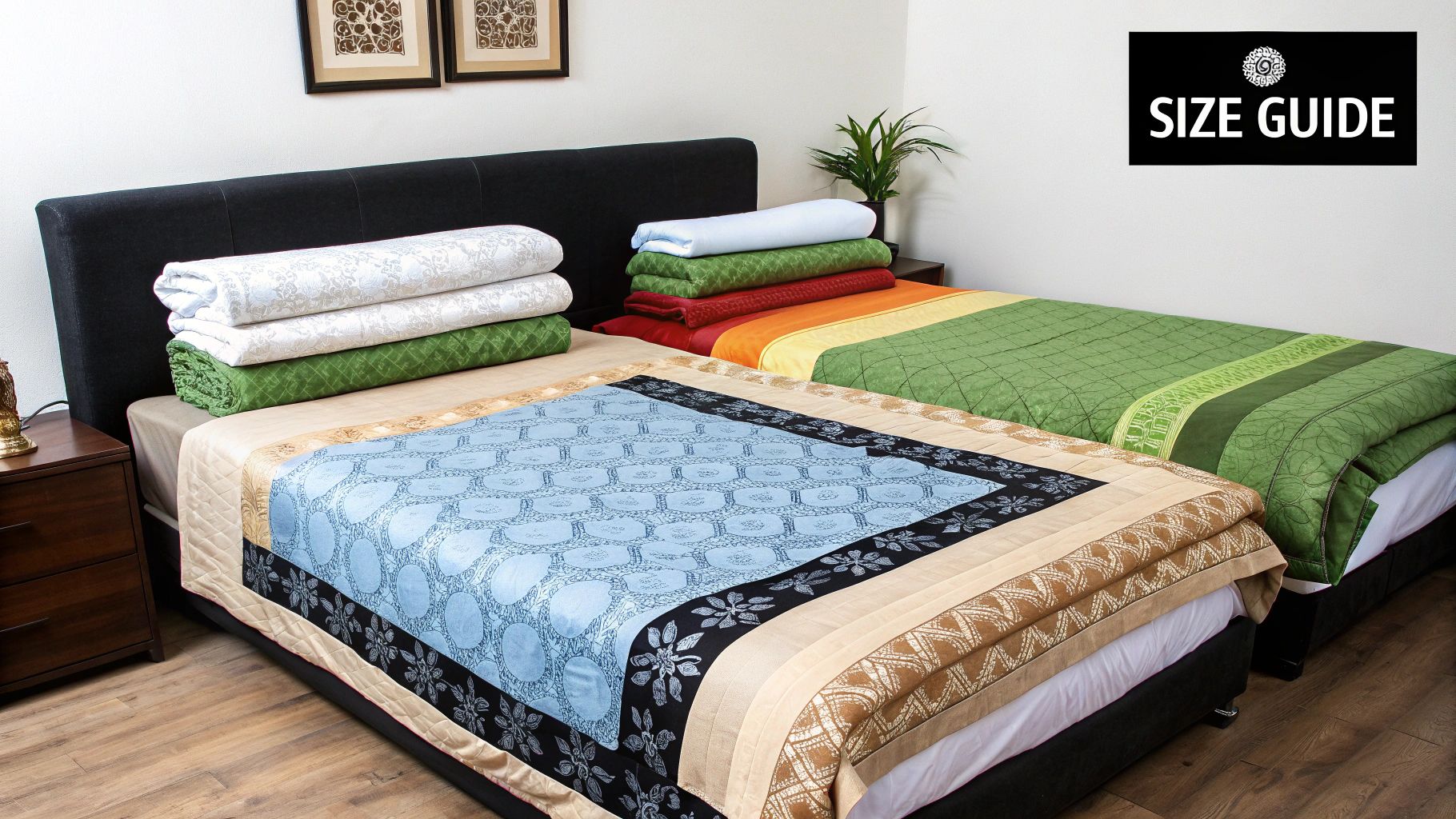
Think of standard sizing as the secret to a perfectly made bed. A correctly sized duvet cover does for your bed what a great-fitting jacket does for an outfit—it just pulls everything together. These dimensions aren't random; they're designed to give you the perfect amount of overhang for that lush, inviting look, while also keeping the duvet inner from shifting around inside.
Standard New Zealand Duvet Cover Dimensions
To make things easy, here’s a quick-glance chart of the standard duvet cover sizes you’ll find across New Zealand. It’s a great little reference to have on hand when you’re looking to invest in new luxury linens.
| Bed Size | Duvet Cover Dimensions (cm) |
|---|---|
| Single | 140 cm x 210 cm |
| King Single/Double | 180 cm x 210 cm |
| Queen | 210 cm x 210 cm |
| King | 245 cm x 210 cm |
| Super King | 265 cm x 220 cm |
| California King | 270 cm x 240 cm |
As you can see, these sizes are specifically designed for mattresses sold here in New Zealand, which is what gives you that seamless, hotel-quality fit. If you're curious about how our neighbours do it, this guide on Choosing The Right Quilt Size In Australia: Your Ultimate Guide offers a great comparison.
Understanding these standard measurements is the first step toward achieving a perfectly styled bed. It removes guesswork, allowing you to shop with confidence and focus on the textures and colours that will bring your bedroom to life.
Even with these standards, it’s always a smart idea to double-check the label before you buy, as minor differences can sometimes pop up between brands. To get the full picture for your entire bedding setup, have a look at our comprehensive bedding size chart here: https://www.thefoxesden.co.nz/blogs/the-foxes-den-blog/bedding-size-chart.
Why The Perfect Fit Matters More Than You Think
Choosing a duvet cover might feel like a simple matter of matching numbers on a chart, but the reality is a little more involved. Think of it like a well-tailored suit versus one bought straight off the rack—the right fit transforms the entire experience from just functional to genuinely exceptional. Getting the size spot-on is key for both how comfortable you are and how good your bedroom looks.
A cover that doesn't fit properly can genuinely ruin your sleep. We’ve all been there: waking up in the middle of the night, tangled in a sea of loose fabric, or shivering because the duvet has bunched up into a useless lump at one end. That common frustration is the direct result of an oversized cover that gives the inner far too much room to move around.
On the flip side, a cover that’s too small is just as bad. It will squeeze and compress your duvet, leaving it feeling dense and lumpy, completely robbing it of the lofty fluffiness and warmth it was designed to provide.
Beyond Comfort: The Visual Impact
The right fit is also the secret to creating that polished, magazine-worthy bed. When a duvet cover fits perfectly, it lays smooth and even, creating clean lines and an inviting surface. Suddenly, your bed is no longer just a piece of furniture; it becomes an intentional and elegant centrepiece for the whole room.
A well-fitted duvet gives you:
- A Tailored Look: It gets rid of those unsightly empty fabric pockets at the corners and edges, giving your bed a neat, almost custom-made appearance.
- Effortless Style: When the surface is smooth and unbunched, the fabric's unique texture, colour, and pattern can really shine.
- Balanced Proportions: The correct amount of overhang makes the bed look perfectly balanced in the room, so it doesn't seem too bulky or too sparse.
This kind of attention to detail is what elevates a room, signalling a sense of care and quiet luxury.
Achieving a Better Night's Sleep
Ultimately, it all comes down to uninterrupted rest. A duvet cover that holds its inner securely in place means you spend less time wrestling with your bedding and more time sleeping soundly. When the duvet is evenly distributed, you get consistent warmth and a comforting weight all night long, which helps you settle into a more restorative sleep cycle. In fact, countless studies have shown that a comfortable and stable sleep environment is one of the biggest keys to improving sleep quality.
Think of your duvet cover as the final, crucial layer in your sleep sanctuary. Its fit directly influences how comfortable you feel and how serene your bedroom looks, making it one of the most important details to get right.
Getting the size right isn't about blindly following a rulebook; it's about curating an experience. It’s a small investment that pays off in better sleep and a more beautiful home.
How to Measure Your Bed for a Perfect Fit
It's tempting to just go by the "Queen" or "King" label on your mattress, but that's a shortcut that often leads to disappointment. Real-world factors like mattress depth, a plush topper, or even how fluffy your duvet inner is can completely change the dimensions you actually need.
Think of it this way: your mattress size is the starting line, not the finish. A deep pillow-top mattress needs a lot more coverage than a slim, modern one to look right. Taking a few minutes to measure is the only way to guarantee that beautiful, drapey look you see in magazines.
The Three Key Measurements
Grab a tape measure—this will only take a moment. We're going to get the real story of your bed's dimensions, accounting for all the little things that standard labels miss.
-
Width and Length: First, the basics. Measure your mattress from side to side to get the width, then from the head to the foot for the length. Write these down.
-
Mattress Depth (The Secret Ingredient): This is the one most people forget! Measure from the bottom edge of your mattress right up to the top. If you have a mattress topper, you absolutely must include it in this measurement. It adds more height than you’d think.
-
Your Duvet Inner's Loft: "Loft" is just a fancy word for fluffiness. A thick, lofty wool or down duvet takes up space inside its cover. To avoid a compressed, squashed look, it’s a good idea to add an extra 5-10 cm to both your width and length measurements. This gives your duvet inner room to breathe, keeping it warm and cosy.
This quick guide gives you a visual for how these simple steps work together.
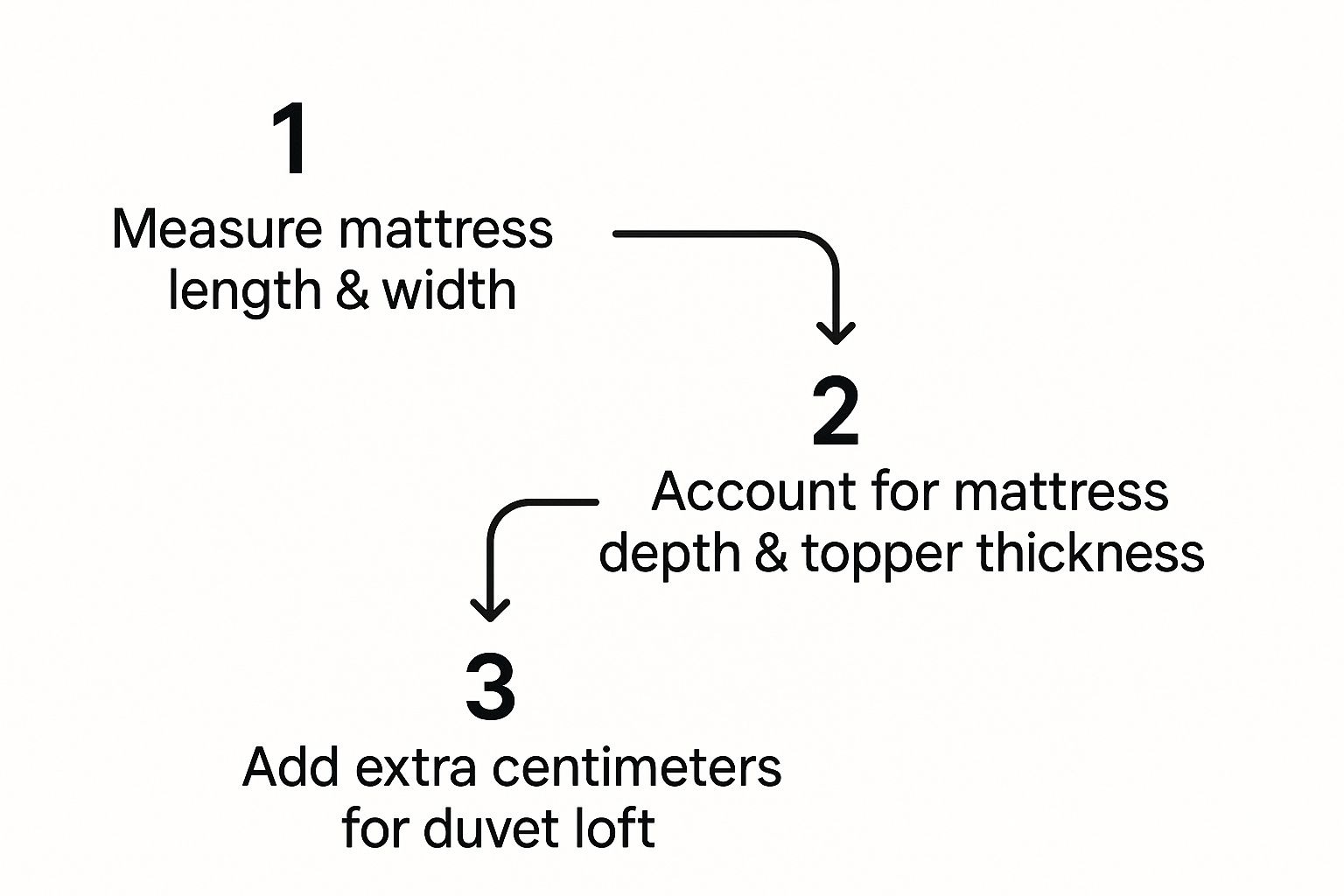
As you can see, getting it right is about thinking in three dimensions, not just the flat surface of your bed.
Finding Your Ideal Duvet Cover Size
Armed with these measurements, you can now shop with confidence. You have a precise target, which makes choosing a duvet cover that drapes elegantly over the sides and foot of your bed so much easier.
As a rule of thumb, look for a duvet cover that’s at least 30 cm wider and 20 cm longer than your mattress. This usually creates that generous, inviting overhang without the bedding pooling on the floor.
This simple process helps you skip the hassle of returns and get it right the first time. If you want to dive deeper into how this applies to your other bedding, our guide on NZ sheet sizes is the perfect next step. A few moments of measuring ensures your investment in beautiful linen pays off with a bed that looks and feels absolutely incredible.
Mastering the Art of Duvet Overhang

The secret behind a truly luxurious, inviting bed often comes down to one detail many people miss: the duvet overhang. This is simply the amount of fabric that drapes over the sides and foot of your mattress. Getting this right is less about rigid rules and more about personal style—it’s how you create a specific feeling, whether that’s minimalist and neat or opulent and cosy.
Think of it like the hem on a well-tailored pair of trousers. Too short, and it looks awkward and unfinished. Too long, and it just looks messy. But get it just right, and it creates a look of effortless polish. While standard duvet cover sizes are designed to give a decent overhang, truly mastering it is what lets you customise the look of your bed.
Choosing Your Overhang Style
How much overhang you want really depends on the aesthetic you're going for. There are generally two popular approaches, and each one sets a completely different mood for the bedroom.
-
The Minimalist Tuck: If you love a clean, modern, hotel-like look, a shorter overhang that can be tucked in neatly is perfect. This style is great for showcasing your bed frame and keeping the lines of the room crisp and uncluttered. It works especially well with low-profile platform beds where a long, flowing drape might look out of place.
-
The Lavish Drape: For that sumptuous, enveloping feeling, a generous overhang is a must. This style fully covers the mattress and often the base of the bed, creating a soft, cascading effect that feels incredibly luxurious. It's the look you so often see in high-end design magazines for a reason.
The Art of Upsizing for a Fuller Look
One of the best-kept secrets in bedroom styling is to deliberately "upsize" your duvet. It’s a simple trick: just choose a duvet and cover one size larger than your bed. For example, using a King size duvet on a Queen bed is a popular technique for achieving that lavish, billowy drape.
Using a larger size instantly creates a sense of opulence and comfort. The extra width and length give you a generous overhang that hides the mattress completely, making the bed the undeniable focal point of the room.
This method isn't just about looks; it has a practical side, too. It puts a swift end to any nighttime tug-of-war over the covers. With more duvet to go around, everyone stays comfortably wrapped up. If you want to dive deeper into how the right overhang can transform a queen bed, this Ultimate Guide to Queen Bed Doona Size is a fantastic resource.
Ultimately, the right amount of overhang boils down to your personal taste and your bed's height. A taller bed ensemble, for instance, can handle a longer drape without it puddling on the floor. Don't be afraid to play around. By thinking beyond the standard bed-and-duvet pairings, you can style your bed to perfectly match your vision of comfort and elegance.
Common Sizing Mistakes and How to Avoid Them

We’ve all been there. You find the perfect duvet cover, bring it home, and then start the frustrating wrestle only to realise it just doesn't fit. Navigating the world of duvet cover sizes can feel unnecessarily complex, but knowing the common pitfalls is the best way to sidestep them. A little bit of know-how here saves you the disappointment of a poor fit and the hassle of a return.
One of the easiest traps to fall into is assuming that a "Queen" is a "Queen" the world over. It isn’t. If you’re shopping from an international brand, you need to be careful. For instance, a US Queen size bed is a full 6 inches wider and 8 inches longer than our standard NZ Queen. That’s a massive difference that will leave your bed swimming in loose, sloppy fabric.
Forgetting About Natural Fabric Shrinkage
Another classic mistake is forgetting that gorgeous natural fibres like cotton and linen have a tendency to shrink a little, especially after their first couple of washes. It’s one of their natural characteristics, but if you don't account for it, your once-perfect cover can become frustratingly snug over time.
A high-quality linen or pure cotton duvet cover can shrink by up to 3-5%. It doesn't sound like much, but it can be the difference between a good fit and a tight one. Here’s how to get ahead of it:
- Check the Label: Look for anything that says "pre-shrunk." This means the manufacturer has already done the hard work for you.
- Size Up Slightly: If you’re buying a 100% natural fibre cover that hasn't been pre-shrunk, choosing one that's just a few centimetres bigger than your duvet inner is a smart move.
- Wash with Care: Always follow the care label. A cold wash and line drying is the kindest way to treat your linen and will keep shrinkage to an absolute minimum.
A little bit of planning here ensures your duvet cover keeps its beautifully relaxed fit for years.
Ignoring Your Duvet's Loft
It's easy to just measure the length and width of your duvet inner and call it a day. But what about its thickness, or "loft"? A big, fluffy down or wool duvet takes up a lot more space inside a cover than a thin, synthetic one does.
Think of it like trying to squeeze a bulky winter puffer jacket into a slim-fit shell. If the cover is too tight, it will squash the duvet, creating uncomfortable lumps and ruining its ability to keep you warm.
To avoid this, always add a few extra centimetres to your measurements. This gives your duvet room to breathe and allows the filling to spread out evenly. That little bit of extra space is the secret to preserving its warmth and achieving that plush, cloud-like look that makes a bed so inviting.
Your Final Duvet Cover Buying Checklist
Before you fall in love with a beautiful new duvet cover, let’s run through a quick final check. This is just a simple way to pull together everything we’ve talked about, so you can feel completely confident in your choice.
Think of it as your last-minute gut check before you commit. Answering these questions now will help you dodge those common sizing mistakes and land a duvet cover that doesn't just look amazing, but feels perfect too.
The Essential Pre-Purchase Questions
This isn't about overthinking it; it's about being deliberate. A few moments of thought right now can save you the hassle of a return and the disappointment of a cover that just doesn't sit right on your bed.
So, before you click "add to cart," quickly ask yourself these four things:
-
Have I Measured My Mattress Depth? Don't forget to include any plush mattress toppers in this measurement. This single number is the secret to getting that perfect amount of side coverage.
-
Have I Accounted for My Duvet’s Loft? A big, fluffy duvet inner needs more space to breathe. Adding a few extra centimetres to your numbers will prevent that squashed, lumpy look and feel.
-
What Overhang Style Am I Aiming For? Are you dreaming of that crisp, tucked-in hotel finish, or do you prefer a more relaxed, lavish drape that cascades over the sides? Your answer here will determine if you stick with your standard size or go one size up.
-
Have I Considered Potential Fabric Shrinkage? Natural fibres like 100% cotton or linen can shrink a little. It's always a good idea to check if the fabric is pre-shrunk or to allow for a small buffer of around 3-5% just in case.
By running through these four points, you're doing more than just matching a size on a label. You're consciously designing your sleep sanctuary for the best possible comfort and style, making sure your new linen looks every bit as stunning in your bedroom as it did online.
Frequently Asked Questions About Duvet Sizes
Even with all the charts in the world, a few common questions always seem to come up when you’re on the verge of choosing a duvet cover. Let's walk through some of the most frequent dilemmas to help you make the final call with total confidence.
Can I Use a King Duvet Cover on a Queen Bed?
You absolutely can! In fact, this is one of the best-kept secrets for creating a truly luxurious bedroom look.
Putting a larger King size duvet and cover on a Queen bed gives you that generous, flowing drape you see in high-end hotels. The extra fabric hangs beautifully over the sides, completely hiding the mattress and base for an incredibly plush, inviting feel.
The key to getting this right is to pair your King cover with a King size duvet inner. This makes sure the cover is filled out properly from corner to corner, so you won't get any annoying empty fabric or have the inner bunching up inside. If you're keen to try this, our detailed guide on the King size duvet cover size has all the extra tips you’ll need.
What If My Duvet Cover Is a Little Smaller Than My Duvet?
This might sound like a mistake, but it can actually be a clever trick. A cover that’s just slightly smaller than the duvet inner forces a snugger fit, which can make the whole thing look and feel loftier and fluffier. Popping a Super King duvet into a King cover, for instance, can really enhance its plushness.
But there’s a catch. This only works if the size difference is very small—we’re talking just a few centimetres. If the cover is too small, it will squash the inner, creating uncomfortable lumps and making it a nightmare to put on in the first place.
The goal is a fit that holds the duvet securely without strangling it. A slightly snug cover can add volume, but too much compression will ruin the look and compromise its warmth.
Do All Duvet Cover Materials Shrink After Washing?
Shrinkage is something to keep in mind, especially with natural fibres like cotton, linen, and bamboo. It's just part of their nature. Many high-quality linen brands anticipate this and will either pre-shrink the fabric or cut their covers slightly larger to account for it.
Always, always check the care label before that first wash. The safest bet to minimise any potential shrinkage is to use a cold wash cycle and line dry your cover. Synthetic fabrics like polyester, on the other hand, are far more stable and almost never shrink.
At The Foxes Den, we believe that the right fit is the foundation of a beautiful bed. Explore our curated collection of luxury linens to find the perfect duvet cover that combines exceptional quality with timeless style. Discover your perfect match at https://www.thefoxesden.co.nz.