


The Definitive Guide to King Single Duvets in New Zealand
Perfect for a king single mattress, a king single duvet offers that sweet spot of generous coverage and a luxurious drape, all without overwhelming the bed frame. It’s been specifically designed to give you more width and length than a standard single, ensuring a comfortable, well-fitted look that’s ideal for guest rooms, teenagers, or any solo sleeper who loves a bit of extra space.
What Exactly Is a King Single Duvet?
Navigating the world of bedding sizes can be confusing, with terms like single, king single, and double getting thrown around. But when it comes to making a bed look and feel just right, the fit is everything. Think of it like a perfectly tailored coat versus one that's a size too big or too small—one looks effortlessly sharp, while the other just looks off. A king single duvet is that perfectly tailored coat for your bed.
This particular size was born from a common problem. A standard single duvet often leaves a king single mattress looking a bit bare and can let in chilly drafts during the night. On the flip side, a larger queen duvet tends to swamp the bed, with too much fabric bunching up on the floor. The king single duvet is the perfect middle ground.
The Sweet Spot for NZ Beds
At its core, a king single duvet is designed to provide plenty of cosy coverage for a king single mattress. It has become the go-to solution for creating a plush, inviting bed in spaces you see all over New Zealand:
- Growing Teenagers' Rooms: It gives them the extra length and width they need, especially for those who toss and turn.
- Polished Guest Bedrooms: It provides that hotel-like comfort and a smart, well-dressed aesthetic.
- Sanctuaries for Solo Sleepers: For anyone who loves to roll over without fighting for the covers, it’s a total game-changer.
This blend of practicality and style has made it a quiet hero in many Kiwi homes. In fact, market data shows that the king single duvet, which typically measures 180cm x 210cm, makes up a solid 18-20% of all duvet sales in New Zealand. Its popularity reflects how many of us have opted for king single beds—they offer a bit more room to stretch out without taking up the space of a full queen. You can learn more about the king single duvet size and its place in NZ homes.
It’s More Than Just Dimensions
Choosing a king single duvet is really about making a conscious decision for comfort and style. It’s an investment in how your bed looks and feels, turning it from just a place to sleep into a real centrepiece of your room. A duvet that fits properly is the first step to a beautifully made bed, creating a clean, inviting silhouette that just makes you want to climb in.
When you choose the right size, you’re not just buying a blanket; you’re curating an experience. It’s the difference between a bed that does its job and one that makes you feel truly rested and at home.
Here at The Foxes Den, we believe that kind of attention to detail is what turns a house into a home. Our premium king single duvets are made with this in mind, offering the perfect dimensions and quality materials to elevate both your sleep and your style.
How to Get the Perfect Duvet Fit and Overhang
You'd think choosing the right duvet size would be simple – just match the label to your bed size, right? But if you've ever wondered why your bed doesn't have that plush, inviting look you see in magazines, the secret is all about the overhang.
Overhang is simply the amount of duvet that drapes over the sides of your mattress. It's the key to making a bed look full and luxurious, turning it from a place to sleep into a proper sanctuary. Too little, and the duvet looks skimpy; too much, and it drags on the floor. But get it just right, and you create a beautifully balanced look that also traps warmth and prevents cold spots.
Calculating Your Ideal Overhang
Getting the fit right is really just a bit of simple maths. In New Zealand, a standard king single mattress is 107cm wide by 203cm long. A duvet designed for it is quite a bit bigger, typically measuring 180cm wide by 210cm long.
This difference is deliberate. The extra width creates that gorgeous drape on either side of the bed. For a king single, you end up with about 36.5cm of overhang on each side—the sweet spot for generous coverage that doesn’t end up in a puddle on the floor. This thoughtful sizing is a huge part of its appeal.
The image below gives you a quick visual on where the king single fits within the common bedding sizes here in New Zealand.
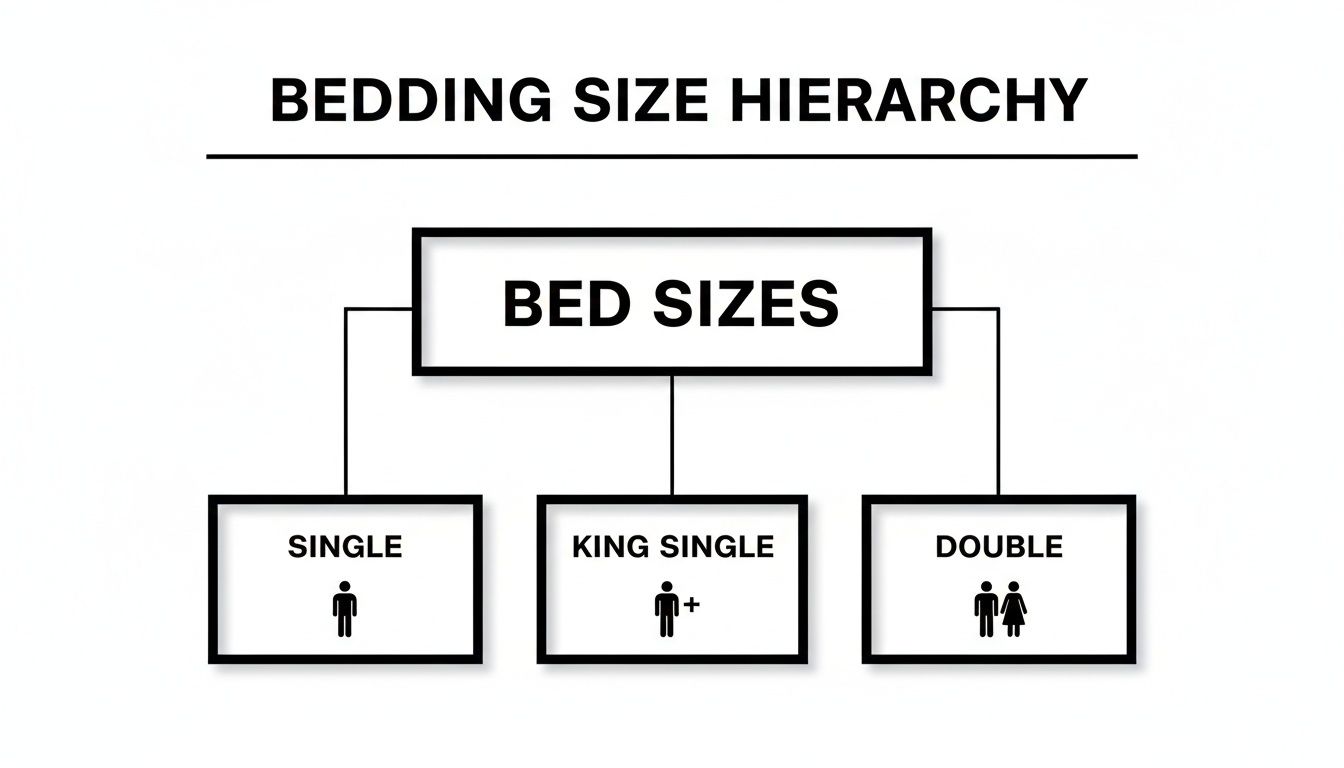
As you can see, it perfectly bridges the gap between a standard single and a double, offering a noticeable step up in comfort for one person.
Comparing NZ Bedding Sizes
To really see why the king single duvet is such a great fit, it helps to compare it against all the standard New Zealand sizes. A mismatched duvet and mattress can throw off the whole look of a room, so knowing these numbers is handy for every bed in the house.
The trend towards better, more comfortable sleep has seen king single duvets grow to make up 18-20% of all duvet sales in NZ. They offer a tailored solution that isn't oversized. A king duvet, for instance, measures a massive 245cm x 210cm and suits much larger beds, naturally claiming 25-30% of the market. The king single’s 180cm x 210cm dimensions, however, are perfectly scaled for our 107cm x 203cm mattresses, providing that ideal overhang for a tucked-in, cosy feel without any awkward excess.
This table breaks it all down, making it easy to see how much drape you can expect from each standard size.
New Zealand Bedding Size Guide Duvet vs Mattress
| Bed Size | Standard Mattress Dimensions (cm) | Recommended Duvet Dimensions (cm) | Resulting Overhang (Each Side) |
|---|---|---|---|
| Single | 91 x 190 | 140 x 210 | ~ 24.5 cm |
| King Single | 107 x 203 | 180 x 210 | ~ 36.5 cm |
| Double | 137 x 190 | 180 x 210 | ~ 21.5 cm |
| Queen | 153 x 203 | 210 x 210 | ~ 28.5 cm |
| King | 167 x 203 | 245 x 210 | ~ 39 cm |
| Super King | 183 x 203 | 265 x 210 | ~ 41 cm |
As you can see, the king single offers one of the most generous overhangs in relation to its mattress width. This isn’t an accident—it’s a design choice that delivers that signature look of effortless comfort.
Ultimately, you want your duvet to frame your bed beautifully. With these dimensions in mind, you can choose the right size with confidence, knowing you’ll get the look and the cosy feel you're after. And of course, getting the duvet right is the first step; the next is finding the perfect cover, which you can learn all about in our guide to duvet cover sizes in NZ.
Choosing Your Ideal Duvet Filling and Fabric
Getting the right size and overhang for your king single duvet is a great start, but the real magic happens with what’s inside. The filling and fabric are what truly transform a simple bed covering into your personal sanctuary, influencing everything from how warm you are to how the duvet feels against your skin.
Think of the filling as the heart of your duvet. It’s what gives it that beautiful, puffy loft, its comforting weight, and its ability to keep you at the perfect temperature all night long. Much like choosing an engine for a car, your personal needs—whether you sleep hot or cold, or have allergies—should be your guide.

Understanding Natural and Synthetic Fills
When you start looking at duvet fillings, you’ll find they generally fall into two camps: natural and synthetic. Each offers a completely different feel and set of benefits, so the best choice really comes down to your sleep style and what you value in your bedding.
Natural Fills are loved for their incredible warmth-to-weight ratio and breathability. These include:
- Feather and Down: Sourced ethically, down gives you amazing loft and warmth without feeling heavy. The delicate clusters are brilliant at trapping air, creating a duvet that's light, fluffy, and incredibly cosy.
- New Zealand Wool: Wool is a bit of a wonder-fibre. It’s a fantastic natural insulator but is also remarkably breathable. It has this unique knack for wicking moisture away from your body, keeping you dry and comfortable whether the night is cool or warm.
Synthetic Fills, on the other hand, are designed to replicate the qualities of natural materials. For anyone with allergies or sensitivities, premium microfibre fillings are an excellent alternative, offering plenty of warmth and softness in a package that's easy to look after and completely hypoallergenic.
The right duvet filling should feel like it was made just for you. It’s the invisible element that works all night to keep your sleep environment perfectly balanced, allowing for deeper, more restorative rest.
The Importance of the Outer Shell
While the filling does the heavy lifting for comfort, the outer fabric—or shell—is what you actually touch. The quality of this material is just as vital, as it impacts the duvet's softness, durability, and how well it breathes. A beautiful filling deserves an equally beautiful shell to let it perform at its best.
You wouldn’t wrap a precious gift in cheap, crinkly paper, would you? The same idea applies here. A high-quality cotton or pure linen shell is the perfect partner for a premium fill.
Natural Fabrics for Unmatched Comfort
Here at The Foxes Den, we’re big believers in the power of natural fibres. They just work better with your body, enhancing the performance of the duvet’s inner filling and creating a far superior sleep experience.
Two of our favourite choices for duvet shells are:
- Airo-Washed Linen: Famous for its relaxed look and incredible breathability, linen is a classic for a reason. Our airo-washing process softens the fibres right from the start, giving it a beautiful drape and feel. Linen is also exceptionally durable and just gets softer the more you wash it. You can learn more about our passion for luxury linen in NZ on our blog.
- Supima® Cotton: This isn’t your average cotton. Supima® represents the top 1% of cotton grown in the world. Its extra-long staple fibres create a fabric that is noticeably softer, stronger, and holds colour more vibrantly. That smooth, silky feel against the skin is pure indulgence.
Ultimately, choosing your ideal duvet is about curating your own comfort. When you understand how the filling and fabric work together, you can find a king single duvet that not only looks stunning but also helps you get a deeply satisfying and restful night’s sleep, every single night.
Getting the Warmth Right for New Zealand's Seasons
So, you’ve settled on the perfect size and fill for your king single duvet. Now for the final, crucial piece of the puzzle: getting the warmth just right. You’ll probably come across the term ‘TOG’, and while it might sound a bit technical, it’s really just a straightforward way to make sure you’re comfortable all year round.
Think of a TOG rating like layers of clothing, but for your bed. It’s simply a measure of how well a duvet traps warm air. One of the biggest misconceptions is that weight equals warmth, but that’s not the case. A light, fluffy, high-quality down duvet can easily be warmer—and have a higher TOG rating—than a much heavier synthetic one.
What TOG Means for Kiwi Homes
Understanding TOG is the secret to a great night's sleep, especially here in New Zealand where we can get four seasons in one day. Picking the right duvet for our famously changeable climate makes all the difference.
Here’s a simple way to break it down:
- Low TOG (around 4.5): This is your perfect summer companion. It’s light, airy, and breathable, so you stay comfortable on those balmy nights without overheating. Think of it as the linen shirt of the bedding world.
- Medium TOG (around 9.0): Ideal for spring and autumn. This duvet offers that perfect in-between warmth for cooler nights that aren't quite cold enough for a heavy winter inner. It's your favourite cosy jumper.
- High TOG (13.5+): Meet your winter workhorse. A high TOG duvet is all about maximum insulation, trapping your body heat to keep you wonderfully snug when the temperature really drops.
The king single duvet is a huge favourite in New Zealand, making up 18-20% of all duvet sales. A big part of its appeal is this very versatility. Being able to choose a specific warmth level lets Kiwis adapt to the seasons with one smart bedding choice, which is great for both storage space and your wallet.
The All-Seasons Duvet: A Clever Solution
If you’re looking for true adaptability, the ‘all-seasons’ duvet is a brilliant piece of design. It’s actually two separate duvets—one with a low TOG (like 4.5) and another with a medium TOG (like 9.0).
Use the lightweight one through summer, switch to the medium one for autumn, and then simply clip them together for a combined 13.5 TOG to create an incredibly warm and cosy duvet for the depths of winter. It’s a modular system that keeps you perfectly comfortable with just one purchase. For more help finding the right inner for your bed, have a look at our guide on choosing duvet inners in NZ.
A duvet shouldn't just be warm; it should be the right kind of warm for you and your home. Matching the TOG to your environment is the secret to unlocking a truly restorative night's sleep.
Don't forget to factor in your own home. A modern, well-insulated house might only need a medium-TOG duvet for most of the year. On the other hand, an older villa with high ceilings and draughty windows will likely need something with a much higher TOG to stay comfortable in winter. It’s all about matching the duvet to your personal sleep style and your home’s character to find that perfect, custom-made feel.
Caring for Your Duvet to Ensure It Lasts
A beautiful duvet is an investment in years of incredible sleep. Like a favourite cashmere jumper, it needs a little TLC to keep it looking and feeling its best. The good news is, with a few simple habits, you can protect that investment and keep your duvet just as lofty and inviting as the day you brought it home.
Proper care isn't about constant, intensive cleaning. It’s more about consistent, gentle habits that will dramatically extend the life of your duvet, keeping it fresh, fluffy, and hygienic for years to come.
Simple Daily and Weekly Habits
The easiest way to keep your duvet feeling luxurious? A daily fluff. When you make the bed each morning, just give it a good, vigorous shake from the end. This one simple move redistributes the filling, stops it from clumping, and traps air inside to maintain that wonderful loft and volume.
Every week or so, give your duvet a chance to breathe. You can simply fold it back over the end of the bed for a few hours. Even better, hang it outside on a dry, breezy day (but keep it out of direct sunlight). This lets any moisture absorbed overnight evaporate, which is key to keeping the filling fresh and preventing that musty smell.
Your duvet cover is your first and best line of defence. Think of it as a protective shield against dirt, body oils, and the occasional coffee spill. Using one means you'll need to wash the duvet itself far less often, which is the single most effective way to preserve its delicate fill and structure.
Washing and Drying Guidelines
When the time comes for a proper deep clean, the right approach depends entirely on what’s inside your duvet. Always check the care label first – it’s your roadmap to success.
As a general rule of thumb, here’s what you need to know:
- Feather and Down: These natural fills are delicate. While some are machine washable, professional laundering is often the safest bet. It’s the best way to avoid damaging the delicate clusters and, crucially, to make sure it gets completely dry.
- Wool and Synthetic: Most wool and synthetic king single duvets can be washed at home, provided you have a large-capacity machine. Use a gentle, cool cycle with a mild, wool-safe detergent.
Drying is the most critical step of all. A duvet that’s even slightly damp on the inside is a recipe for mildew and clumping. Tumble dry on a low heat setting and throw in a few clean tennis balls or wool dryer balls. These will bounce around, breaking up any clumps and helping to restore that lovely fluffiness. You’ll want to stop the dryer every so often to give the duvet a good shake and check its progress. Be patient – it can take several hours, but proper drying is non-negotiable for a long and happy duvet life.
Styling Your Bed to Create a Personal Sanctuary
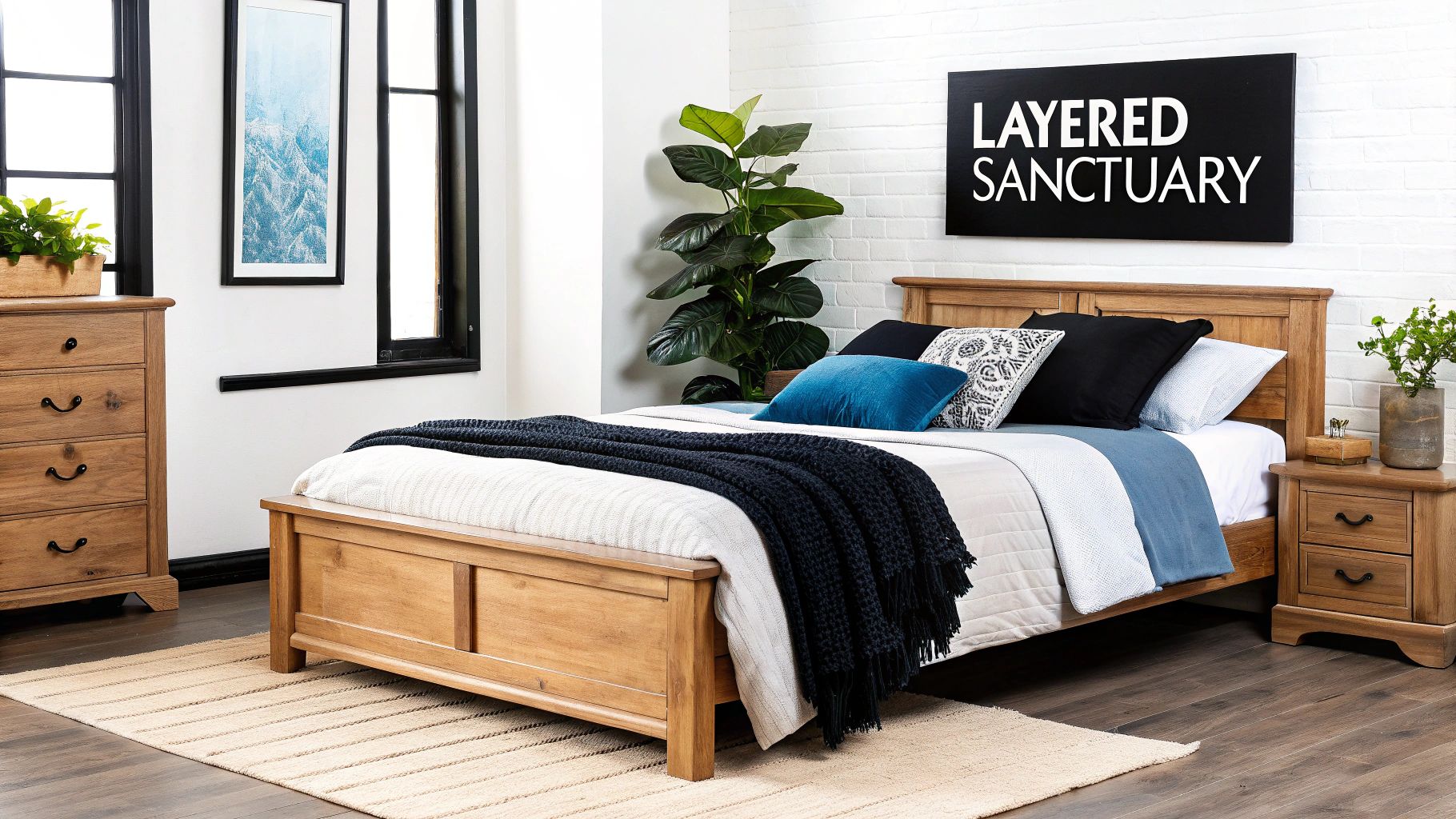
Your bed is so much more than just a place to sleep—it should be the stunning centrepiece of your own personal retreat. With your perfectly sized king single duvet as the foundation, a few simple styling techniques can transform your room into a layered, luxurious, and deeply inviting space you can't wait to come home to.
It all starts with colour. The duvet cover you choose sets the mood for the entire room. A palette of soft, earthy neutrals like warm oat, gentle sage, or classic white creates a calming, serene atmosphere perfect for promoting rest. These colours work like a beautiful blank canvas, letting the textures and layers you add truly shine.
On the other hand, if you want your bed to make a bolder statement, why not go for rich, moody tones? Think deep charcoal, warm amber, or a lush forest green. These deeper colours bring a touch of drama and sophistication, instantly making the space feel more intimate and cosy. The goal is to find a colour story that feels like you and helps you unwind at the end of the day.
The Art of Layering Textures
Once you’ve settled on your colour palette, the real magic happens with layering. This is the secret behind those effortlessly plush beds you see in magazines—it’s all about mixing different textures to add visual depth and tactile comfort.
Start with your duvet, then bring in complementary pieces. A beautifully crafted quilt or a chunky knit throw folded at the end of the bed adds an immediate layer of interest. Don't be shy about mixing materials, either. A smooth cotton duvet cover pairs wonderfully with a textured linen throw or a soft wool blanket.
Here’s a simple way to build up those layers:
- Start with the Foundation: Your king single duvet and its cover set the stage.
- Add a Quilt or Coverlet: Fold it neatly across the bottom third of the bed to introduce a new texture or a subtle pattern.
- Introduce a Throw Blanket: Casually drape a smaller throw over a corner for that organic, lived-in feel.
Curating the Perfect Pillow Combination
Pillows are the final flourish, the finishing touch that ties the whole look together. A well-styled bed goes beyond your standard sleeping pillows and includes a curated mix of shapes, sizes, and textures that echo your colour scheme.
A thoughtfully arranged collection of pillows is what truly signals luxury and comfort. It’s an invitation to lean back, relax, and enjoy the sanctuary you’ve created.
A simple but highly effective formula is to place your two standard pillows at the back, followed by two slightly larger Euro pillows in a complementary sham. Finish it all off with a single decorative cushion—perhaps a long lumbar pillow in a contrasting texture or a small, round cushion in a vibrant accent colour. This creates a balanced, appealing arrangement that looks polished without feeling cluttered.
Of course, the environment around your bed plays a huge part in the overall ambiance. To create a truly tranquil retreat, think about how natural light fills your space. Exploring some inspirational bedroom skylight ideas can reveal fantastic ways to brighten your room and complete your sanctuary. When you combine beautiful bedding with a thoughtfully designed room, you craft a truly restful escape.
A Few Final Questions About King Single Duvets
Choosing the right duvet is a big decision, and it’s natural to have a few questions before you commit. We get asked these all the time, so we’ve put together some straightforward answers to help you feel completely confident in your choice.
Can I Use a Double Duvet on a King Single Bed?
It’s a great question, and the answer is… sometimes! In New Zealand, a standard double duvet is actually the same size as a king single: 180cm x 210cm. So, if you have a modern double duvet, it should fit perfectly.
The catch is that older or internationally bought double duvets can have different dimensions. If you want to guarantee that beautiful, even drape on both sides of the bed without any guesswork, sticking with a duvet specifically labelled as a king single is your safest bet for a polished, intentional look.
How Often Should I Replace My Duvet?
This really comes down to the quality of the duvet and how well it’s looked after. A well-made duvet with a premium natural fill, like our ethically sourced down or pure New Zealand wool, is a real investment in your sleep and can easily last for over 10 years.
You'll know it’s time for a replacement when it starts to feel a bit flat or lumpy, has lost its lofty, cloud-like feel, or simply isn't keeping you as warm as it used to. Starting with a high-quality duvet from day one means you get years of comfort and much better value in the long run.
What Is the Best Duvet Filling for Allergies?
If you're an allergy sufferer, the main game is keeping dust mites at bay. For years, synthetic microfibre was seen as the only option, but today's high-quality natural fills are often just as effective—and feel so much more luxurious.
For example, premium down that has been properly cleaned is considered hypoallergenic. New Zealand wool is another fantastic choice, as its unique structure is naturally resistant to dust mites and mould. The key is to pair any duvet with a good quality cover you can wash often in hot water. For a deeper dive into creating the perfect sleep setup, you might find this complete guide to bedding, mattress protectors, and comforters really helpful.
The right duvet isn't just about size or fill; it's about finding the piece that completes your sleep sanctuary, answering both your practical needs and your desire for everyday luxury.
With these common questions answered, you can finalise your choice with complete peace of mind.
At The Foxes Den, we’ve curated a collection of beautiful king single duvets and homewares designed to bring lasting comfort and style into your home. We invite you to explore our collection and find the perfect pieces for your sanctuary at https://www.thefoxesden.co.nz.