


Your Guide to Choosing the Perfect King Size Duvet Cover
A great king size duvet cover isn't just a piece of bedding; it's the very heart of your bedroom's comfort and style. Here in New Zealand, getting it right can turn your sleep space from just a room into a real sanctuary. Let’s walk through what you need to know, from getting the Kiwi dimensions spot-on to choosing materials that feel just right for you.
Finding the Perfect King Size Duvet Cover
Choosing a king size duvet cover is that final, satisfying touch to your bedroom masterpiece. It’s the one thing that ties the whole look together, promising not just a great night's sleep but a room that feels complete and thoughtfully designed. But with so many options out there, it's easy to wonder where to even start.
It's actually simpler than it looks. The first step is just understanding what a duvet cover really does—it's basically a protective, decorative sleeve for your duvet inner. If you want a quick primer, this explanation of what a doona cover is from our Aussie neighbours is a great place to start.
Why King Size Is the Kiwi Favourite
Across New Zealand, the king size duvet cover is the undisputed champion. It has become a real force in the bedding world, making up an estimated 25-30% of all duvet sales nationwide. This isn't just a random trend; it points to a real shift in how we think about our sleep, prioritising more space and a touch of luxury.
This preference lines up with what we're seeing across the wider bedding industry, which is on track to hit a revenue of NZ$122.72 million by 2025. You can read more about the rise of the king size duvet in New Zealand and why its standard 245cm x 210cm size is now the go-to for so many homes.
So, what's behind its popularity? A few simple things:
- More Room, More Comfort: A bigger cover means no more nightly tug-of-war. There's plenty of warmth and space for everyone to move without disturbing their partner.
- A Touch of Luxury: The way a king size duvet drapes over the bed—whether it's a king or even a queen—creates that plush, inviting look you see in high-end hotels.
- Design Anchor: Its generous size makes it a natural focal point, anchoring the entire design of your bedroom.
With these basics in mind, you're already in a great position to choose a duvet cover that doesn't just fit your bed, but truly elevates your entire bedroom.
Mastering Duvet Cover Dimensions and Fit
Getting the size of your king duvet cover right is the most crucial first step in creating a bed that looks as good as it feels. A perfect fit isn't just about covering the duvet; it’s about achieving that elegant, styled appearance that can completely transform your bedroom.
Think of the overhang on a duvet cover like a well-tailored suit. Too short, and it looks awkward and unfinished. Too long, and it drags and looks messy. The sweet spot is that graceful drape that signals luxury and thoughtful design. Your duvet cover should do the same for your bed.
Understanding the New Zealand King Size
Here in New Zealand, the standard king size duvet cover measures 245cm x 210cm. This generous sizing is specifically designed to provide ample coverage for a standard NZ king mattress, which is typically 167cm x 203cm.
That extra width is intentional. It ensures there's enough fabric to drape beautifully over the sides of the mattress, preventing any late-night tugs-of-war for the covers and creating that plush, inviting look you see in high-end hotels. It’s this overhang that’s key to a beautifully made bed.
The Goal: A proper drape is non-negotiable for a high-end look. You want the duvet cover to hang low enough to hide the mattress and part of the bed base, creating a seamless and sophisticated profile.
Making the right choice comes down to a few key decisions on fabric, size, and style. This simple visual can help you map out your needs.
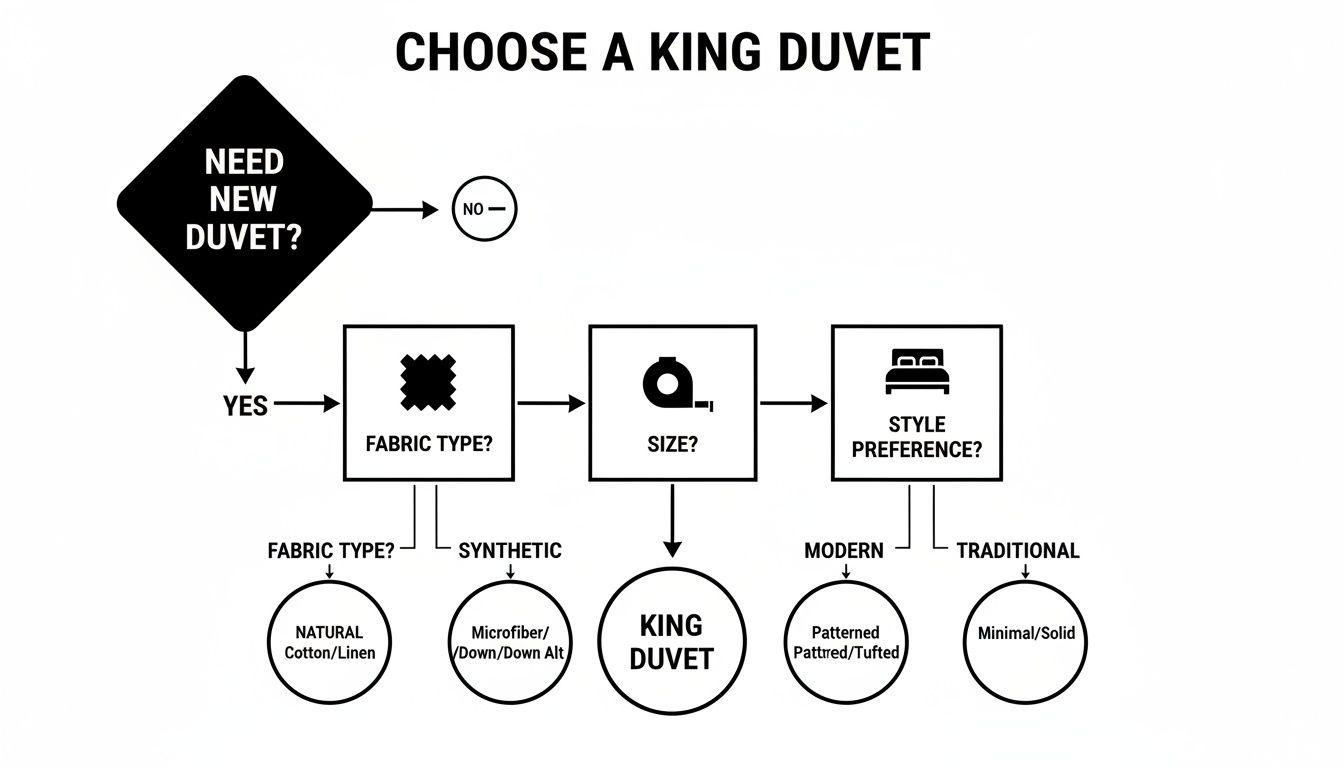
Ultimately, getting the size right is the foundation. It’s what allows your chosen fabric and style to truly shine.
How to Measure for a Perfect Fit
To sidestep common sizing mistakes, a couple of quick measurements will guarantee a flawless fit. It’s not just about the size of your duvet inner—the height of your mattress plays a huge part in how the cover will drape.
Here’s what to do:
- Measure Your Duvet Inner: Lay your duvet inner out flat and measure its width and length. A quality duvet cover should match these dimensions almost exactly, or be just a few centimetres larger. This gives the fill room to loft up properly. A cover that’s too tight will compress the filling, making it less warm and fluffy.
- Measure Your Mattress Height: Grab a tape measure and find the height of your mattress, from the bottom edge to the very top. Deeper mattresses, especially those with a plush pillow-top, need more fabric to achieve a good overhang. While the standard NZ king is designed for most modern mattresses, it never hurts to check.
A cover that’s too loose is just as bad, causing the inner to shift and bunch up into uncomfortable lumps. For a more detailed walkthrough, you can explore our complete guide to the king size duvet cover size and its nuances.
NZ Duvet Cover and Mattress Compatibility Guide
To make things easier, here’s a quick reference for matching standard New Zealand duvet cover dimensions with the correct mattress sizes. This will help you achieve that perfect, hotel-worthy drape every time.
| Duvet Cover Size | Standard Dimensions (cm) | Ideal Mattress Fit | Recommended Overhang Per Side |
|---|---|---|---|
| Single | 140cm x 210cm | Single (91cm wide) | ~24.5cm |
| King Single | 180cm x 210cm | King Single (107cm wide) | ~36.5cm |
| Queen | 210cm x 210cm | Queen (153cm wide) | ~28.5cm |
| King | 245cm x 210cm | King (167cm wide) | ~39cm |
| Super King | 265cm x 210cm | Super King (183cm wide) | ~41cm |
| Californian King | 285cm x 210cm | Californian King (203cm wide) | ~41cm |
Using this table as a starting point will ensure your duvet cover not only fits but also enhances the overall look of your bed by providing just the right amount of overhang.
Navigating International Size Differences
Shopping online opens up a world of beautiful bedding, but it also brings the risk of sizing confusion. A "king" is not a universal standard, and dimensions can vary dramatically between countries. This is where costly mistakes often happen.
Here’s a quick comparison to keep in your back pocket:
- New Zealand King: 245cm x 210cm
- Australian King: 245cm x 210cm (Generally compatible with NZ)
- United Kingdom King: 225cm x 220cm (Noticeably narrower and more square)
- United States King: 269cm x 229cm (Much larger than the NZ standard)
Always, always double-check the exact measurements in the product description, especially when buying from overseas retailers. Assuming a "king" is a "king" everywhere can leave you with a duvet cover that’s too small to cover your bed or so large it completely drowns it. Sticking to the NZ standard of 245cm x 210cm is the surest way to get that perfect, elegant drape every time.
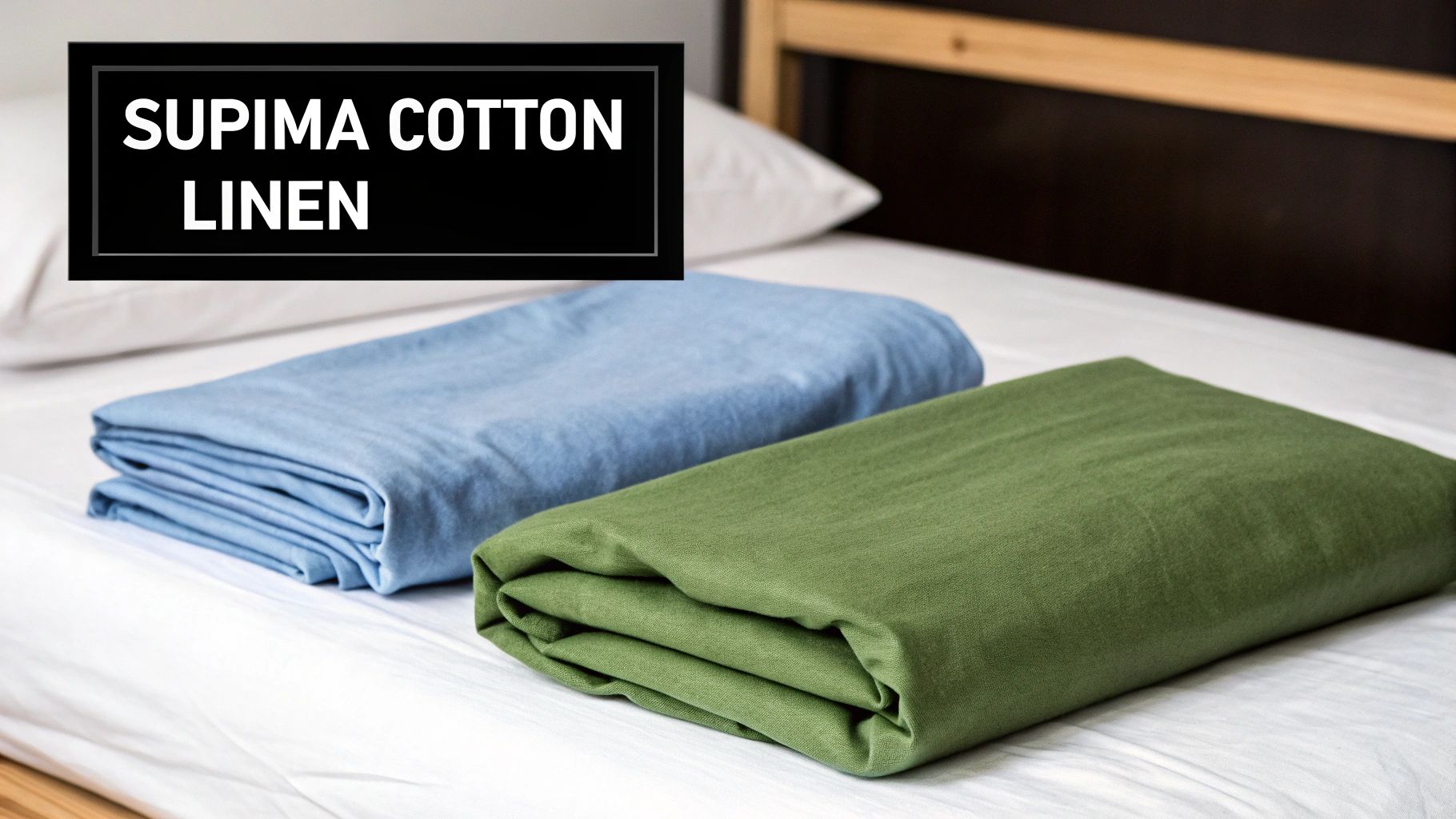
Comparing Supima Cotton and Airo-Washed Linen
The material of your king size duvet cover is where things get personal. This is the fabric that touches your skin all night, helps regulate your temperature, and ultimately sets the whole mood of your bedroom. Two of the most beautiful and sought-after options are Supima® cotton and airo-washed linen, and they offer completely different sleep experiences.
Choosing between them isn’t about which one is ‘better’ – it’s about the feeling you want to create. Are you after the crisp, silky smoothness of a five-star hotel, or the relaxed, breathable comfort of a coastal bach? Let's break down what makes each one special.
The Silky Sophistication of Supima Cotton
First off, Supima® cotton isn’t your average cotton. It’s an elite material, making up only the top 1% of cotton grown worldwide. What sets it apart is its extra-long staple (ELS) fibre, which is dramatically longer than the fibres in regular cotton.
Think of it like comparing a fine silk thread to a standard woollen yarn. Because the Supima® fibres are so long and smooth, they can be spun into a fabric that is incredibly fine, soft, and strong.
This unique structure delivers some serious advantages:
- Exceptional Softness: The surface feels incredibly smooth and silky against the skin. You don't get any of the slight coarseness found in shorter cotton fibres; it's just pure, crisp comfort.
- Vibrant Colour: Supima® fibres drink up dye more evenly and deeply. This means colours look richer and more brilliant from the start, and they stay that way without fading.
- Remarkable Durability: Those long fibres create a much stronger yarn that holds up brilliantly to wear and washing. It’s far more resistant to pilling, breaking, and tearing, making a Supima® duvet cover a true long-term investment.
If you love that immaculate, crisp feeling of slipping into a freshly made hotel bed, Supima® cotton is absolutely for you. It brings a polished, five-star elegance to the bedroom.
The Relaxed Charm of Airo-Washed Linen
Airo-washed linen, on the other hand, is a whole different world. Made from the fibres of the flax plant, linen is famous for its natural texture, strength, and amazing breathability. The "airo-washing" is a special finishing technique where the fabric is tumbled with air, softening the fibres without needing harsh chemicals.
The result is linen that has a beautiful, gently rumpled, lived-in feel from day one. It’s the very definition of effortless style—sophisticated but completely unpretentious.
Linen is an absolute game-changer for anyone who values airflow and sleeping at the right temperature. Its natural properties make it an all-season workhorse.
Why is Linen So Breathable? It's all in the fibre's structure. Linen fibres are hollow, which allows air to circulate freely right through the fabric. This wicks moisture away from your body, keeping you cool and dry on hot nights while still feeling cosy and warm in winter. It’s like having a natural climate-control system built into your bed.
If you’re drawn to a more organic, textural look and a breathable sleep environment is your top priority, you really can’t beat airo-washed linen. Its relaxed drape creates an inviting sanctuary that just gets softer and better with every wash.
Making Your Choice: A Quick Comparison
While both are fantastic luxury fabrics, they serve different styles and sleep preferences. Getting clear on these differences is the key to picking the right king size duvet cover for your space. We dive even deeper in our complete guide to choosing between linen or cotton sheets.
Here’s a side-by-side look to help you decide:
| Feature | Supima® Cotton | Airo-Washed Linen |
|---|---|---|
| Feel | Silky, smooth, and crisp | Soft, textured, and relaxed |
| Look | Polished, lustrous, and elegant | Naturally rumpled, matte, and organic |
| Breathability | Good | Excellent |
| Durability | Very strong and pill-resistant | Exceptionally strong and long-lasting |
| Best For | Those who love a classic, hotel-luxury feel | Hot sleepers and those who prefer a casual, lived-in aesthetic |
| Maintenance | Resists wrinkles better than standard cotton | Embraces a natural, crumpled look |
Ultimately, it comes down to the experience you want to have in your bedroom. It's also worth noting that beyond these two classics, innovative fabrics like a Tencel 100% Lyocell Fibre Quilt Cover Set (King, Blue) can offer a unique combination of softness and sustainability. Whether you lean towards the refined finish of Supima® or the airy comfort of linen, either choice will beautifully elevate your sleep and style.
How It's Made: The Finer Details of Construction and Finish
Once you've settled on a fabric, the next step is to look closer. The real measure of a king size duvet cover isn't just in the material you can feel, but in the small, thoughtful details of how it's put together. These are the things that dictate how easy it is to live with, how well it holds its shape, and ultimately, how long it will last.
Think of it like a beautifully tailored suit. It's the expert stitching and quality buttons that elevate it from something ordinary to something exceptional. The same goes for luxury bedding. From the type of closure keeping your duvet in place to the finishing touches along the edges, understanding these features helps you spot true craftsmanship.
Choosing Your Fastening Style
How your duvet cover closes is more than just a practical matter—it shapes the overall look and feel of your bed. Each style has its own personality and practical perks, so it really comes down to what you prefer in terms of aesthetics and convenience.
You'll generally come across three main options in high-end duvet covers:
- Classic Buttons: These give off a timeless, traditional vibe, especially when made from natural materials like mother-of-pearl. Buttons provide an incredibly secure closure, so there's no chance of the inner peeking out. They might take a minute longer to do up, but they add a relaxed, almost rustic charm that pairs perfectly with linen.
- Hidden Zippers: If you're after a clean, contemporary look, a hidden zipper is the way to go. It’s tucked away neatly into the seam, creating a seamless edge that’s both modern and incredibly practical. A good quality zipper makes changing the bed a quick, fuss-free job.
- Minimalist Ties: Don't overlook the inside! Internal corner ties are a game-changer for stopping your duvet from bunching up. These simple fabric ties are sewn into each corner, allowing you to secure the duvet inner and ensure it drapes smoothly and evenly across the bed.
A True Sign of Quality: The inclusion of internal ties is a small detail that speaks volumes. It shows the designer has actually thought about the user experience, tackling that all-too-common frustration of a wandering duvet inner.
In the end, the right fastening is a matter of personal taste. Are you drawn to the classic appeal of buttons or the slick efficiency of a zipper? Whichever you choose, check for quality—buttons should be stitched on tightly, and zippers should run smoothly without catching.
Spotting Premium Finishing Touches
The edges of a duvet cover are where you can really see the craftsmanship at play. These finishes aren't just for show; they add structure, durability, and a polished elegance that turns a simple piece of bedding into a design feature. Knowing what to look for will help you separate a good product from a truly great one.
Here are a couple of high-end finishes to keep an eye out for:
- Piped Edging: Sometimes called cording, this is where a thin tube of fabric is sewn right into the seam of the duvet cover. It creates a crisp, well-defined border that helps the cover hold its shape and can add a subtle touch of contrast. Piped seams are a classic tailoring detail that signals a high-quality finish.
- Flange Edge: A flange is a decorative fabric border that extends out from the main seam, usually by about 5-7cm. This creates a soft, elegant frame around the bed, giving it a more formal, hotel-luxe feel. You’ll often see this finish on matching pillowcases, which ties the whole look together beautifully.
These details do more than just look good. They reinforce the seams, making the entire duvet cover more robust and able to withstand years of use and washing. When you choose a king size duvet cover with these kinds of refined touches, you're not just buying bedding—you're investing in a piece that will maintain its structure and elegance for a long, long time.
How to Style Your King Size Duvet Cover
Your king size duvet cover isn't just bedding; it's the artistic canvas for your entire bedroom. Once you've found the perfect fabric and sorted out the dimensions, the fun really starts. Styling is what elevates your bed from a simple piece of furniture to an inviting, five-star centrepiece.
Think of your duvet cover as the main event. It's beautiful on its own, but the right accessories—pillows, throws, and textures—are what create that complete, polished look. With a few simple tricks, you can introduce depth, colour, and personality, turning your bedroom into a genuine retreat.

Building Layers for Depth and Texture
A flat, unadorned bed can feel a bit stark and uninviting. The secret to that plush, 'jump-right-in' look you see in design magazines? Layering. It's a technique that adds visual weight and a sense of cosiness that feels both luxurious and comforting.
Start by simply folding the top quarter of your duvet back on itself. This one move instantly breaks up the large surface area and creates dimension, setting the stage for more elements.
From there, you can start to build up your layers:
- Bring in a Throw: Drape a throw blanket in a contrasting texture across the foot of the bed. For a relaxed, lived-in vibe, just casually toss it over one corner. If you prefer a more structured style, fold it neatly into a wide band and lay it across the bottom third of the bed.
- Add a Quilt or Coverlet: For that extra touch of luxury, place a folded quilt or coverlet between the folded-back duvet and the throw. This adds another layer of texture and warmth, which is especially lovely in the cooler months.
- Play with Texture: The real magic happens when you combine different materials. Try pairing a smooth Supima® cotton duvet cover with a chunky knit throw, or complement a rumpled, airy linen cover with a velvet quilt. It’s the contrast that makes the whole arrangement so compelling.
Mastering the Art of Pillows
Pillows are the final flourish, the finishing touch that ties the whole look together. A well-styled pillow arrangement adds height, colour, and a sense of curated elegance that feels intentional and effortless at the same time. The key is to work from the back to the front, using a mix of sizes and shapes.
For a king size bed, a common and highly effective arrangement uses a combination of Euro pillows, standard sleeping pillows, and smaller decorative cushions.
Here’s a simple, step-by-step way to create a balanced look:
- Start with Euro Pillows: Begin with two or three large Euro pillows (typically 65cm x 65cm) propped against the headboard. They create a solid, elevated backdrop for everything else.
- Add Your Sleeping Pillows: Next, layer in your standard sleeping pillows. On a king bed, you can comfortably fit two king size pillows or three standard pillows side-by-side.
- Finish with Decorative Cushions: This is where you can really inject your personality. Add one to three smaller, decorative cushions in front. Don’t be afraid to mix shapes (like square and lumbar) and textures to create a dynamic, interesting focal point.
Styling Tip: A king size bed offers plenty of space to play with. While two king size pillows (approx. 51cm x 91cm) fit the width perfectly, using three standard pillows can sometimes give a fuller, more versatile appearance. It all comes down to personal preference.
Working with Colour Palettes
The colour of your king size duvet cover sets the mood for the whole room. It’s the anchor for your colour scheme, influencing everything from your wall colour to your choice of furniture. Whether you're aiming for a calm, serene space or something bold and dramatic, your duvet cover is the perfect starting point.
Consider these popular approaches to colour:
- Monochromatic Serenity: For a sophisticated and calming feel, build a palette using different shades and tints of the same colour. For example, pair a soft grey linen duvet with charcoal Euro pillows, a light silver throw, and dove grey walls. The result is a cohesive and deeply restful atmosphere.
- High-Contrast Drama: If you want to make a real statement, choose a duvet cover that contrasts sharply with your walls. A crisp white duvet against a deep navy or forest green wall creates a bold, modern look that is both timeless and striking.
- Analogous Harmony: This approach uses colours that sit right next to each other on the colour wheel, creating a rich yet harmonious feeling. Think of a sage green duvet cover paired with cushions in olive and soft mossy tones. The result is a palette that feels natural and effortlessly elegant.
By thoughtfully layering textures, arranging pillows with confidence, and choosing a cohesive colour palette, your king size duvet cover becomes the foundation of a beautifully designed and deeply personal sanctuary.
Extending the Life of Your Luxury Bedding
A beautiful, high-quality king size duvet cover is much more than just another piece of bedding—it's a long-term investment in your comfort and sleep. When you treat it with the right care, you ensure it remains a stunning centrepiece in your bedroom for years, growing softer and more inviting with every wash.
Think of it like a fine cashmere jumper. You wouldn't throw it in the wash with your work jeans. In the same way, gentle washing, mindful drying, and proper storage are the secrets to maintaining the softness, colour, and shape of your luxury bedding.
Essential Washing and Care Instructions
The first rule for caring for any premium fabric is simple: always check the care label. That said, there are a few general principles that apply to beautiful materials like Supima® cotton and airo-washed linen that will help protect their natural fibres.
Here are a few best practices to keep in mind:
- Stick to a Gentle Cycle: Always choose a cold or warm wash on a gentle setting. A temperature between 30-40°C is perfect for cleaning the fabric effectively without causing shrinkage or damaging the delicate fibres.
- Use a Mild Detergent: Harsh chemicals and optical brighteners can be brutal on natural fabrics, stripping them of their softness and causing colours to fade over time. A mild, pH-neutral liquid detergent is always the better choice.
- Wash It Separately: To avoid pilling and abrasion from rougher fabrics like denim or towels, it's best to wash your duvet cover on its own or with other similar items. Don't forget to fasten any buttons or zips to prevent snagging.
Caring for pure linen requires a slightly different touch to maintain its unique texture and strength. For a detailed walkthrough, have a look at our expert tips on how to wash linen sheets to keep them at their absolute best.
Drying Techniques for Lasting Softness
How you dry your duvet cover is just as crucial as how you wash it. The goal is to preserve the fabric's natural softness without exposing it to the intense heat that can make fibres brittle.
For both Supima® cotton and linen, line drying is the gold standard. It’s incredibly gentle on the fabric, saves energy, and leaves your bedding with that unbeatable fresh, natural scent.
If you need to use a machine, tumble dry on the lowest possible heat setting. The real trick is to pull the cover out while it's still slightly damp. This simple step helps minimise wrinkles and stops the fabric from becoming over-dried and stiff.
A Sustainable Choice for Your Home
Choosing a durable, high-quality king size duvet cover is, in itself, a sustainable decision. Unlike fast-fashion bedding that wears out quickly and ends up in a landfill, a well-made piece is designed to last. This "buy once, buy well" approach reduces waste and lessens your environmental footprint.
You can also look for trusted certifications that show a real commitment to responsible manufacturing.
- OEKO-TEX® Standard 100: This is a big one. This label certifies that every single component—from the fabric right down to the thread and buttons—has been tested for harmful substances and is completely safe for human health.
By investing in quality and caring for it properly, you’re making a thoughtful choice not just for your home, but for the planet, too.
Your King Size Duvet Cover Questions Answered
Even after getting to grips with materials and measurements, a few practical questions always seem to come up right before making a final decision. Let's tackle those lingering queries so you can feel completely confident in your choice.
We’ve pulled together the most common questions we hear from our customers, along with some straightforward answers to help you put the finishing touches on your bedroom sanctuary.
Do I Have to Use King Pillows on a King Bed?
Not at all. While two king size pillows (51cm x 91cm) sit neatly across the width of a king bed for a clean, symmetrical look, it’s really down to personal preference. Frankly, many people find them a bit too big and bulky for a comfortable night's sleep.
A fantastic alternative is using three standard pillows instead. This setup fills the space just as nicely, gives you more flexibility for sleeping, and often creates a more layered, plush look on the bed.
Can I Use Two Duvets on One King Bed?
Absolutely! This is a popular European trick—often called the "Scandinavian method"—and it’s a brilliant fix for couples who run at different temperatures. Using two separate single or king single duvets means the nightly tug-of-war over the covers is officially over.
This approach lets each person pick a duvet inner with their perfect warmth level. One of you can have a light summer fill, while the other snuggles under a cosy all-seasons option. It’s such a simple way to get personalised comfort without any compromises.
How Often Should I Wash My Duvet Cover?
To keep your bedding hygienic and feeling wonderfully fresh, we recommend washing your king size duvet cover every one to two weeks. If pets share your bed or you’re prone to allergies, a weekly wash is probably your best bet.
Regular washing gets rid of natural body oils and dust, which helps maintain the fabric's softness and quality for years to come. Just be sure to check the specific care instructions on the label to keep your luxury bedding in beautiful condition.
Ready to create your perfect sleep sanctuary? Explore the curated collection of luxury bedding at The Foxes Den and find the ideal Supima® cotton or airo-washed linen duvet cover to elevate your space. https://www.thefoxesden.co.nz