


Finding the Best Lint Remover NZ for Your Wardrobe
We’ve all been there. That favourite merino jumper or cosy winter coat, once a source of pride, starts to show its age with those annoying little balls of fluff. In New Zealand, where natural fibres are a cornerstone of our wardrobes, a good lint remover is an absolute game-changer. This guide is all about helping you find the right tool to bring your garments back to life and keep them looking pristine.
Keeping Your Favourite Fabrics Flawless
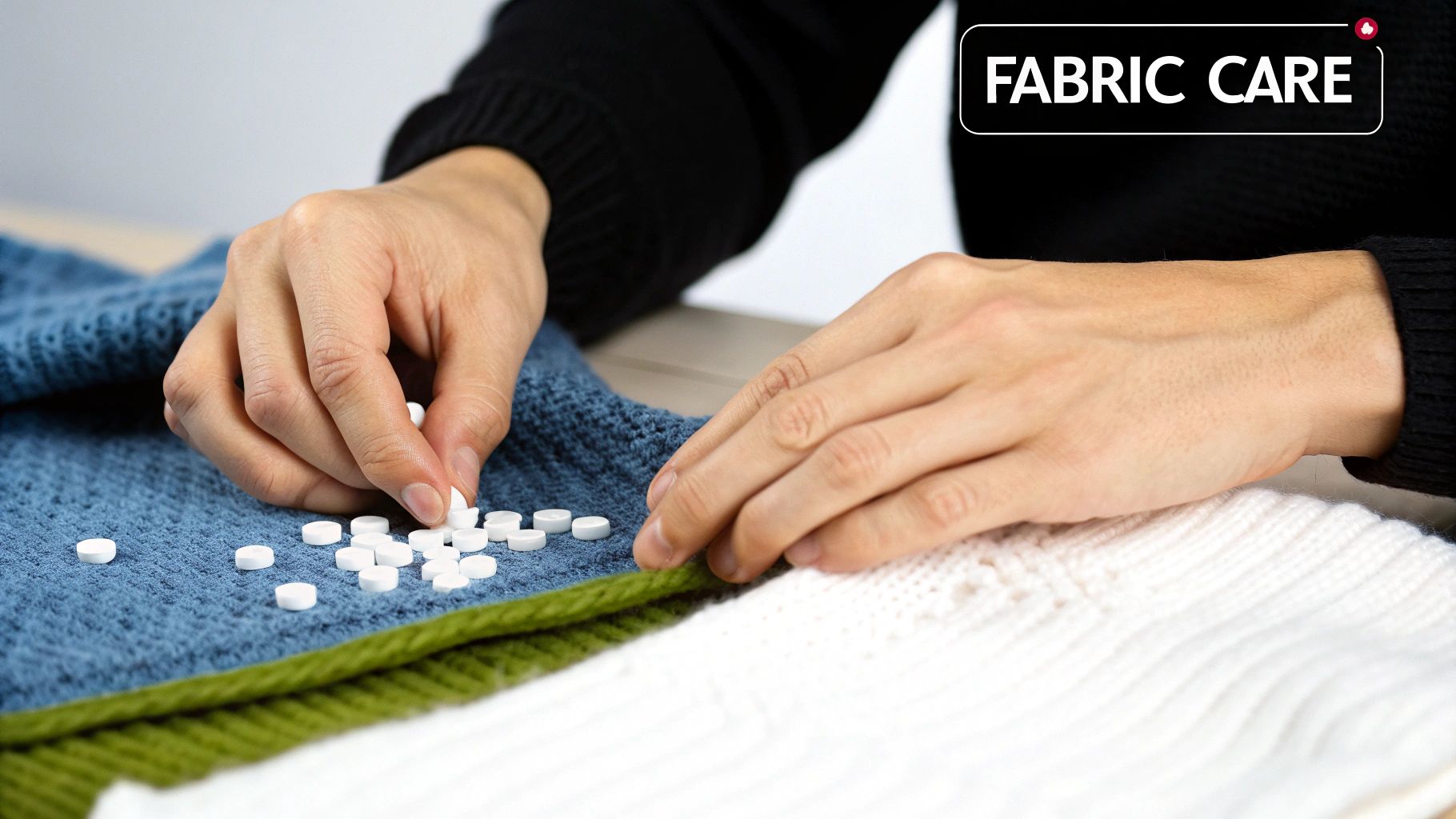
Whether you’re dealing with Auckland's humidity or the crisp air of the South Island, our unique climate definitely has an impact on our clothes. It’s the constant friction from just wearing and loving our garments that causes fibres to break and tangle. Before you know it, you’ve got unsightly lint and pilling, especially on those beloved woollens and linens.
Finding the right tool isn’t just about making things look good; it’s about making them last.
It’s no surprise that the demand for effective fabric care is on the rise here. With so many of us being pet owners—a whopping 64% of Kiwi households owned pets in 2023—tools that tackle both lint and fur are essential. In fact, the local market for these devices, including pet hair removers, was valued at around NZD 25 million last year. It’s clear we care about keeping our homes and clothes looking sharp.
Maintaining Garment Integrity
Getting your hands on a quality lint remover brings some real benefits to your wardrobe and home.
- It breathes new life into old favourites. A quick once-over can instantly remove fuzz, pills, and pet hair, making clothes and even upholstery look fresh and new.
- It extends the lifespan of your clothes. Gently shaving off pills rather than pulling at them prevents further stress and damage to the fabric’s weave.
- It keeps fabrics healthier. Regular de-pilling stops the build-up of dust and allergens that can break down textiles over time.
Of course, a good tool is only part of the solution. Proper care routines are just as critical. Knowing how to correctly wash delicate items, for example, can make a huge difference. Understanding the ins and outs of how to wash linen sheets (https://www.thefoxesden.co.nz/blogs/the-foxes-den-blog/how-to-wash-linen-sheets) can prevent the very damage that leads to lint in the first place.
Proper storage is another piece of the puzzle. An expert guide to fabric storage can show you how to protect garments from dust and friction when you’re not wearing them.
A well-chosen lint remover is more than just a gadget; it's an investment in the longevity and beauty of your favourite textiles. It gives you the power to care for your items with precision, ensuring they remain staples for years to come.
Choosing the Right Lint Removal Tool
Not all lint removers are created equal, and the right one really depends on the job at hand. It’s not just about what works, but what works best for your specific fabrics. Here in New Zealand, where we cherish our merino wool, cashmere blends, and quality linens, matching the tool to the textile is crucial for keeping your clothes looking their best for years to come.
Think about it this way: you're rushing to a meeting and spot pet hair all over your dark blazer. That’s a job for something quick and efficient. But what about that favourite knit jumper that’s developed those frustrating little pills after a season of cozy wear? That needs a much more delicate and precise touch.
Let's break down the main contenders.
The Speedy Solution: Sticky Lint Rollers
The classic sticky lint roller is a staple in most Kiwi homes, and for good reason. It’s brilliant at grabbing surface-level fuzz like dust, dandruff, and the ever-present fur from our four-legged friends.
- Best For: A last-minute cleanup on smooth, durable fabrics like cotton, denim, or even the couch. They are a lifesaver for getting your coat looking sharp just before you head out the door.
- Pros: They’re everywhere, cheap as chips, and incredibly fast for light jobs. There's no learning curve; just roll and go.
- Cons: The adhesive can be a bit aggressive for delicate materials like silk or fine-gauge knits, potentially pulling at the fibres. The single-use sheets also create ongoing waste, which is a big consideration for many eco-conscious New Zealanders.
If you’re looking for a reusable alternative, a washable gel roller offers similar power for surface cleaning without the trail of disposable sheets. Just give it a rinse with water, let it dry, and it’s good to go again.
The Deep Clean: Electric Fabric Shavers
When you’re dealing with pilling—those small, fuzzy balls that pop up on knitted fabrics—an electric fabric shaver is your most powerful ally. These gadgets use tiny rotating blades behind a protective screen to carefully trim off pills without damaging the fabric underneath.
An electric lint remover is something many NZ households can rely on to revive wool jumpers, fleece blankets, and even furniture that's seen better days. When you start looking, you’ll find plenty of options. Products like the Singer Lint Remover are a good example of the typical features you can expect.
The secret to using an electric shaver safely is to work on a flat, taut surface. Gently glide it over the fabric without pushing down. This prevents snagging or creating holes, especially on your precious merino pieces.
Specialised Tools: The Lint Brush or Comb
For a more traditional and controlled approach, a lint brush or a fabric comb is an excellent choice. These manual tools are designed to gently lift and remove lint and pills through either friction or fine teeth, giving you complete control.
A velvet or directional fabric brush works wonders on upholstery and heavy coats, lifting embedded hair with a simple one-way sweeping motion. For knitwear, a specialised wool comb allows you to carefully tease away pills from delicate fibres.
Brushes are also a fantastic zero-waste option, built to last for years with just a little care. You can learn more about how these simple but effective tools work in our guide on the benefits of a non-stick surface brush.
Lint Remover Method Comparison for New Zealand Fabrics
Choosing the right tool is the first step towards better fabric care. Sometimes, seeing everything laid out side-by-side makes the decision much clearer. This quick comparison can help you decide which lint remover is the best investment for your wardrobe.
| Tool Type | Best For | Pros | Cons | Sustainability Rating |
|---|---|---|---|---|
| Electric Shaver | Heavy pilling on knitwear, wool, and upholstery. | Highly effective; revitalises tired-looking garments. | Can damage delicate fabrics if used incorrectly. Requires batteries or charging. | Moderate |
| Sticky Roller | Quick removal of surface lint, pet hair, dust on smooth fabrics. | Fast, easy to use, widely available, and affordable. | Creates ongoing waste. Adhesive can be too harsh for fine materials. | Low |
| Gel Roller | Surface lint and hair; an eco-friendly alternative to sticky rollers. | Reusable, less waste, gentle on most fabrics. | Needs rinsing and drying time between uses, which isn't ideal for quick fixes. | High |
| Lint Brush/Comb | Delicate knits (comb), heavy upholstery and coats (brush). | Gentle, precise control, zero waste, and built to last. | Slower and requires more manual effort than other methods. | Excellent |
Ultimately, many well-dressed Kiwis find that having a couple of these tools on hand is the best approach—a sticky roller for quick touch-ups and a more specialised tool like a shaver or comb for deeper fabric maintenance.
Why Electric Fabric Shavers Are a Top Choice
When you’re dealing with serious pilling on a treasured merino jumper or a well-loved sofa, a sticky roller just isn’t going to cut it. This is where an electric fabric shaver really shines. It’s a powerful little machine designed not just to pick up surface fluff, but to meticulously shave away the stubborn, bobbled fibres that make fabrics look old and tired.
Unlike simply pulling at pills—which can easily weaken and stretch the yarn—a shaver works with rotating blades tucked safely behind a protective metal guard. This screen glides over the fabric, letting only the raised pills pop through to be trimmed off, leaving the flat, undamaged surface completely untouched. The result is a garment that looks and feels revitalised, much closer to how it was when you first bought it.
Key Features to Look For
Not all fabric shavers are created equal, though. When you’re hunting for the best lint remover NZ has to offer, keep an eye out for a few features that make all the difference in performance and fabric safety.
- Adjustable Height Settings: This is non-negotiable for protecting delicate materials. A higher setting creates more space between the blades and the fabric, which is perfect for fine-gauge knits like cashmere or merino wool.
- Rechargeable Models: For sheer convenience, nothing beats a cordless, rechargeable shaver. You aren't tethered to a power point, making it a breeze to work on larger items like blankets, curtains, or upholstery.
- Large Shaving Head: A wider head covers more surface area, and quickly. It’s a significant time-saver when you're tackling a big job like de-pilling a whole winter coat or a three-seater couch.
The real advantage of an electric shaver is its precision. It surgically removes the problem—the pills—without causing collateral damage to the surrounding fibres, fundamentally restoring the texture of the fabric.
This simple flowchart can help you decide which tool is right for the job.
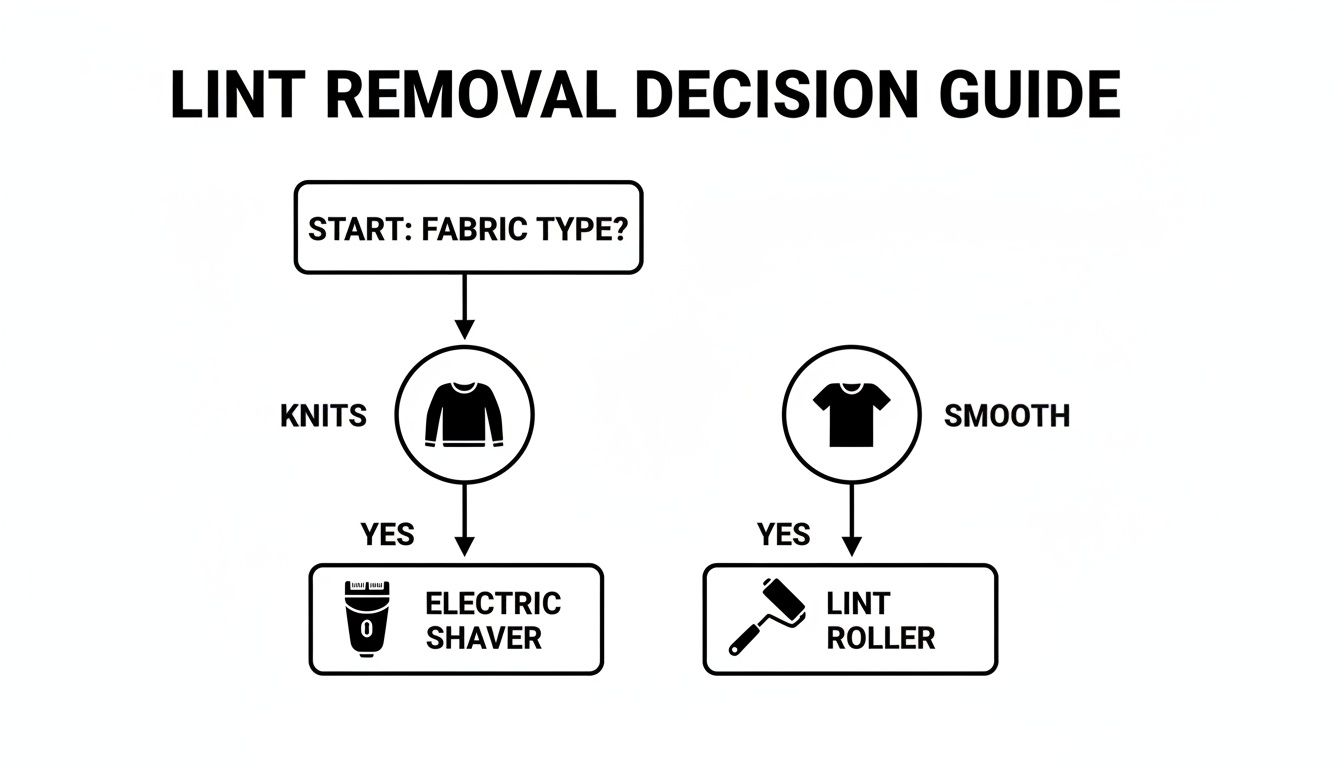
As you can see, for knitted textiles prone to pilling, an electric shaver is the recommended tool, while rollers are better suited for collecting loose fluff on smooth fabrics.
How to Safely De-pill a Merino Wool Jumper
Bringing a precious merino garment back to life can feel a bit daunting, but with the right technique, it's actually quite simple.
First, lay the jumper on a firm, flat surface—an ironing board or a clean table works perfectly. You’ll want to pull the fabric taut with one hand to prevent any wrinkles or folds from accidentally getting caught.
Start with your shaver on its highest height setting. Gently glide the device over the pilled areas using a light circular motion. It's crucial not to apply pressure; let the shaver do the work. You’ll hear it trimming the pills away. Remember to empty the lint collector frequently, as this keeps the blades working efficiently and prevents clogging.
It’s clear Kiwis are catching on. In 2024, JB Hi-Fi NZ sold 45,000 electric lint shavers, which is a 25% increase from the previous year. This sits within a broader Kiwi fabric care market now valued at NZD 35 million. The trend is particularly strong in our cities; one survey found that 67% of Auckland residents use electric shavers monthly on things like upholstery and suits. This growing preference shows just how effective these tools are, both at home and in professional settings. You can dive deeper into the fabric shaver market trends to see the full picture.
Lint Rollers: Your Go-To for a Quick Tidy-Up
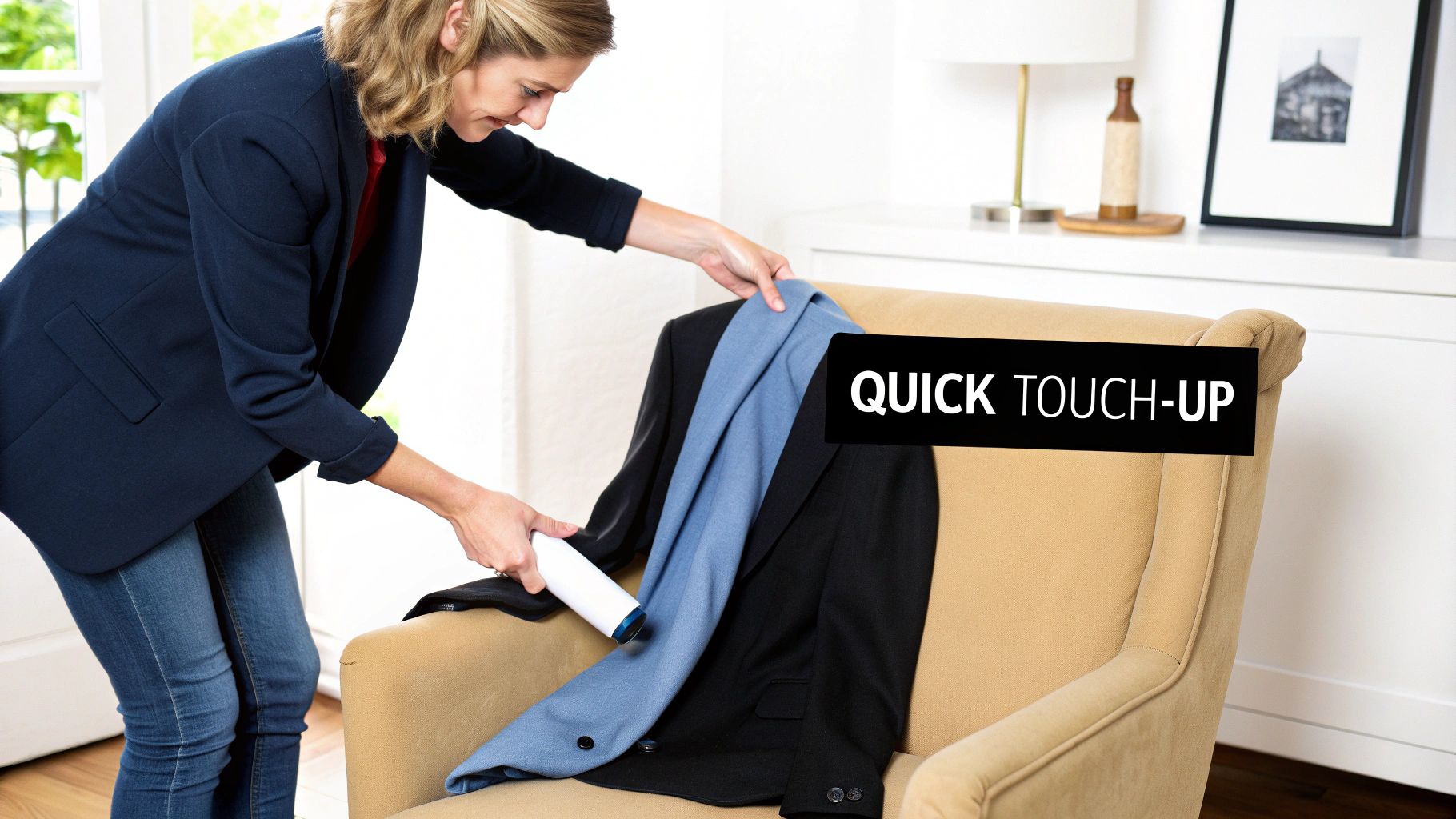
Sometimes, you don't need a deep fabric restoration. You’re five minutes away from walking out the door when you spot it—your favourite black trousers or wool coat are covered in a fine layer of dust, fluff, or pet hair. This is where the humble lint roller really shines. Nothing beats it for sheer speed and simplicity.
For those last-minute touch-ups, the classic sticky roller is a staple in countless Kiwi homes, cars, and office drawers. Its job is simple: grab and lift surface debris from smoother, more durable fabrics. It’s the perfect fix for your work blazer, cotton upholstery, or the car seats after taking the dog for a run.
The numbers don't lie. As soon as winter hits and we pull out our favourite woollens, lint roller sales climb. Back in 2022, Farmers department stores across New Zealand sold a staggering 120,000 units, which was a 19% jump from the year before. This spike lined up perfectly with a 12% rise in wool and knitwear sales—especially items made from our iconic Merino, which can definitely use a quick de-fluff now and then. It’s a trend that fits right into the bigger picture, as you can see from the global lint roller market trends.
When Is a Roller the Right Tool?
Deciding between a roller and an electric shaver comes down to what you’re trying to remove. A roller is brilliant for anything that sits on top of the fabric.
- Pet Hair: Absolutely unbeatable for a quick de-furring of just about any surface.
- Dust and Dandruff: A life-saver for dark clothing that seems to show every single speck.
- Loose Fibres: Perfect for cleaning up the fluff after a new towel or blanket has its first shed.
But it's crucial to know its limits. A sticky roller won't do anything for pilling. In fact, dragging a strong adhesive across a delicate knit can easily snag the yarn and make the bobbling even worse.
My Two Cents: I always keep a travel-sized lint roller in my car’s glove box and another in my desk drawer at work. It's a tiny thing, but it makes a huge difference in looking polished and put-together throughout the day.
Making the Switch to Sustainable Rollers
As effective as they are, those single-use paper rollers create a lot of waste, which is a big concern for many of us here in New Zealand. This has thankfully led to some fantastic reusable alternatives that fit much better with a sustainable lifestyle.
Washable gel or silicone rollers give you that same quick-fix convenience but without the throwaway sheets. When it’s full, you just rinse the roller under warm water, let it air dry, and its tackiness is completely restored. This makes them a brilliant long-term lint remover nz solution for anyone looking to cut down on household waste. As a bonus, they tend to be a bit gentler, making them a safer bet for a wider range of fabrics.
Eco-Friendly Lint Removal Options in Aotearoa
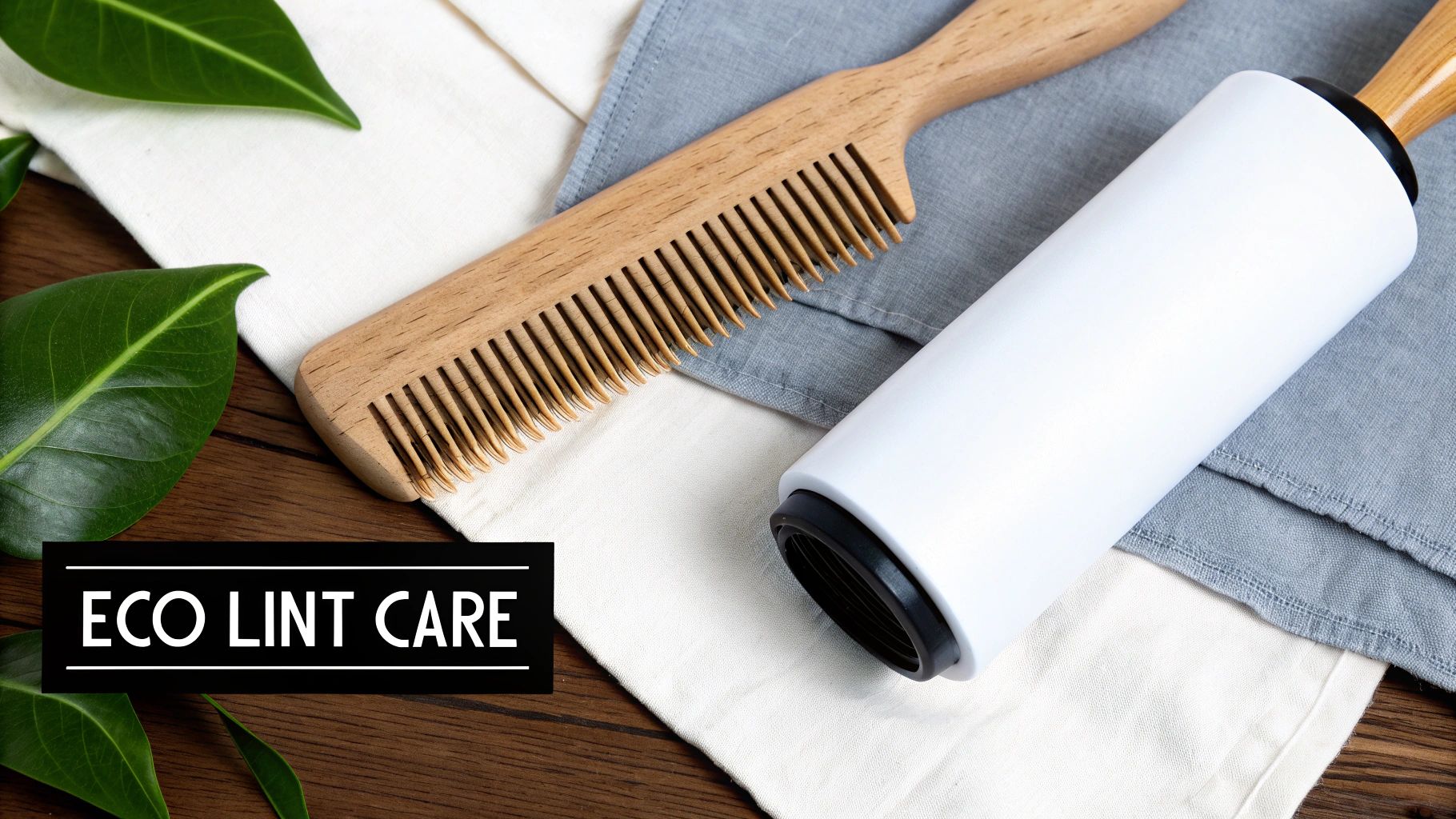
As Kiwis, we’re more and more aware of the waste we produce, a mindset that’s finding its way into our laundry rooms and wardrobes. The convenience of a disposable sticky roller is hard to deny, but their environmental cost adds up. Thankfully, finding a sustainable lint remover nz locals can feel good about is easier than ever, with plenty of effective, reusable choices available right here in Aotearoa.
These eco-friendly tools aren't just better for the planet. They're often beautifully made, long-lasting items that elevate a simple chore into a thoughtful ritual of care. When you invest in a reusable tool, you're not just cutting down on household waste; you're getting a quality piece of equipment designed to last for years, not just a few sheets.
Embracing Traditional Wooden Tools
One of the most elegant and effective zero-waste options is a classic wooden lint comb or brush. These aren't some new invention; people have been using tools like these for centuries to look after fine textiles, especially delicate wool and cashmere.
- Wooden Lint Combs: With their fine, gentle teeth, these are brilliant for carefully teasing away pills from knitwear without catching or pulling the fibres. They give you amazing control, letting you target individual bobbles on that favourite merino jumper.
- Natural Bristle Brushes: Typically made with boar or plant-based bristles in a wooden handle, these are fantastic for lifting surface lint, dust, and pet hair from heavier fabrics like wool coats or upholstery. They work by building up a slight static charge that draws debris right off the fabric.
These classic tools really are a masterclass in simple, effective design. If you'd like to dive deeper, this guide on the benefits of zero-waste wooden brushes is a great read.
The real beauty of these wooden tools is their simplicity and durability. They don’t need batteries or refills, and with a bit of care, they can genuinely last a lifetime—a truly sustainable investment for your home.
Modern Reusable Innovations
If you're a fan of the classic roller, modern innovation has come up with a brilliant green alternative. Washable silicone or gel lint rollers give you that same quick, rolling action of their disposable cousins, but you can use them over and over again.
Once the surface is covered in fluff, you just rinse it under warm water. All the debris washes away, and as it air-dries, the sticky surface is completely restored, ready to go again.
Another fantastic tool, especially if you have pets, is the natural rubber brush. The unique, grippy texture of the rubber is incredibly good at pulling embedded pet hair from furniture, carpets, and car interiors. Just a few quick sweeps are usually enough to gather all the fur into a tidy pile you can easily pick off and throw away. For keeping upholstery looking its best, these simple, durable tools are an absolute game-changer.
Common Questions About Lint Removers
When you're caring for beautiful fabrics, it’s natural to have a few questions about the best tools for the job. From precious merino to everyday upholstery, choosing the right lint remover makes all the difference. We get asked a lot about this, so here are some answers to the most common queries we hear from Kiwis.
Can I Use a Lint Remover on My Merino Wool Jumper?
You absolutely can, but the key is to be gentle. Merino wool is an incredible fibre, but it doesn't respond well to aggressive treatment.
Your best friend here is an electric fabric shaver with an adjustable guard. This feature is non-negotiable for delicate knits. Start with the highest setting, which keeps the blades further away from the fabric surface. Lay your jumper out flat, hold the area taut with one hand, and use light, circular motions with the shaver. Don’t press down.
If you're just dealing with surface fluff or a bit of pet hair, a soft garment brush or a washable gel roller is a much safer option. I'd steer clear of standard sticky tape, as it's often too aggressive and can easily snag and pull those fine merino yarns.
Here's a pro tip: Always test a new tool on a small, hidden spot first—think an inside seam or the hem. A quick test patch gives you peace of mind that it'll play nicely with the fabric before you move on to more visible areas.
Where Can I Buy a Good Quality Electric Lint Remover in NZ?
Finding a great electric lint remover here in New Zealand is pretty straightforward. You've got a few solid options, depending on what you're after.
- Department Stores: You can usually find a decent selection at places like Briscoes or Farmers, right in their home goods or laundry care sections.
- Appliance & Tech Retailers: Stores like Noel Leeming and JB Hi-Fi are worth a look, as they often stock a range of rechargeable gadgets, including fabric shavers.
- Online Marketplaces: For the best variety and to compare models, websites like Mighty Ape or The Market are fantastic. You can sift through different brands and, most importantly, read recent customer reviews to see how they actually perform.
If you’re looking for something a bit more specialised or professional-grade, I’d suggest checking out dedicated Kiwi sewing or garment care websites.
What’s the Most Eco-Friendly Lint Remover Option?
If you're aiming for a more sustainable laundry routine, the best choice is always a reusable tool that cuts down on waste. Thankfully, there are some brilliant eco-friendly options that work just as well, if not better, than their disposable counterparts.
Washable gel or silicone lint rollers are a game-changer. You just rinse them under the tap, let them dry, and they’re sticky again—ready to be used hundreds of times. This completely eliminates the need for those peel-off paper sheets.
Another classic is the wooden lint comb, sometimes called a de-piller, which is specifically designed for gently removing pills from knitwear. And for stubborn pet hair on upholstery, you can't beat a natural rubber brush. It’s incredibly effective and will last for years. You’ll find many of these durable, low-waste tools in New Zealand’s growing number of sustainable living and zero-waste stores.
Ready to give your treasured fabrics the care they deserve? At The Foxes Den, we believe in the beauty of well-maintained textiles. Explore our curated collection of homewares and luxury linens, designed to bring timeless elegance into your home.