


A Guide to Nesting Tables NZ for Stylish and Smart Homes
When it comes to smart, stylish furniture, it’s hard to go past a good set of nesting tables. They’re a bit of a secret weapon for Kiwi homes, offering a clever mix of versatility and space-saving design that just works. Think of them as a dynamic styling tool—part practical surface, part decorative accent—ready to adapt to whatever life throws at you.
Whether you're decorating a compact city apartment or a spacious family home, nesting tables are one of those pieces that quietly solve a dozen little problems.
The Smart Solution for Stylish New Zealand Homes
In any home, furniture that can pull double duty is worth its weight in gold. Nesting tables are the perfect example of this. Instead of seeing them as one piece of furniture, think of them as a flexible system that adapts to your day-to-day. A set is usually made up of two or three tables of graduating sizes, all designed to tuck neatly under one another.
It’s this simple, brilliant concept that has made them such a staple in modern New Zealand homes. From a tight-on-space Wellington apartment where every square metre counts, to a sprawling Auckland villa that needs flexible pieces for entertaining, their appeal is universal. They solve that classic dilemma: needing an extra surface now and then, but not wanting to sacrifice permanent floor space for it.
More Than Just a Pretty Face
While the space-saving side of things is a huge plus, the real magic of nesting tables is just how versatile they are. They're the chameleons of the furniture world, shifting their purpose to fit the moment. This adaptability is what makes them such a sound investment for any home.
Their dual role is what really sets them apart:
- The Practical Workhorse: Need a spot for your cup of tea or laptop? Just slide one out. When you've got friends over, you can separate the set to give everyone a convenient place to pop their drink.
- The Decorative Accent: When clustered together, they create a layered, visually interesting focal point. You can style them with a lamp, a stack of your favourite books, and a treasured object to build a curated look that adds real personality and depth to a room.
At their core, nesting tables are all about responsive design. They don't just sit in a room; they interact with it, offering a fluid solution that expands and contracts right alongside your lifestyle.
This guide will walk you through everything you need to know about choosing the perfect set of nesting tables NZ homeowners will love. We’ll get into materials, styling ideas, and how to find a set that feels like it was made for your space, making sure you get the most out of this incredibly clever design.
2. Choosing the Best Materials and Finishes
Picking the right material for your nesting tables is more than just a style choice; it’s about finding that perfect sweet spot between looks and real-world durability. The material is the very soul of the piece, defining how it feels to the touch, how it catches the light, and how it holds up to the happy chaos of everyday life.
Here in New Zealand, our love for natural textures often guides our interior choices. Whether you’re drawn to the rugged warmth of native timber or the clean, crisp lines of modern metal, the material you select will set the tone for the whole room.
Ultimately, nesting tables are a clever, multifaceted solution for modern homes—they’re functional workhorses that don’t ask you to sacrifice an ounce of style.
The Timeless Warmth of Wood
It’s no surprise that solid wood remains a firm favourite. It brings an organic, grounding feeling to a space that is both comforting and endlessly stylish. In Kiwi homes, timbers like beautiful oak or rich, reclaimed rimu are treasured for their stunning grain and lasting strength.
An oak set, for instance, brings a classic, sturdy presence that feels right at home in everything from a country-style villa to a sleek, Scandinavian-inspired apartment. The natural variations in the timber grain mean no two pieces are ever the same, giving your tables a unique personality.
Here are a few popular timber choices:
- Oak: Famous for its strength and distinctive grain, oak is a brilliant all-rounder that stands up well to daily use. It can be finished in countless ways, from light and raw to deep and moody.
- Rimu: As a cherished native timber, reclaimed rimu offers a deep, warm glow that instantly adds a touch of Aotearoa character to a room.
- Walnut: For a hint of mid-century elegance, walnut’s deep, luxurious tones and smooth finish feel incredibly sophisticated.
The Sleek Appeal of Modern Metal
If your style leans more contemporary or even a little industrial, metal nesting tables are a fantastic option. Materials like steel, iron, or brass create a clean, sharp silhouette that can help a room feel more open and uncluttered. Metal is often just the frame, paired with a different material like glass or marble on top for a beautiful contrast in textures.
Imagine a set of black powder-coated steel tables adding a bold, architectural line to a minimalist lounge. Or picture a brass-finished set bringing a touch of understated glamour next to a plush velvet sofa. This corner of the furniture market is humming in New Zealand; in fact, the industry is valued at around NZD 1.5 billion and has grown at about 3.8% annually over the last five years, thanks to our growing population and housing market. You can dig deeper into NZ furniture market trends to see the bigger picture.
The Sophisticated Touch of Stone and Glass
When you’re aiming for a look that feels truly refined and luxurious, stone and glass are hard to beat. They bring a sense of lightness and elegance that can instantly elevate a space.
Stone-topped tables, especially those crafted from marble or travertine, feel less like furniture and more like a piece of functional art. Each slab has its own unique veining and character, making your tables a true one-of-a-kind statement.
Here’s a quick comparison of these luxe materials:
- Marble: The classic definition of luxury. Marble has a polished, high-end look that makes a serious statement, but it does need a bit of TLC to prevent stains and scratches.
- Travertine: With its warm, earthy tones and beautifully porous texture, travertine offers a softer, more organic kind of luxury. It’s the perfect companion for natural linens and a neutral colour palette.
- Glass: A glass-topped nesting table is a small-space superhero. It creates an illusion of openness by allowing you to see the floor or rug beneath, reflecting light and making the whole room feel airier.
Nesting Table Material Comparison
To help you decide, here’s a quick-reference table that breaks down the most common materials.
| Material | Best For (Aesthetic) | Durability Level | Care Requirements |
|---|---|---|---|
| Wood (Oak, Walnut) | Natural, Scandinavian, Rustic, Mid-Century Modern | High | Regular dusting; use coasters to prevent marks |
| Metal (Steel, Brass) | Industrial, Modern, Minimalist, Art Deco | Very High | Wipe clean; powder-coated finishes are very durable |
| Marble | Luxe, Classic, Glam | Medium | Prone to staining/etching; seal regularly, clean spills immediately |
| Travertine | Organic Modern, Mediterranean, Neutral & Textured | Medium-High | Porous; requires sealing, clean gently, use coasters |
| Glass | Contemporary, Minimalist, Small Spaces | Medium | Shows fingerprints easily; clean with glass cleaner, can chip |
As you browse the nesting tables NZ makers have to offer, think about how your choice will weave into the existing fabric of your home. Consider the textures you already have—the weave of your sofa, the drape of your curtains, the finish on your flooring. The right material won’t just do its job; it will pull the whole room together, creating a space that feels layered, cohesive, and genuinely welcoming.
Getting the Scale and Size Just Right
You can have the most beautiful piece of furniture in the world, but if the proportions are off, it’ll never feel quite right. When it comes to nesting tables, getting the scale perfect for your room is what creates that balanced, intentional, and genuinely comfortable feeling we’re all after.
Think of it like getting a suit tailored. A few centimetres here or there makes all the difference between something that looks awkward and something that looks like it was made just for you. This is especially true in New Zealand, where our homes range from compact city apartments to sprawling, open-plan family houses—each with its own unique spatial needs.
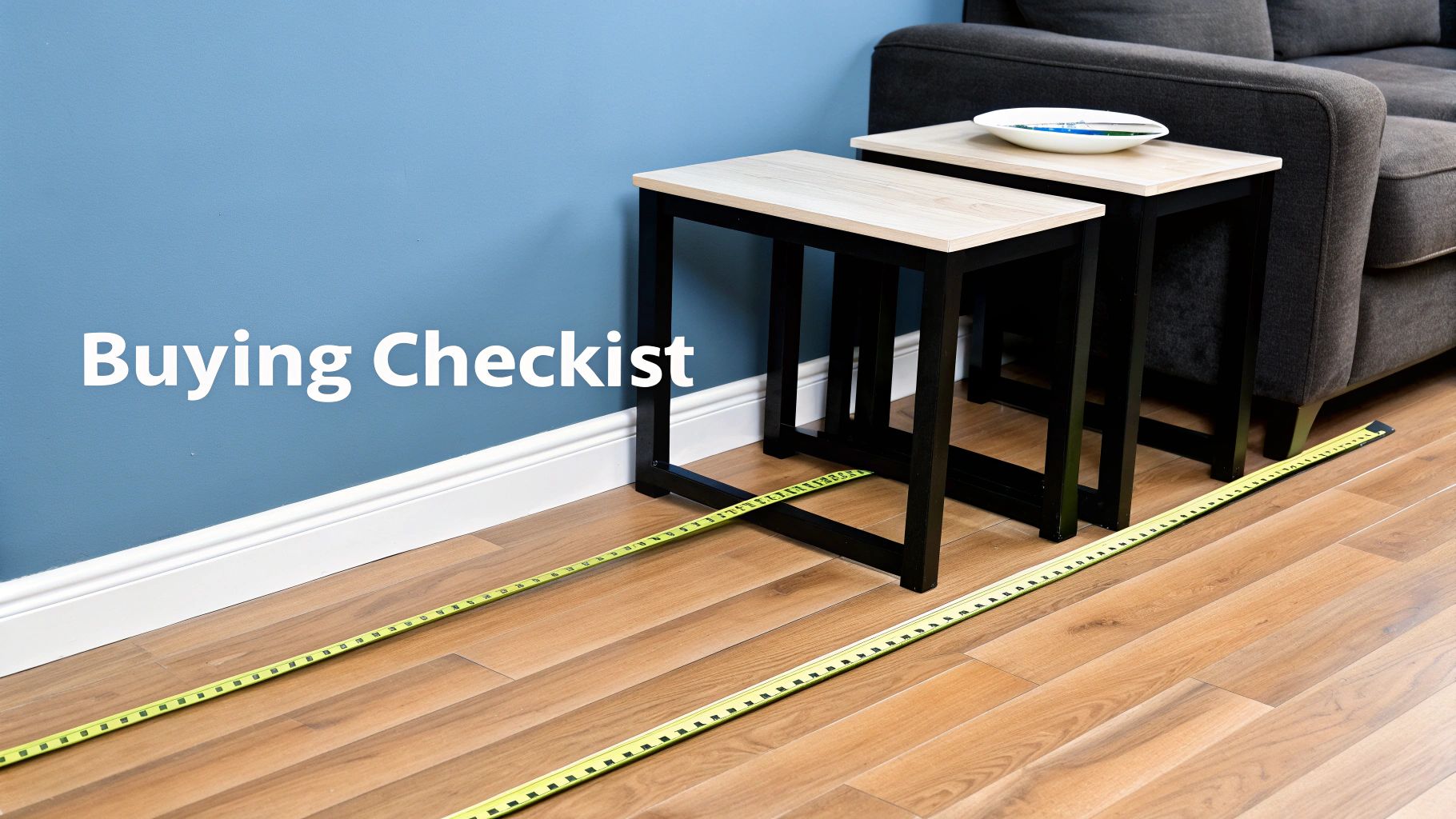
One of the best things you can do is visualise the footprint before you buy. Grab some painter's tape and mark out the dimensions of the largest table on the floor right where you plan to put it. This simple trick takes the guesswork out of online shopping and gives you a real-world feel for how much space the set will actually occupy.
Height Harmony Beside Your Sofa
When you’re placing nesting tables next to a sofa or armchair, height is the number one thing to get right. The goal is a surface that’s both beautiful to look at and easy to use.
A good rule of thumb is that the tallest table in the set should sit at, or just slightly below, the height of your sofa’s armrest. This creates a clean, continuous line and makes it comfortable to reach for your drink or book.
- Too high: A table that looms over the armrest can feel top-heavy and make the whole seating area seem cramped.
- Too low: If it's too far below the armrest, it can feel disconnected from the sofa and be awkward to use without leaning right over.
Nailing this height makes the tables feel like a natural part of your living room, not just a random addition.
Nesting Tables as a Layered Coffee Table
Using nesting tables NZ homeowners are discovering, as a coffee table is an incredibly clever and stylish move, especially for rooms that need to be flexible. Instead of one big, static block in the middle of your room, you get a dynamic centrepiece that you can pull apart or cluster together as needed.
When you’re using them this way, the height rule changes a little. The tallest table should be no higher than your sofa’s seat cushions. This keeps the profile low and open, so it doesn’t block sightlines or get in the way of conversation. For the overall footprint, you’ll want to leave at least 45-50 cm of clear space around the cluster to allow for easy foot traffic.
If you’d like to dive deeper into getting this look right, our guide to choosing a nesting coffee table has even more detailed tips.
Pro Tip: When you’re styling a nested coffee table, treat the different levels like individual canvases. Put taller items, like a vase of flowers, on the largest table, and smaller things like a candle or a stack of coasters on the smaller ones. This creates beautiful, interesting layers.
Matching Scale to Room Size
Finally, step back and consider the overall size of your room. The visual weight of your nesting tables should feel in harmony with the space.
- For smaller or narrow lounges: Look for sets with a lighter, more delicate profile. Tables with slender metal legs, round tops, or even glass surfaces feel less bulky and stop the room from looking cluttered. They give you all the function without eating up precious visual space.
- For large, open-plan areas: You’ve got the room to be a bit bolder. This is where you can go for a more substantial set—think solid wood, strong geometric shapes, or rich materials like marble or travertine. A larger, more grounded set can hold its own and helps to properly anchor the seating area within the wider space.
By taking a moment to measure, visualise, and think about these relationships, you’ll find a set of nesting tables that doesn’t just fit your room, but truly enhances it.
Creative Ways to Style Your Nesting Tables
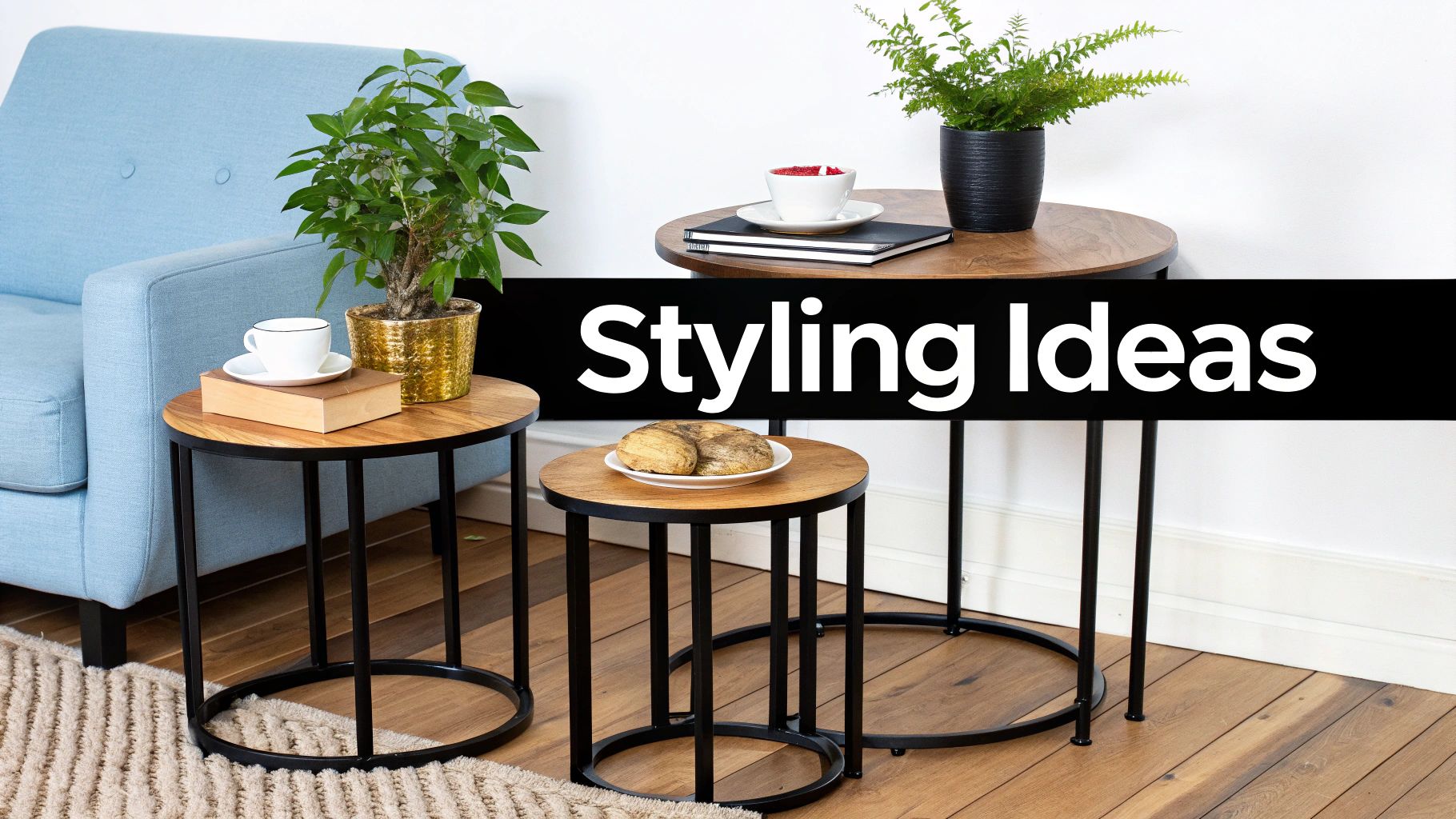
Alright, you’ve sorted the materials and found the perfect size. Now for the really fun part: making them look beautiful in your home. Nesting tables are so much more than a convenient spot to pop your cuppa; they’re a canvas for expressing your style. Their staggered, multi-level design is an open invitation to get creative and build a little visual story that a single, flat coffee table just can't tell.
Instead of seeing them as one piece of furniture, think of them as a collection of related surfaces just waiting for your personal touch. This is where you can truly unlock their potential, turning them from a purely practical item into a curated feature that elevates the entire room.
Reinventing the Living Room Lounge
The living room is the natural habitat for nesting tables. They are chameleons in this space, adapting from a quiet evening with a book to a lively get-together with friends.
A classic approach is to style them as a layered coffee table. When clustered together, they create a wonderful sense of depth. I always recommend staggering them slightly so each surface is visible. This allows you to play with height and scale; place a tall vase of foliage on the largest table, a neat stack of your favourite art books on the middle one, and a beautiful candle on the smallest.
Then, when guests pop over, the magic happens. The set can be pulled apart to serve everyone. Suddenly, each person has their own side table for a drink or a plate of nibbles – a thoughtful touch of hospitality that makes everyone feel at home.
The real secret to styling a multi-level surface like this is creating visual harmony. You're not aiming for perfect symmetry, but for balance. Distribute the visual weight across the different tiers. For instance, a tall lamp on one table can be beautifully balanced by a low, wide bowl on another.
This principle of layering is a cornerstone of good interior design. If you're keen to apply this thinking to your whole space, our guide on how to make your home more luxurious explores similar ideas for creating curated elegance.
The Bedroom Bedside Companion
Tired of that bulky bedside cabinet? Nesting tables are a brilliant, practical alternative. Their smaller footprint can make a bedroom feel more open and airy, while the tiered surfaces give you plenty of room for nighttime essentials without creating clutter.
Use the largest, highest table for the things you reach for most: a good reading lamp and a small dish for your jewellery. The lower tables are perfect for the things you want nearby but not always on show, like your current book, a calming sleep spray, or your phone while it charges overnight.
This works especially well in smaller Kiwi bedrooms where every square centimetre counts. You get all the function of a traditional bedside table but with a much lighter, less imposing look.
Unconventional and Creative Uses
The beauty of nesting tables is how adaptable they are. With a little imagination, they can solve styling dilemmas all over the house. Here are a few fresh ideas for your set of nesting tables NZ homes can easily embrace:
- The Entryway Drop-Zone: Set up a chic and organised welcome right by your front door. Use the top table for a beautiful bowl to hold keys, and the smaller ones for a scented diffuser or a small, hardy plant. It's a stylish way to keep essentials handy.
- A Compact Serving Station: In a dining room or during a party, a set of nesting tables can become a mini bar or a dessert station. Use the different levels to display glasses, a bottle of wine, and a selection of cheeses or sweets. It's an elegant solution that saves precious space.
- The Plant Stand Powerhouse: Group your houseplants on a set of nesting tables to create a stunning green feature. The varying heights add instant architectural interest and help each plant get its share of sunlight. This looks incredible in a sun-drenched corner.
- The Bathroom Butler: In a larger bathroom, a waterproof set (think metal or stone) can hold rolled-up towels, bath oils, and a candle, instantly turning your space into a spa-like retreat.
To make sure your new tables feel right at home, think about how they connect with your other furniture. For more inspiration on bringing your whole space together, you can explore creative furniture styling ideas. At the end of the day, styling is about making a piece your own. Don't be afraid to experiment, move things around, and find what truly brings you joy.
Commissioning Custom Pieces from NZ Makers
While there are plenty of beautiful ready-made nesting tables out there, sometimes the perfect piece is the one that doesn't exist yet. If you're after a set that fits your space, your style, and your story to a T, commissioning a custom piece from a local New Zealand maker is a fantastic option. It's a chance to create something truly unique, made just for you.
Going bespoke isn't just about buying furniture; it's a collaborative process. You get to specify the exact dimensions for that tricky spot beside the sofa, choose a specific timber like reclaimed native rimu, or even request a particular finish to match your home's colour palette. It's the ultimate way to get nesting tables that aren't just in your home, but feel like they've always been a part of it.
The Beauty of Bespoke Furniture
When you choose a custom-made piece, you're investing in more than just an object. You're supporting local artisans and keeping traditional craft skills alive right here in New Zealand. This focus on local is a growing part of our furniture scene, helping build a more sustainable future and reducing our reliance on mass-produced imports.
The benefits are deeply personal, too:
- Perfect Proportions: Your tables can be crafted to the exact millimetre, guaranteeing a perfect fit.
- Material of Your Dreams: You get to hand-pick the materials, from locally sourced timbers to specific types of stone or metal.
- A Story to Tell: Your tables will have a real sense of place and a connection to a local craftsperson, making them a meaningful part of your home.
How to Commission Your Dream Tables
The thought of commissioning furniture might seem a bit daunting, but it's actually a pretty straightforward and rewarding journey. The whole thing hinges on good communication between you and the maker. Understanding how custom furniture made simple can be helps to take the mystery out of it all and sets you up for a great partnership with an artisan.
Here’s a rough guide to how it usually works:
- Find Your Maker: Start by exploring local furniture makers, cabinetmakers, or artisans in your area or online. Have a look at their past work to find a style that resonates with you.
- Create a Clear Brief: Pull all your ideas together. This should include the dimensions you need, any inspiration photos you've saved, material preferences, and a rough budget. The more detail you can provide, the better the maker can grasp your vision.
- Initial Consultation: Get in touch with your chosen maker to chat through your brief. This is your chance to ask questions, look at material samples, and get a feel for how they work.
- Review the Design and Quote: The maker will usually come back to you with a design sketch or concept, along with a detailed quote and an estimated timeframe.
- Confirmation and Creation: Once you've given the design the green light and paid a deposit, the magic begins. The artisan will start crafting your one-of-a-kind nesting tables.
Commissioning furniture is a partnership built on a shared appreciation for quality and design. It’s a chance to connect directly with the person making your piece, resulting in a deeper appreciation for the skill and care invested in it.
By choosing a local maker, you’re also making a conscious choice to support sustainable practices. For more on this, check out our insights on finding sustainable homeware brands in NZ. This path ensures you end up with a set of nesting tables nz artisans have lovingly crafted—a future heirloom you’ll cherish for years to come.
Your Essential Nesting Tables Buying Checklist
Alright, you’ve done the research, and now it's time to make a decision. Choosing the right nesting tables should feel like the exciting final piece of the puzzle, not a stressful chore. To make it easier, I've put together a straightforward checklist that pulls all the key points from this guide into one place.
Think of it as your final sense-check before you commit. Running through these points will ensure you've covered all your bases, from the practical stuff like measurements to how the tables will fit into your life.
Your Step-by-Step Guide
Before you even start browsing online or heading to a showroom, take a few minutes to walk through these steps. A little prep work now will save you a ton of time and help you zero in on the perfect set for your home.
-
Measure Your Space (Twice!): Get the tape measure out. First, check the ideal height—it should sit at or just below your sofa's armrest. Then, work out the width and depth you have to play with. If they’re acting as your coffee table, a good rule of thumb is to leave 45-50 cm of clear space around them so you can move easily.
-
Define Their Main Job: What do you really need these tables for? Are they standing in for a traditional coffee table, serving as unique bedside tables, or adding a stylish touch to an empty corner? Knowing their primary role makes it much easier to choose the right material and size.
-
Match Materials to Your Lifestyle: This is where aesthetics meet reality. For a busy family home with kids and pets, you'll want something that can handle a bit of wear and tear, like solid wood or a tough powder-coated metal. If it's for a quieter, more formal space, you can indulge in elegant materials like marble or travertine to make a real statement.
-
Set a Realistic Budget: Know what you're comfortable spending. This helps you decide whether you’re looking for a beautiful ready-made set or thinking about something truly special, like commissioning a custom piece from a local New Zealand maker.
In-Store Experience vs. Online Convenience
Another big decision is where to actually buy your tables. Visiting a physical store means you can see the furniture in person, run your hand over the finish, and get a true feel for its quality and scale. There’s nothing quite like that tactile experience.
Of course, shopping online gives you an almost endless selection and makes comparing prices incredibly easy. It’s no surprise that e-commerce is a huge part of the furniture scene here in New Zealand, now making up 25-30% of all retail sales. If you're curious, you can read more about the growth of NZ online furniture retail on openpr.com.
There’s no right or wrong answer here. It really comes down to your personal preference. Some people need to see and touch a piece before they buy, while others love the convenience and sheer variety of shopping from home.
This checklist should give you the confidence to make a final call, balancing looks, function, and logistics to find the nesting tables that feel like they were made just for your space.
Your Nesting Table Questions, Answered
It’s completely normal to have a few last-minute questions before you commit to a new piece of furniture. It’s an investment, after all! To help you feel completely confident in your choice, we’ve put together some straightforward answers to the queries we hear most often from our customers here in New Zealand.
Think of this as the final checklist to ensure you find a set of tables you’ll absolutely love for years to come.
Are Nesting Tables Still in Style for NZ Homes?
They absolutely are. Nesting tables are one of those timeless furniture staples that never really fade away, and for a good reason. Their real value lies in their flexibility and space-saving magic, which is something that’s always in demand. This is especially true here in New Zealand, where our homes can be anything from a snug city apartment to a sprawling family house.
What’s more, today's designs aren't stuck in the past. With materials like beautiful natural timber, sleek metal, and even stone, they fit seamlessly into the contemporary, relaxed aesthetics we love across NZ. They're less of a passing trend and more of a classic, clever solution for modern living.
How Do I Stop Nesting Tables from Scratching Each Other?
That’s a very smart question, especially if you’re looking at tables with timber or painted finishes. The good news is that high-quality sets from good nesting tables NZ makers are designed with this in mind. They’re usually crafted with just enough clearance between each table so they don’t scrape against each other with everyday use.
If you want a little extra peace of mind, a simple trick is to stick small, clear felt or silicone pads on the underside of the smaller tables—right where they might touch the table below. It’s a cheap, invisible fix that will keep the finish looking perfect.
A tip from our studio: Pay attention to the frame design when you're buying. A well-thought-out set will have legs that minimise contact points naturally. Still, adding those little protectors is a wise move for any material to ensure your tables stay looking pristine.
Can I Use Nesting Tables as a Coffee Table?
Yes, and it’s an incredibly stylish and practical way to use them in a Kiwi lounge! The beauty of it is the versatility. You can keep them neatly tucked together for a layered, compact look day-to-day. Then, when friends come over, you can pull them apart to create extra spots for drinks and nibbles. No more balancing plates on knees!
If you’re planning to use them this way, just double-check the height and overall footprint of the largest table. You want to make sure it’s in good proportion to your sofa and provides enough surface area for your daily bits and pieces, creating a centrepiece that works as hard as it looks good.
At The Foxes Den, we believe furniture should be both beautiful and intelligent. Our curated collection of homewares is chosen to bring timeless style and clever functionality into your space. Explore our pieces to find that perfect addition to your NZ home.