


Single duvet covers: Your Guide to Luxurious Bedding
Let’s be honest, a single duvet cover is so much more than a simple dust jacket for your duvet inner. It’s the single largest piece of fabric in your bedroom, and because of that, it’s the real anchor for the room’s entire look and feel.
How a Single Duvet Cover Can Completely Change Your Bedroom
Think of your bedroom. Is it just a place to crash, or is it a space you truly love to be in? The right single duvet cover can be the one thing that shifts it from a functional room to a genuine retreat that feels entirely you.
This isn't just a guide about picking a nice pattern. We're going to get into how brilliant materials and a few clever styling tricks can seriously upgrade not just your sleep, but the whole vibe of your space. It's about appreciating the quiet power of really good bedding.
It's Not Just a Cover
Your duvet cover is essentially the canvas for your bedroom. It sets the mood. A crisp, white Supima® cotton cover, for instance, can give you that clean, five-star hotel feeling. On the other hand, a beautifully textured airo-washed linen cover in a soft, earthy colour can make the room feel instantly relaxed and calm.
The choice you make has a ripple effect on everything:
- The Overall Look: It’s the piece that pulls everything else together—the curtains, the rug, the colour on the walls—into one cohesive style.
- How It Feels: The material is what you’ll be touching all night long. It has a direct line to how well you rest.
- That Touch of Luxury: You can just see quality. Great fabrics don't just feel better; they hang better and look richer, adding a subtle layer of sophistication to the room.
Unlocking Your Room's Potential
Styling is where the real fun begins. A duvet cover is your base layer, the foundation for creating a bed that looks deep, interesting, and incredibly inviting.
A well-chosen duvet cover doesn’t just cover your bed; it anchors the entire room. It’s the simplest way to make a big design impact without calling the builders.
For example, imagine taking a neutral linen duvet cover and then layering on merino wool throws, a few statement cushions, and some beautiful sheets. You're suddenly playing with a mix of textures that adds personality and makes the bed the undeniable star of the show.
Throughout this guide, we’ll walk you through how to master these little tricks to turn your bed into something special.
Choosing Your Perfect Bedding Material
The material of your single duvet cover is where true comfort really begins. It's the first thing you feel when you slip into bed and the last thing you touch when you wake up, so it has a massive impact on your quality of sleep. Think of it as a deeply personal, sensory choice that goes far beyond just picking a colour or pattern; it defines your entire sleep experience.
Selecting the right fabric is a bit like choosing the perfect coat for the season. Some materials are light and breezy, perfect for those warmer nights, while others offer a more substantial, cosy weight. It all comes down to what you prefer—do you sleep warm or cool? Do you love a silky-smooth touch, or are you drawn to a more textured, lived-in feel?
This diagram shows how the right material choice radiates outwards, influencing everything from the look of your room to how well you rest.
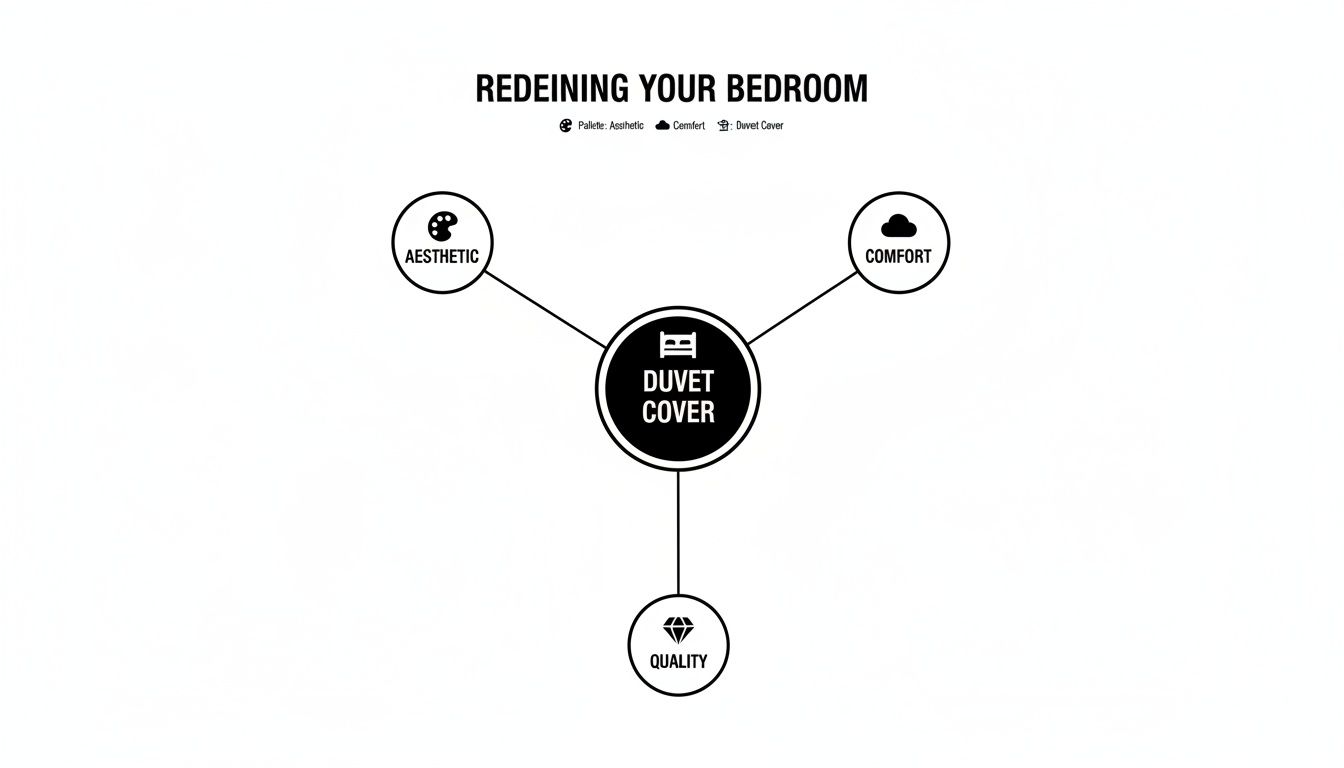
As you can see, the fabric is the heart of it all. It’s the starting point for creating a bedroom sanctuary that feels just right.
The Gentle Embrace of Airo-Washed Linen
Imagine your favourite, most-loved linen shirt—the one that’s been worn and washed until it’s unbelievably soft. That’s exactly what airo-washed linen feels like, right from the very first night. This beautiful European linen goes through a special air-tumbling process that softens up the fibres without using any harsh chemicals, giving it a relaxed texture and a lovely, gentle drape.
Linen is also famous for its breathability. The natural flax fibres are uniquely structured to let air circulate freely, wicking moisture away from your body. This makes it a fantastic choice for anyone who tends to sleep warm, or for keeping you comfortable all year round in New Zealand’s variable climate.
The beauty of airo-washed linen is its effortless elegance. It’s designed to look slightly undone, creating a relaxed, sophisticated style that feels both timeless and incredibly inviting.
And it’s tough, too. Linen fibres are actually stronger than cotton, and they get softer and more beautiful with every wash. When you invest in a quality linen single duvet cover, you’re choosing something that won’t just last but will genuinely get better with age.
The Silky Strength of Supima Cotton
If your idea of luxury is a smooth, silky surface that feels cool and crisp against your skin, then Supima® cotton is probably your perfect match. Supima® is a premium type of cotton grown only in the USA, making up less than 1% of all the cotton in the world. Its secret lies in its extra-long staple fibre.
Think of it this way: a longer fibre can be spun into a yarn that is both finer and stronger. This means Supima® cotton fabric is:
- Exceptionally Soft: The long fibres create a much smoother surface with fewer tiny ends poking out, which is why it feels so silky.
- More Durable: It’s up to 45% stronger than regular cottons. This means it resists pilling, breaking, and tearing, keeping your duvet cover looking and feeling pristine for years.
- Richer in Colour: The finer fibres absorb dye more deeply and evenly, so colours stay vibrant and true, wash after wash.
A Supima® cotton single duvet cover gives you that five-star hotel feeling right at home—a clean, crisp, and incredibly comfortable foundation for a great night’s sleep. If you're weighing up these two amazing natural fibres, our detailed guide on linen vs cotton sheets can help you decide which one best suits your personal style and comfort needs.
Luxury Fabric Comparison for Single Duvet Covers
To make the choice a little easier, we've broken down the key differences between these two luxurious materials. Ultimately, it comes down to personal preference and the feeling you want to create in your bedroom.
| Material | Feel & Texture | Breathability | Durability | Best For |
|---|---|---|---|---|
| Airo-Washed Linen | Soft, textured, relaxed, and gently rumpled. Gets even softer with every wash. | Excellent. Naturally temperature-regulating, keeping you cool in summer and warm in winter. | Extremely high. Flax fibres are incredibly strong, making it a true long-lasting investment. | Warm sleepers and anyone who loves a relaxed, lived-in, and effortlessly chic aesthetic. |
| Supima® Cotton | Silky, smooth, and crisp with a subtle lustre. Resists pilling for a pristine feel. | Very good. It's breathable and moisture-wicking, though not quite as absorbent as linen. | Very high. The extra-long staple fibres create a resilient fabric that resists tearing. | Those who prefer a smooth, hotel-style feel and a crisp, polished look for their bedding. |
Whether you choose the earthy, relaxed charm of airo-washed linen or the sleek, polished finish of Supima® cotton, you're investing in quality. The right material will transform your bed from just a piece of furniture into a personal sanctuary, tailored perfectly to what comfort and style mean to you.
Getting the Perfect Fit for Your Single Duvet Cover
You can choose the most luxurious fabric in the world, but if the fit isn't right, your bed will never look quite finished. It’s the difference between a polished, hotel-worthy look and a bit of a mess. An ill-fitting single duvet cover lets the inner bunch up, get lost, or pull at the seams. It’s these small details that truly make a bed look and feel exceptional.
Getting this right comes down to understanding the relationship between your duvet inner and its cover. This isn't just about matching the size on the label; it’s about how the dimensions work together with the fluffiness of your inner (its loft) and the way the fabric hangs (its drape).
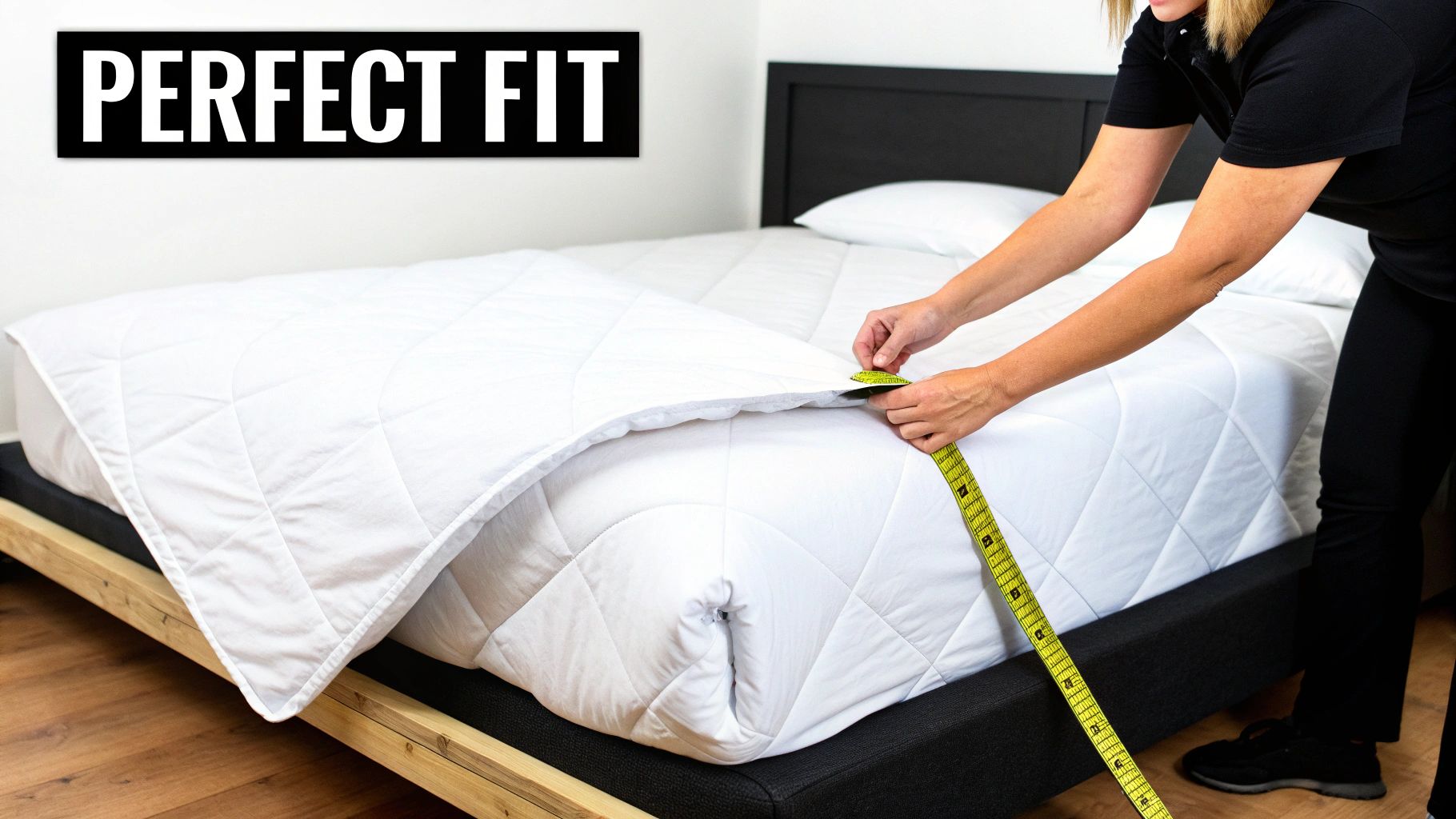
When these elements are in harmony, your bed doesn’t just look inviting—it feels incredible. It’s how you turn a bedroom into a genuine sanctuary.
The Importance of Loft and Drape
Think of your duvet inner as the pillow and the cover as its pillowcase. A case that’s too big leaves the pillow swimming inside, looking flat and sad. One that’s too small makes it lumpy and compressed. It’s exactly the same principle with your single duvet cover.
Loft is simply the height and fluffiness of your duvet inner. A high-loft goose-down or wool duvet will fill out a cover much more completely than a thin, flat synthetic one will. This is why it’s so important to measure your actual inner—don’t just rely on the tag, because loft has a huge impact on its real-world dimensions.
Then you have drape, which is all about how the fabric of the cover falls. A slightly oversized linen cover, for instance, can create a beautifully relaxed, billowy look that feels soft and lived-in. On the other hand, a perfectly fitted Supima® cotton cover gives you that crisp, tailored finish with sharp, clean lines. Neither is better than the other; it just depends on the style you’re after.
Navigating New Zealand Duvet Sizes
Bedding sizes in New Zealand can sometimes feel a bit all over the place, with dimensions varying slightly from one brand to the next. The best approach is to be precise. A few centimetres can be the difference between a seamless fit and a frustratingly bunched-up duvet.
As Kiwis continue to invest in quality home comforts—with projections showing the local bedding market is expected to generate US$122.72m in 2025—getting the fit right has become more important than ever. For a deeper dive, our complete guide to duvet cover sizes in NZ has even more detailed measurements.
To help you get it right the first time, here’s a quick guide to standard NZ sizes and how we design our covers at The Foxes Den.
New Zealand Single Duvet Cover Size Guide
This table breaks down the standard measurements for single and king single duvet covers in New Zealand, making it easy to find the perfect match.
| Bed Size | Standard NZ Duvet Size (cm) | The Foxes Den Duvet Cover Size (cm) | Best Fit For |
|---|---|---|---|
| Single | 140 x 210 | 145 x 215 | Standard single beds, providing a neat and tailored appearance. |
| King Single | 180 x 210 | 180 x 210 | King single beds, offering more generous coverage for a luxurious drape. |
You’ll notice our single covers are designed with a little extra room. This is intentional—it’s to accommodate the loft of premium duvet inners, ensuring a perfect, plump look without straining the seams.
How to Measure for a Flawless Fit
For a truly accurate result, always measure your duvet inner itself, not the mattress. A fluffy inner takes up more space than a flat one, and you need to account for that volume.
It’s easy. Just follow these simple steps:
- Lay It Flat: Place your duvet inner on the floor or a large, flat surface.
- Smooth It Out: Gently pat it down to remove any major lumps, but don't stretch or pull the fabric.
- Measure Width and Length: Using a tape measure, record the width from side to side and the length from top to bottom.
Pro Tip: Your duvet cover should ideally be 2-5 cm larger than your inner. This small allowance gives the inner just enough room to breathe and loft up fully, which prevents it from feeling compressed but keeps it from sliding around.
This quick check takes less than a minute, but it guarantees your new single duvet cover will look and feel fantastic, giving you that perfectly made bed every single day.
The Art of Layering and Styling Your Bed
A beautiful single duvet cover is a great start, but the real magic in creating a luxurious bed is all in the layering. This is how you take a simple bed and turn it into a stunning, inviting centrepiece for your room. It’s about more than just making the bed; it’s about thoughtfully adding texture, depth, and colour to create a space that feels personal and incredibly sophisticated.
Think of it like putting together a perfect outfit. Your duvet cover is the main piece—the dress or the suit—but it’s the accessories like pillows, throws, and sheets that bring the whole look together. There are no rigid rules, just a few core ideas to help you build a bed that truly feels like you.
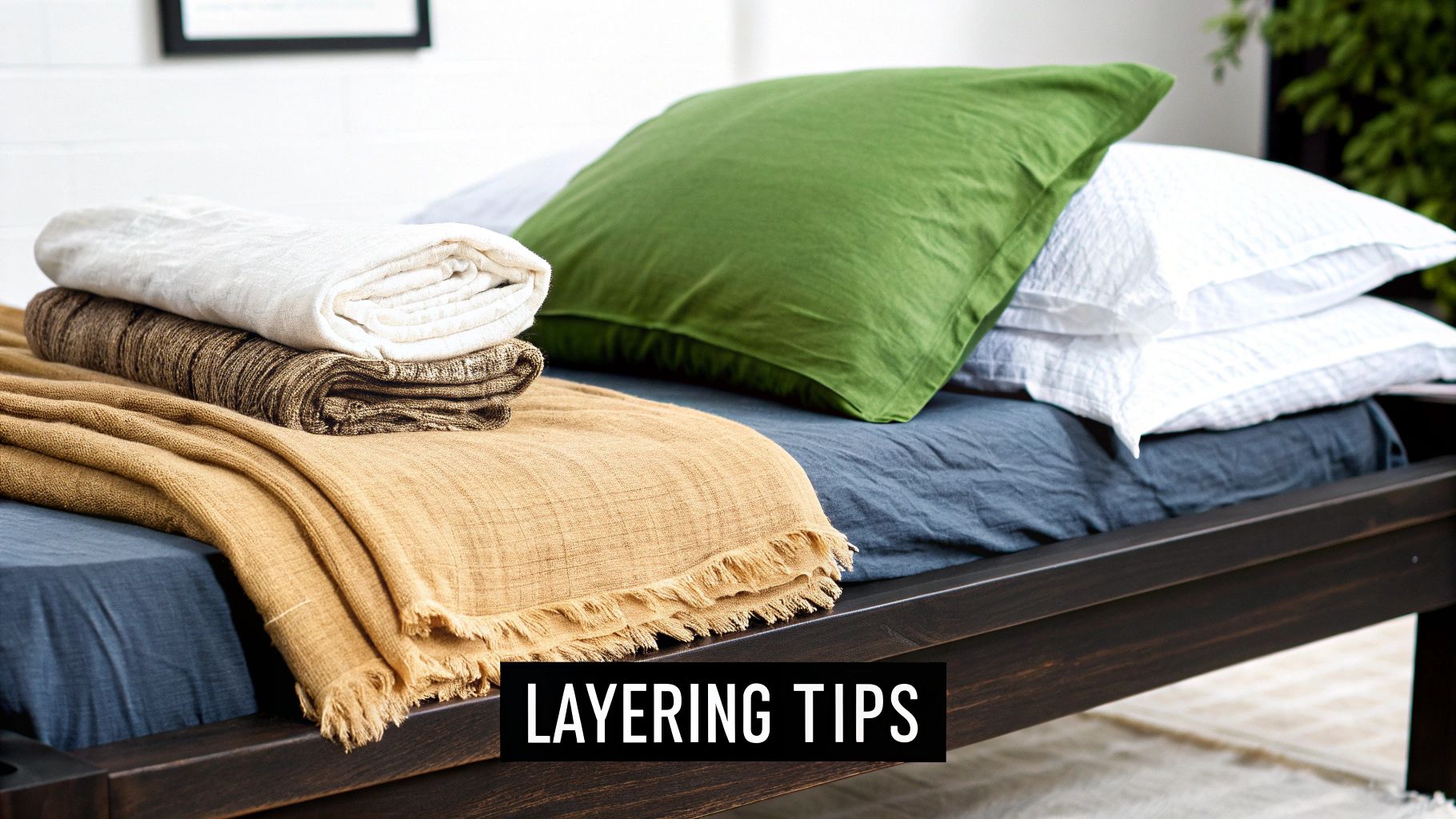
Ultimately, this is about creating visual interest and a sense of tactile comfort. You’re transforming a flat surface into a dynamic, welcoming retreat that promises warmth and a good night's rest.
Creating a Monochromatic Sanctuary
One of the most elegant ways to style a bed is to go monochromatic. This doesn't mean sticking to one flat colour, but rather exploring the full spectrum of tones and shades within a single colour family. Picture a bed layered in soft greys, from a deep charcoal linen duvet to silvery-grey sheets and a dove-grey woollen throw on top.
The secret to making this work is texture. Combining different materials is what stops a monochromatic scheme from feeling flat or one-dimensional. You could pair a smooth Supima® cotton duvet cover with a subtly textured stone-washed linen throw, for instance. The result is a look that’s sophisticated and calming, not boring.
Mastering the Art of Textural Neutrals
Another fantastic approach is to lean into textural neutrals. This style uses a calm, neutral palette—think whites, creams, beiges, and soft, earthy tones—and brings it to life by mixing up the materials. It's the perfect way to create that cosy, inviting atmosphere that feels both modern and completely timeless.
To nail this look, focus on combining contrasting surfaces.
- Start with a crisp, white single duvet cover as your clean, versatile base.
- Layer on a chunky knit wool or cashmere throw to add a serious dose of warmth and cosiness.
- Finish with decorative cushions in different materials, like a soft velvet or a rustic, slubby linen.
This mix of textures creates a rich, sensory experience. It's a style that looks effortlessly chic and feels deeply relaxing.
Professional Pillow Arrangements for a Single Bed
Pillows are the final flourish that can completely elevate the look of your bed. With a single bed, too many pillows can look cluttered, so a more structured approach often works best. The 2-2-1 formula is a bit of an interior stylist's secret, creating a look that’s balanced and luxurious without going over the top.
Here’s the simple breakdown:
- The Foundation (2): Start with two standard sleeping pillows at the back, propped up against the headboard. These are best in crisp pillowcases that match your sheets.
- The Accent (2): Next, place two slightly smaller, decorative cushions in front of them. This is your chance to bring in a new texture, colour, or a subtle pattern.
- The Statement (1): Finish it all off with a single, unique cushion front and centre. This could be a round cushion, a long lumbar pillow, or something with a distinctive texture to act as the focal point.
This simple arrangement adds height, depth, and a sense of deliberate design to your single bed.
The Perfect Throw Blanket Fold
A throw blanket is an essential styling piece, adding that final layer of colour and texture. But how you place it really matters. A thoughtful fold can make all the difference between looking messy and looking polished. For some great tips on getting that effortless drape just right, our guide on how to style a bed with a throw has you covered.
For a clean, hotel-like finish, fold the throw lengthwise into thirds and lay it neatly across the foot of the bed. If you prefer a more relaxed, lived-in feel, just drape it casually over one corner.
A well-styled bed is more than just a place to sleep; it’s a form of self-expression. Each layer, from the single duvet cover to the smallest cushion, contributes to a personal narrative of comfort and style.
It's clear that Kiwis are more interested than ever in creating beautiful home spaces. In fact, New Zealand's home bedding market is projected to see a compound annual growth rate of 6.4% between 2025 and 2035. This trend really highlights our collective desire to invest in comfort and aesthetics where it matters most.
Elegantly Mixing Patterns with Solids
Bringing patterns into the mix can inject personality and flair, but the trick is to find the right balance. You don't want competing patterns to overwhelm the space. A good rule of thumb is to mix one bold pattern with more subtle designs or solid colours. For example, if you have a patterned single duvet cover, keep your sheets and throws in solid, complementary colours pulled from the pattern.
On the other hand, if your duvet cover is a solid colour, you have more room to play with your cushions. Try mixing a classic stripe with a small-scale geometric print. For a softer, organic touch, you could even add accents like floral quilt covers to bring a gentle, nature-inspired feel to the room. By following these simple layering ideas, you can easily turn your bed into a masterpiece of comfort and design.
Caring for Your Bedding Investment
When you choose a beautiful single duvet cover in airo-washed linen or Supima® cotton, you're not just buying bedding; you're making an investment in your comfort. To make sure that investment pays off night after night, a little care goes a long way. It’s nothing complicated, but knowing how to treat these natural fibres will protect their softness, colour, and feel for years to come.
Think of natural fibres like your own skin—they respond best to gentle treatment. The biggest culprits in damaging premium linen and cotton are excessive heat and harsh chemicals. High temperatures can make the delicate fibres brittle, while abrasive detergents can strip them of their natural softness, causing fading and premature wear.
Your Washing and Drying Guide
The secret to longevity is simplicity. You can forget about complicated washing routines and harsh stain removers. All your single duvet covers really need is a gentle, consistent approach to stay looking and feeling incredible.
Your new best friend is a mild, pH-neutral liquid detergent. Powdered versions sometimes leave a residue that can build up on the fabric, making it feel stiff and look dull. Eco-friendly detergents are often a great choice, as they tend to be free of the optical brighteners and harsh chemicals that degrade natural materials.
Just follow these simple steps for a perfect wash every time:
- Choose a Gentle Cycle: A cool or warm wash, ideally around 30°C, is more than enough to get things clean without shocking the fibres with high heat.
- Don’t Overcrowd the Machine: Give your duvet cover plenty of room to move. This ensures a more thorough clean, reduces wrinkling, and puts less stress on the seams.
- Line Dry if You Can: The absolute best way to dry your bedding is on a line, out of direct, harsh sunlight. It's the gentlest method of all and helps to soften the fabric naturally.
- Tumble Dry on Low: If you need to use a dryer, always opt for the lowest heat setting. Try to pull the cover out while it’s still slightly damp to prevent over-drying, which is what sets deep wrinkles.
Busting Common Laundry Myths
Many of us have picked up old laundry habits that actually do more harm than good, especially when it comes to high-quality textiles. It’s time to set the record straight.
-
Myth: You need hot water to get things properly clean.
- Fact: Not anymore. Modern detergents are designed to work brilliantly in cold water. Hot water is not only unnecessary for a standard wash but is actively damaging to natural fibres like linen and cotton.
-
Myth: Fabric softener makes bedding feel softer.
- Fact: Fabric softeners work by coating fibres in a waxy, chemical film. Over time, this build-up actually reduces the natural softness and breathability of your bedding.
-
Myth: It's fine to wash bedding with other clothes.
- Fact: It’s always best to wash your bedding by itself. Zips, buttons, and hooks on clothing can easily snag and tear the delicate fabric of a duvet cover in the wash.
Caring for luxury bedding isn't about adding more steps; it's about removing the harsh ones. Gentle washing, low heat, and the right detergent are all you need to protect your investment and ensure years of comfort.
Storing Your Bedding Correctly
Proper storage is the final piece of the puzzle, especially for sets you only use seasonally. To keep your covers fresh and prevent yellowing, store them somewhere cool, dry, and well-ventilated, like a classic linen cupboard.
Steer clear of plastic containers or bags, as they trap moisture and can lead to mildew. Breathable cotton storage bags are a much better option. Here’s a simple trick: store each set neatly folded inside one of its own pillowcases. It keeps everything organised, protected, and ready for its next use.
How Boutique Spaces Use Single Duvet Covers
For anyone in the world of interior design, boutique hotels, or luxury hosting, bedding is never just an afterthought. It’s a core part of the guest experience, one of those powerful details that can take a space from perfectly fine to truly memorable. In this context, the right single duvet covers are absolutely central, speaking volumes about your commitment to quality and comfort.
In the hospitality game, every single detail is under the microscope. The bed is often the first thing a guest sees, and the feel of that duvet cover is a sensory memory that sticks. This is why choosing premium materials like airo-washed linen or Supima® cotton isn't just about looks; it's a savvy business decision. These fabrics are specifically selected because they can handle the grind of frequent, high-temperature washing and still feel incredible.
Durability Meets Luxury
One of the biggest hurdles for any high-end accommodation is making elegance practical. Your bedding has to stand up to constant use and intense cleaning cycles without losing its softness, shape, or colour. This is exactly where investing in superior single duvet covers really pays off.
- Material Resilience: Think of fabrics with long-staple fibres, like Supima® cotton. They are naturally stronger and far more resistant to pilling, which means they stay looking fresh and new even after hundreds of washes.
- Timeless Appeal: Classic, high-quality materials create a signature style that feels both sophisticated and genuinely welcoming, reinforcing your brand’s premium feel.
Crafting a Memorable Guest Experience
The whole point of boutique accommodation is to create an escape—a home away from home, but elevated. You build this feeling with countless small, thoughtful touches. The simple pleasure of slipping under a soft, breathable duvet cover is one of the most powerful of these details, directly shaping how a guest feels about their stay.
In a world of cookie-cutter hotel rooms, bespoke bedding becomes a real point of difference. It tells a story of quality and care that guests can literally feel, leading to glowing reviews and repeat bookings.
This push to create exceptional stays is a huge factor in the global home bedding market's growth, which is being boosted by a new appreciation for the link between quality sleep and wellbeing. To understand the bigger picture of setting up a welcoming space, getting some practical advice on how to open a bed and breakfast can offer some fantastic perspective.
At the end of the day, for any boutique space, a premium single duvet cover isn't just another item on a shopping list. It's a fundamental investment in your reputation, your guests' happiness, and the art of hospitality itself.
Your Single Duvet Cover Questions Answered
When you’re choosing new bedding, a few practical questions always pop up. To help you pick the perfect duvet cover for your space, we’ve put together some quick, clear answers to the queries we hear most often.
Think of this as your go-to cheat sheet for getting all the details right, making the whole process of creating your dream bedroom that much easier.
What Is the Difference Between a Single and a King Single Duvet Cover in NZ?
Here in New Zealand, it all comes down to width. A standard single duvet cover measures 140cm x 210cm, designed to fit a regular single bed just right. A king single duvet cover, on the other hand, is a good bit wider at 180cm x 210cm to properly cover the extra room on a king single mattress.
The golden rule is to always match your duvet cover to your duvet inner. Getting this right is the secret to avoiding that annoying bunched-up mess or those floppy, empty corners, ensuring your bed always looks plump and inviting.
How Often Should I Wash My Luxury Duvet Cover?
When you've invested in beautiful natural fibres like airo-washed linen or Supima® cotton, a little care goes a long way. We suggest washing your duvet cover every one to two weeks. This simple routine is enough to wash away natural body oils, keeping the fabric feeling fresh and looking its best.
A top tip for longevity: stick to a gentle wash cycle with a pH-neutral detergent and steer clear of high heat when drying. This small step will preserve the fabric's incredible softness and ensure your bedding stays beautiful for years to come.
Can I Use a Single Duvet Cover on a Double Bed for Styling?
You certainly can, but only as a finishing touch. A single duvet cover folded neatly across the foot of a double or even a queen bed works beautifully as a bed runner. It’s a clever little trick for adding an extra pop of colour or a layer of interesting texture.
Just remember, it’s purely for looks. It won’t be wide enough to actually sleep under on a larger bed, so think of it as a stylistic accent to complete that perfectly layered bed.
Ready to find the foundation for your bedroom sanctuary? Explore the curated collection of luxurious single duvet covers at The Foxes Den and discover your perfect match today.
https://www.thefoxesden.co.nz