


Dryer Balls NZ A Kiwi Guide to Faster Drying and Lower Bills
Dryer balls are one of those brilliantly simple ideas that are making a real comeback in Kiwi homes. They're a natural, reusable alternative for anyone looking to cut down drying time, soften clothes without nasty chemicals, and ultimately, lower their power bill. Think of them as tiny, tireless helpers that bounce around in your dryer, making the whole process more efficient.
For those of us who appreciate practical, eco-friendly solutions, switching to dryer balls is a no-brainer.
What Are Dryer Balls and Why Are Kiwis Using Them?
You know how when you pull a big load of sheets from the dryer, the outside is bone dry but the middle is still annoyingly damp? That’s because everything has clumped into a giant ball, trapping moisture and blocking the hot air. Your clothes do the exact same thing on a smaller scale, which is inefficient and a waste of time and energy.
Now, imagine tossing a few small, solid wool balls into that same load. As the drum spins, they get to work, bouncing around, separating your clothes, and lifting fabrics away from each other. This simple, physical action is the secret behind how dryer balls work. They create space, allowing hot air to flow freely and dry everything much more evenly and quickly.
The Mechanics of Faster Drying
By stopping your laundry from tangling and clumping, dryer balls make sure the heat gets distributed properly. The wool itself is also slightly absorbent, wicking away a bit of moisture to help things along. The result is a much more efficient drying cycle.
For the average New Zealand household, this can slash drying times by up to 25%. It's a tiny change to your laundry routine that makes a big difference, saving you precious time and money with every single load.
A Natural Approach to Softness
Beyond just drying faster, dryer balls are a fantastic, chemical-free way to soften your laundry. Most commercial fabric softeners and dryer sheets leave a thin chemical film on your clothes. This coating is what makes them feel "soft," but it can also build up, reduce the absorbency of your towels, and irritate sensitive skin.
Dryer balls work differently. They soften fabrics purely through friction. As they tumble against your clothes, they gently agitate the fibres, leaving them naturally softer and fluffier without any chemical residue. This mechanical massaging fits perfectly with the Kiwi mindset of finding smart, simple, and sustainable ways to get things done.
The key benefits are pretty straightforward:
- Reduced Energy Consumption: Shorter drying cycles mean a lighter load on your electricity bill.
- Chemical-Free Softening: A perfect choice for babies, people with sensitive skin, and for preserving the quality of your best linens.
- Less Waste: A set can be used for over 1,000 loads, completely replacing single-use dryer sheets.
- Fewer Wrinkles: The constant tumbling helps smooth out wrinkles as clothes dry, which means less time standing over an ironing board.
How Dryer Balls Cut Costs and Boost Efficiency
The real magic of dryer balls is how they turn simple physics into actual savings you can see on your power bill. They work by stopping your laundry from clumping into one big, damp ball, creating space for warm air to move around much more freely. It’s this simple mechanical action that makes them so effective.
As they bounce and tumble, they separate sheets and clothes, making sure the heat gets to every fibre evenly. The result? A surprisingly big drop in drying time, often by 10% to 25% for each load. Those minutes really start to add up over a year, leading to some nice energy savings.
This infographic breaks down the core benefits perfectly.
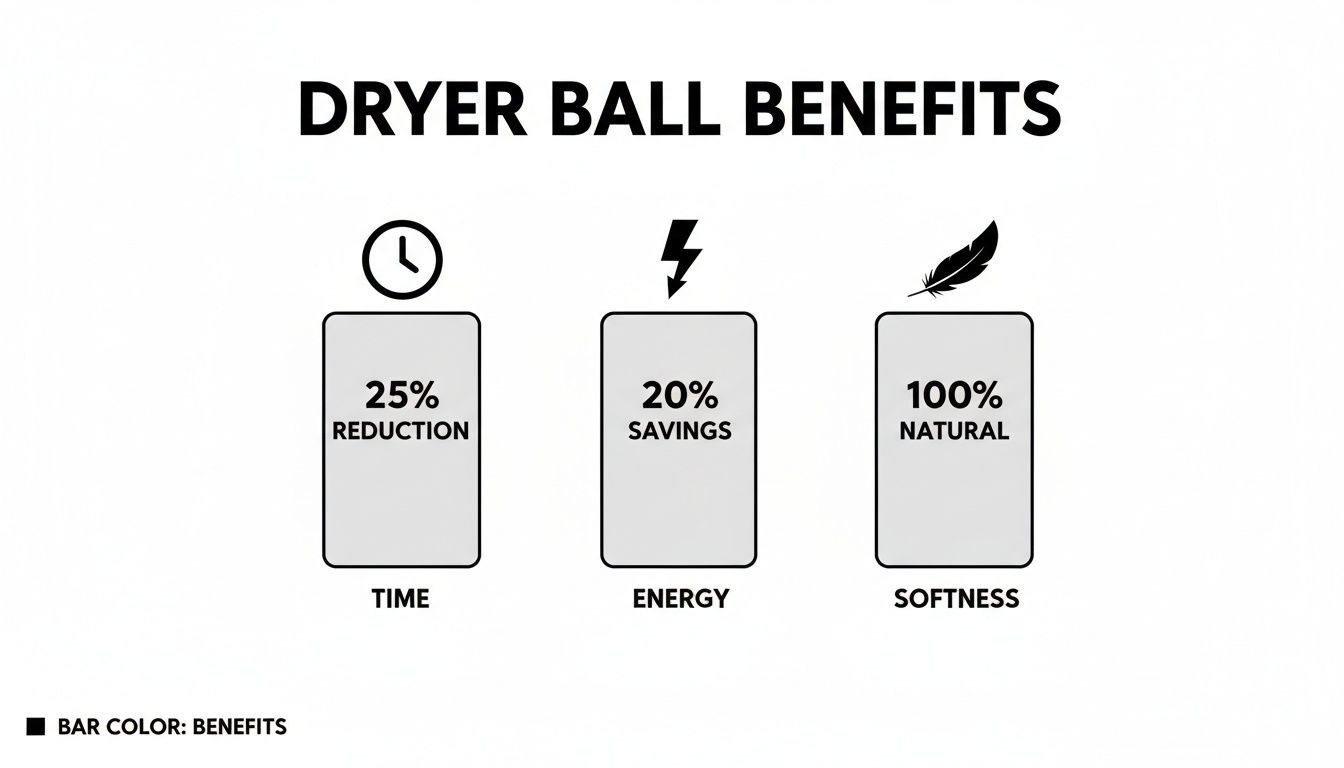
As you can see, it’s a win-win-win: you save time, use less power, and get softer fabrics without adding a single chemical.
What This Means for Kiwi Homes
For those of us in New Zealand, these efficiency gains aren't just numbers on a page. When you look at local electricity prices and typical dryer usage, the financial benefits become very clear. A standard Kiwi household doing one load a day could easily save between NZ$22 and NZ$110 on power each year.
But that’s only half the story.
When you stop buying single-use dryer sheets and liquid fabric softeners, the average family can save an extra $50 to $100 per year. All up, that's a potential annual saving of up to $210 from one small, one-off purchase.
This kind of consistent saving is why so many people are making the switch. For even more ways to make your machine work smarter, check out these other top tips to cut the cost of tumble drying—they work brilliantly alongside dryer balls.
Your Annual Savings With Dryer Balls in NZ
Let's put it all together. This table gives a rough idea of what a typical New Zealand household might save in a year by swapping to wool dryer balls.
| Benefit | Traditional Method (Dryer Sheets & Softener) | With Wool Dryer Balls | Potential Annual Savings (NZD) |
|---|---|---|---|
| Drying Time | Standard cycle duration | Reduced by up to 25% | $22 – $110 (Electricity) |
| Fabric Softening | Liquid Softener & Dryer Sheets | Natural tumbling action | $50 – $100 (Product Costs) |
| Environmental | Ongoing waste and chemical runoff | Reusable, natural, biodegradable | Priceless |
| Total Estimated | - | - | $72 – $210 |
As the numbers show, the combined savings from reduced energy use and cutting out disposable products make a compelling case for this simple laundry upgrade.
The Environmental Upside Goes Beyond Your Wallet
The financial argument is strong, but the ecological benefits are just as important. A single set of quality wool dryer balls can last for over 1,000 loads. That completely gets rid of the waste from disposable dryer sheets, which just end up in the landfill after one use.
You also get to stop buying those big plastic bottles of liquid fabric softener. This not only cuts down on your household's plastic waste but also stops the synthetic chemicals and fragrances in many softeners from washing into our waterways. It's a small change in the laundry room that makes a genuinely positive environmental impact.
Choosing the Right Dryer Balls for Your Home
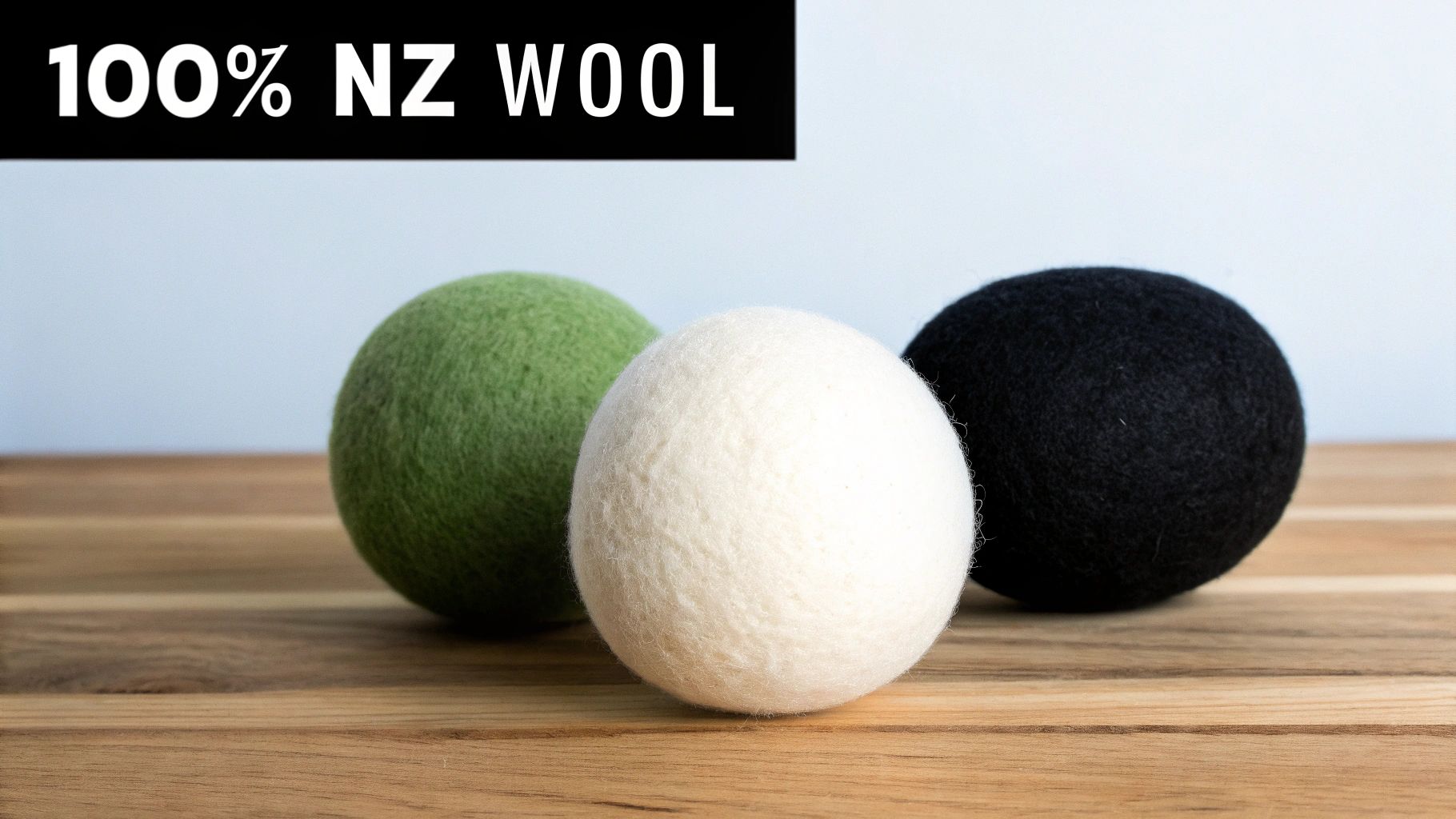
When you start shopping for dryer balls here in New Zealand, you'll find two main choices pop up: natural wool and hard plastic. While both are designed to separate your washing and help it dry faster, they feel and perform very differently. Picking the right one for your home really comes down to what you value most in your laundry routine.
Plastic dryer balls, often covered in spikes, work by physically pummelling fabrics to soften them. They can get the job done, but the trade-off is the noise – a constant, loud clattering inside your dryer drum. Over time, that abrasive action isn't ideal for delicate textiles, and they don't have the same gentle, eco-conscious appeal as wool.
On the other hand, wool dryer balls—especially those made from 100% New Zealand wool—offer a much softer, quieter, and more sustainable solution. They gently tumble through your laundry, absorbing moisture and improving airflow, which is far kinder to premium fabrics like linen and Supima® cotton.
Wool vs Plastic A Quick Comparison
To make things a bit clearer, let's put them head-to-head. Here’s a quick look at how the two stack up.
| Feature | 100% Wool Dryer Balls | Plastic Dryer Balls |
|---|---|---|
| Performance | Excellent; cuts down drying time and softens naturally. | Good; shortens drying time but can be harsh. |
| Noise Level | Very quiet, just a soft tumbling sound. | Loud and clunky against the dryer drum. |
| Eco-Friendliness | Biodegradable, renewable, and all-natural. | Made from petroleum, not biodegradable. |
| Durability | Lasts for 1,000+ loads with proper care. | Can crack or break down over time. |
For any household focused on sustainability and taking good care of their clothes, wool is the standout choice. If you're looking to create a truly efficient and pleasant laundry space, see how they fit in with other key laundry room essentials.
How Many Dryer Balls Do You Need
So, you’ve decided on wool. Great choice! The next question is, how many do you actually need? Getting the number right is the key to unlocking their full potential. If you use too few, your clothes won't separate enough. Too many, and you might just overcrowd the dryer.
A simple rule of thumb is to match the number of balls to your load size. This ensures optimal airflow and tumbling action, maximising efficiency and softness every time you do a load of washing.
Here’s a straightforward guide to help you get started:
- Small to Medium Loads: Pop in 3 to 4 dryer balls. This is perfect for your everyday washing.
- Large Loads: Go for 5 to 6 dryer balls. This works well for a big load of towels, bedding, or the full family’s laundry.
- Extra-Large Items: When drying bulky things like duvets or heavy blankets, using up to 8 balls will stop them from twisting into a damp, tangled mess and help them dry right through.
Choosing the right type and number of dryer balls is a small change that makes a big difference with every load. By opting for quality New Zealand wool and using the right amount, you’ll be rewarded with softer clothes, smaller power bills, and a much quieter, greener laundry day.
The Local Movement Behind Sustainable Laundry
Here in New Zealand, dryer balls are so much more than a laundry gadget. They've really come to represent a wider shift in how we think about the things we bring into our homes. There's a real groundswell of people looking for products that are not just effective, but also sustainable, locally sourced, and made with genuine care.
This movement is all about connecting with the story behind an item—where it came from, what it's made of, and the community it helps support.
Wool dryer balls have almost become a poster child for this change. They just fit so perfectly with our Kiwi values of being practical and looking after the environment. When you choose a simple, reusable wool ball over a disposable, chemical-filled dryer sheet, you’re making a conscious choice to cut down on waste and live a little more naturally. It's one of those small actions that reflects a much bigger commitment to a healthier home and a healthier planet.
The Power of Provenance
The idea of ‘provenance’—really knowing the origin of a product—has become incredibly important for savvy shoppers. When you see a label that says "100% New Zealand wool," it means something.
That simple phrase speaks volumes about quality craftsmanship, ethical sourcing, and the strength of our own agricultural industry. It’s not just a marketing tag; it’s a promise of authenticity that really hits home for Kiwis.
Choosing to support the local artisans and businesses that create these products is a direct investment back into our own economy. It helps keep traditional skills alive and ensures the benefits stay right here in our communities. This focus on 'local' is a huge reason why the search for dryer balls NZ has skyrocketed.
This isn't just a fleeting trend; it's a real, measurable shift in how we shop. The growing demand for local, natural laundry solutions has carved out a distinct market, leading to a noticeable boom in Kiwi suppliers.
We're not just imagining this increase in demand, either. Commercial data reveals that over the last five years, the number of unique listings for "100% New Zealand wool dryer balls" on major online marketplaces has seen a 191% increase in product variety. That’s a massive jump, and it shows just how enthusiastically Kiwi households are making this sustainable switch.
This isn't just a fad. It’s a lasting change in our household habits, showing a collective move towards making thoughtful, sustainable choices part of our everyday lives. For more on this, check out our guide on why you should go natural in the laundry.
How to Use and Care for Your Dryer Balls
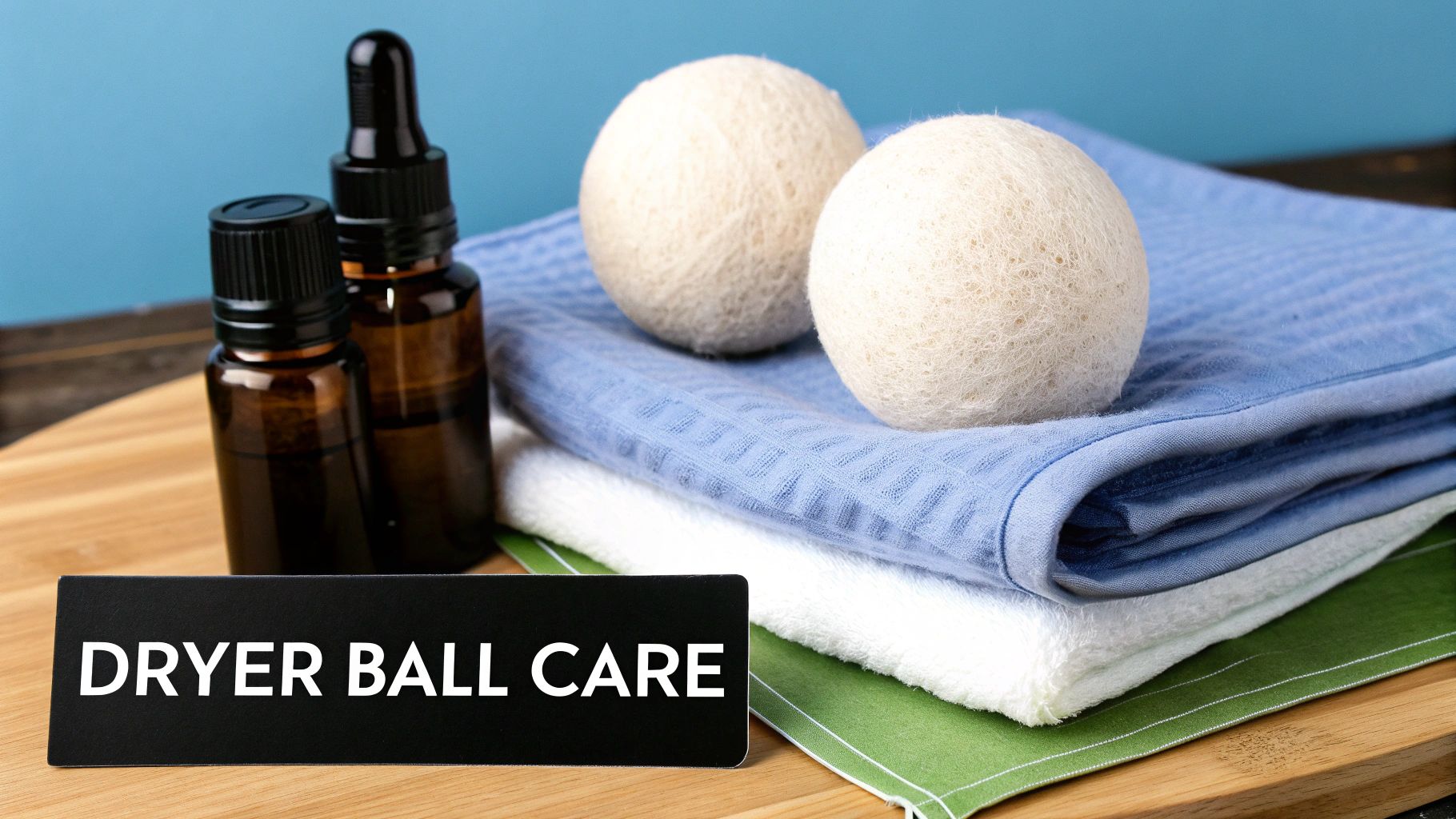
Getting the best results from your wool dryer balls is refreshingly straightforward. Just pop them in the dryer with your wet laundry and you’re good to go. The main trick is to give everything room to move—avoid stuffing the dryer so full that the clothes and balls can't tumble freely.
For an average load, three or four balls will do the job perfectly. If you're tackling something bigger, like a full set of sheets or a mountain of towels, using five or six is a better bet. This gives them enough muscle to separate the heavy fabric, letting that warm air flow through and get everything dry and soft, faster.
Adding a Natural Scent
Miss that fresh scent from conventional dryer sheets? You can get a similar effect, just without all the harsh chemicals. All you need are your favourite essential oils.
Simply put two to three drops of an oil onto each wool ball. You could try lavender for a calming aroma on your bedding, or a bright citrus for your towels. Let the oil soak in for a minute or two before starting the cycle, and your laundry will come out with a lovely, subtle fragrance.
Recharging Your Wool Dryer Balls
After a while, you might notice your wool dryer balls look a bit tired. They can become dense and pick up lint, which makes them less effective at their job. When this happens, it's time to give them a quick "recharge" to bring back their fluffy, absorbent magic.
It's a simple process that only takes two steps:
- Wash Them: Pop the dryer balls into a delicates bag and wash them on a hot cycle with a tiny bit of gentle detergent.
- Dry Them Thoroughly: Once washed, toss them in the dryer on a high heat setting until they are completely dry. This re-felts the wool, tightening up the fibres and making them good as new.
Think of recharging as a tune-up for your dryer balls. Doing this every few months will keep them working at their best. A little bit of care goes a long way—a good set can last for over 1,000 loads, making them an incredibly smart and sustainable choice for any Kiwi home.
Protecting Premium Linens and Delicates
When you invest in beautiful fabrics like Supima® cotton or our airy, airo-washed linen, you’re choosing a certain level of everyday luxury. But keeping that softness and beautiful structure means caring for them properly, and the high, constant heat of a tumble dryer can be their worst enemy.
This is where wool dryer balls really prove their worth. Instead of letting your sheets and towels clump into a damp, tangled mess, the balls gently tumble between the layers. This simple, physical separation allows warm air to move through everything much more freely.
The result? No more hot spots where parts of the fabric get over-cooked, and a much more even, efficient dry.
Gentle Care for Delicate Fibres
The beauty of wool dryer balls is how they soften fabrics. It’s a completely mechanical process—a gentle, persistent massaging action as they bounce around the drum. This is a world away from liquid fabric softeners, which coat fibres in chemicals that can build up over time and actually reduce the breathability and absorbency of your best textiles.
Getting the best out of your linen, in particular, means understanding its unique needs. If you’d like to dive deeper, our guide on washing and caring for luxury European linen is the perfect companion to using dryer balls.
By cutting down the overall drying time by up to 25%, dryer balls drastically reduce how long your linens are exposed to potentially damaging heat. This not only keeps them feeling soft and looking vibrant, but it also genuinely extends their life, protecting your investment for years.
Mastering a gentle laundry routine is key. Taking a moment for understanding fabric care symbols on your labels will always pay off in the long run. Ultimately, using dryer balls NZ families can rely on isn’t just about saving time or power—it’s about giving the fabrics you love the best possible care.
Got Questions About Dryer Balls? We've Got Answers.
Making a change to your laundry routine, even a small one, can bring up a few questions. It's completely normal! We've heard a few common queries from Kiwis thinking about making the switch to dryer balls, so we’ve put together some straightforward answers to help you feel confident from your very first load.
Think of this as your quick-start FAQ.
Will Wool Dryer Balls Leave Fluff All Over My Clothes?
This is probably the number one question we get, and it's a fair one. The short answer is no—high-quality, tightly felted wool dryer balls will not shed on your laundry.
Over many, many cycles, you might see some light pilling on the surface of the balls themselves. This is totally normal! It’s just a sign they're working hard, creating that gentle friction that softens your fabrics. It doesn't mean they're about to fall apart.
Are They Noisy? I've Heard Plastic Ones Are Loud.
You're right, the old-school plastic dryer balls can make a real racket. But wool dryer balls are a different story entirely. They're much quieter.
You'll hear a soft, gentle tumbling sound, which is usually much softer than the normal hum of the dryer itself. It’s a huge improvement over the harsh clatter of plastic hitting the metal drum.
For many people, especially those in smaller homes or apartments, the lack of noise is a game-changer. It makes laundry day that much more peaceful.
Where Can I Find Good Dryer Balls in New Zealand?
You're in luck! It’s easy to find fantastic 100% New Zealand wool dryer balls these days. A great place to start is with local artisans, at farmers’ markets, or in specialised eco-stores, which is a lovely way to support small Kiwi businesses.
The popularity of dryer balls in NZ has really taken off. It's now a retail category worth an estimated NZ$1–4 million annually, which just goes to show how many households have embraced them. You can learn more about this thriving local market and its positive impact on our wider wool industry.
Ready to feel the difference for yourself? The Foxes Den is all about bringing natural, thoughtful luxury into your daily life. Our curated collections are designed to make your home a more beautiful and comfortable place.