


A Guide to Finding the Perfect Duvet Cover Queen Size
Choosing the right duvet cover for your queen bed is about so much more than picking a colour you like. It’s that final, crucial layer that pulls your whole bedroom together and turns it from just a room into your personal sanctuary. This is where precise measurements meet beautiful materials, creating an experience that dictates your comfort every single night.
Your Guide to the Perfect Queen Duvet Cover
I know that finding the perfect bedding can feel a bit overwhelming, but it really just comes down to understanding a few key things. Think of this as your personal cheat sheet for the bedroom, here to cut through the confusion and make this decision an easy, confident one. We'll walk through everything you need to know to choose a cover that feels just as incredible as it looks.
A great duvet cover does more than just protect your duvet inner. It sets the entire mood for your sleep space. As the largest piece of fabric in the room, it's your most powerful styling tool—whether you’re after a calm, minimalist vibe or a rich, layered retreat.
This guide is designed to give you that practical, hands-on knowledge. You'll learn how to:
- Understand NZ Dimensions: Get to grips with the exact measurements for a queen size duvet cover here in New Zealand and see how our sizing stacks up against international standards.
- Select Premium Materials: Really understand the difference between the silky-smooth feel of Supima® cotton and the relaxed, breathable texture of pure European linen.
- Identify Quality Craftsmanship: Learn to spot the small but vital details—like internal corner ties and sturdy closures—that tell you a cover is built to last.
- Master Styling Techniques: Discover the secrets to layering textures and tones to create a bed that looks like it’s been pulled straight from a high-end design magazine.
In the end, your duvet cover is a really personal choice. It's the fabric you feel against your skin every night and the first thing you see each morning. Investing in quality here is a direct investment in your own well-being.
By the time you're done reading, you’ll have everything you need to choose a queen duvet cover that not only fits your bed perfectly but also brings lasting comfort and sophisticated style to your home.
Understanding Queen Size Duvet Dimensions
When you’re on the hunt for a duvet cover queen size, it’s tempting to think the label says it all. But here's a little secret from the world of bedding: 'queen' isn't a universal standard. Much like clothing sizes can vary wildly from country to country, so too can duvet dimensions.
This sizing mismatch is the number one culprit behind that brand-new cover not quite fitting your duvet inner, leaving you with annoying bunching or a sad, flat-looking bed. Think of it like buying a "medium" shirt in Europe versus one from an American brand—the fit could be completely different. A queen duvet cover from the US or UK won’t have the same measurements as one designed for our Kiwi beds, making it crucial to check the exact dimensions in centimetres before you buy.
Why Drape and Fit Matter So Much
The size of your duvet cover does more than just protect your inner; it’s a key player in the overall look and feel of your bedroom. What we're aiming for is a beautiful 'drape'—that graceful, elegant way the fabric hangs over the sides of your mattress. The right amount of drape gives your bed a plush, full, and incredibly inviting appearance.
Get it wrong, and the problems start. If the cover is too small for your inner, it will squash the filling, making your duvet feel dense and far less cosy. On the flip side, a cover that’s too large lets the inner swim around and bunch up, creating a lumpy, untidy mess that’s no fun to sleep under.
The sweet spot? A cover that’s either the same size as your inner or just 2-5 cm smaller. This snug fit helps the duvet stay lofty and full, giving you that five-star hotel look. To nail the drape, you'll first need a clear understanding of your queen mattress dimensions.
This chart shows what people are looking for when they make their choice.
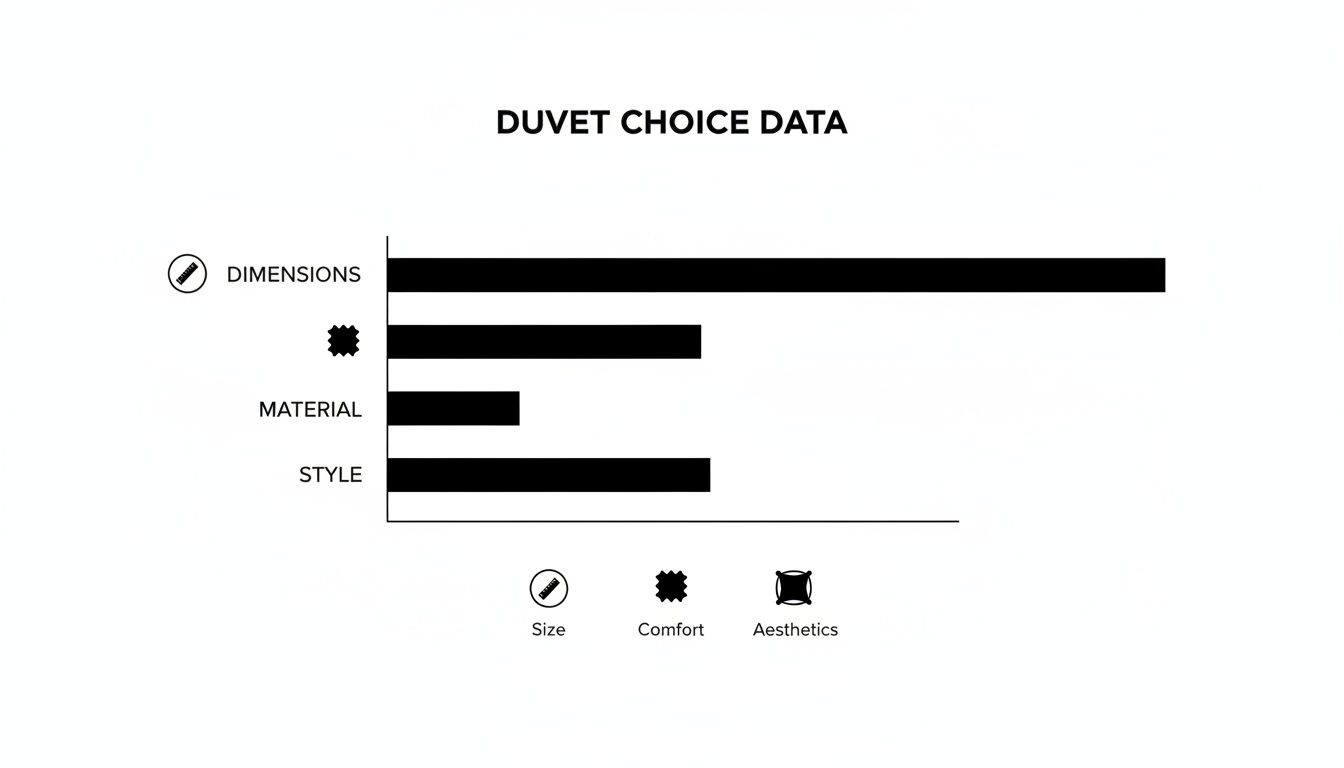
As you can see, while style and material are big factors, getting the dimensions right is the absolute foundation for a well-made bed.
Comparing International Queen Sizes
Don't worry, navigating these international differences is pretty straightforward once you know the numbers. Here in New Zealand, the standard queen size duvet cover is 210 x 210 cm. That distinct square shape is a hallmark of NZ and Australian bedding.
Contrast that with the US and UK, where queen sizes are typically rectangular. Trying to fit a Kiwi square inner into an overseas rectangle cover is a recipe for frustration. For a deeper dive, our guide on https://www.thefoxesden.co.nz/blogs/the-foxes-den-blog/queen-size-duvet-dimensions-nz breaks it all down.
To help you see the differences at a glance, here’s a quick comparison of what you might find while shopping online.
International Queen Size Duvet Cover Dimensions
| Region | Dimensions (cm) | Dimensions (inches) |
|---|---|---|
| New Zealand/Australia | 210 x 210 cm | 83 x 83 inches |
| United States (Queen) | 229 x 224 cm | 90 x 88 inches |
| United Kingdom (King*) | 225 x 220 cm | 88 x 86 inches |
*A quick note: The UK equivalent for a Kiwi queen bed is often called a 'King'.
This table makes it obvious why an American queen duvet cover would completely swamp a New Zealand queen inner, leaving you with heaps of excess fabric and a sloppy, unkempt bed.
Key Takeaway: Always trust the numbers, not the name. Before you even start browsing for a duvet cover queen size, grab a tape measure and check your duvet inner from seam to seam. This one simple step will save you a world of hassle and is your best guarantee for a perfect, luxurious fit.
Choosing Your Ideal Fabric: Supima® Cotton vs European Linen
The fabric of your duvet cover queen size is where the real magic happens. It’s the material you feel against your skin every night, the texture that truly defines the comfort and character of your bed. When you're looking for luxury bedding, two names consistently rise to the top for their exceptional quality and distinct personalities: Supima® cotton and European linen.
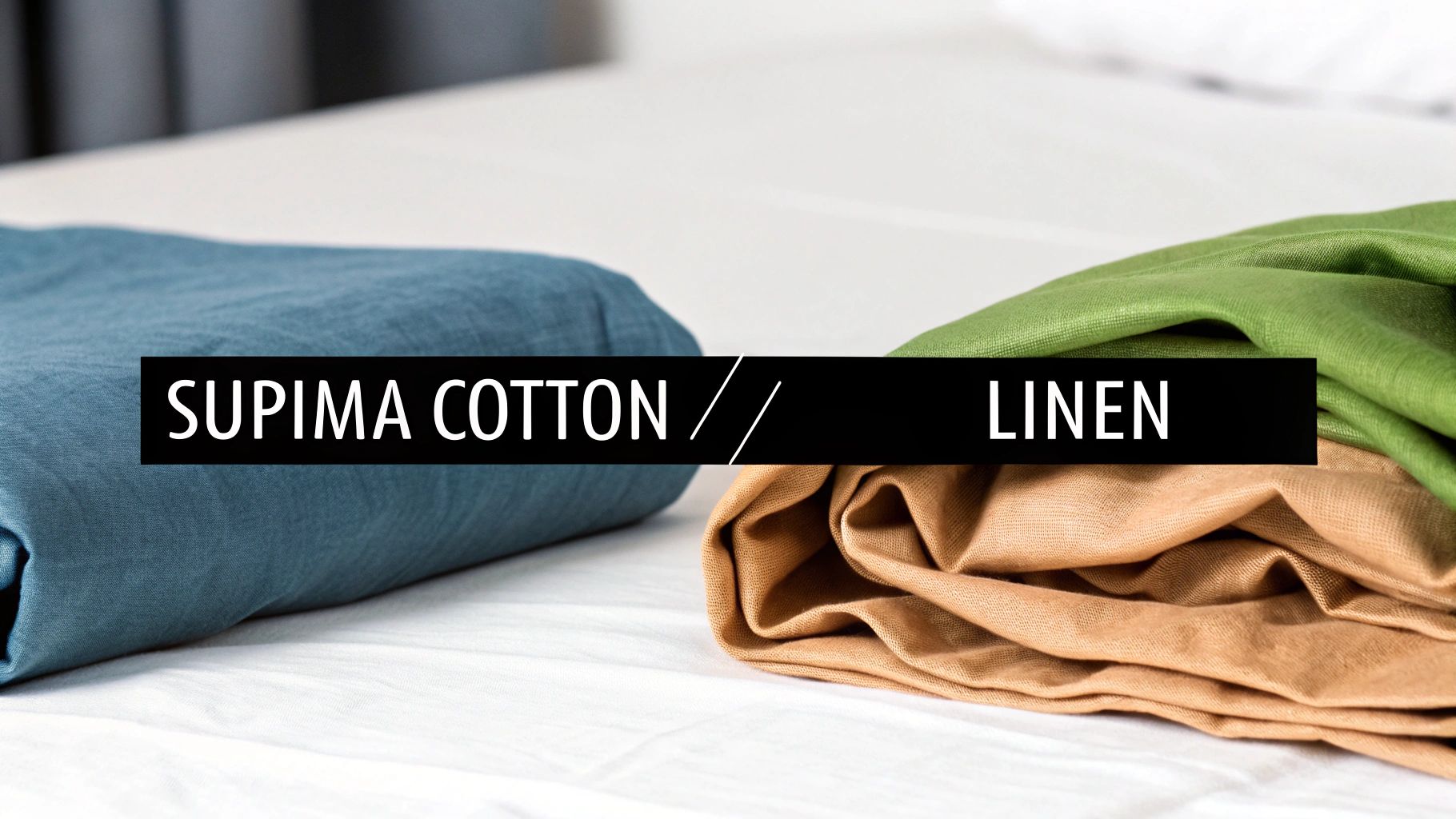
Think of it like choosing between a crisp, tailored silk shirt and a soft, flowing linen one. Both are beautiful and feel incredible, but they offer completely different sensory experiences. Your personal taste for how a fabric feels, how it looks, and even how you sleep will point you toward the perfect choice.
Let's dive into what makes each of these fabrics a worthy investment for your bedroom sanctuary.
The Silky Smooth Embrace of Supima® Cotton
Supima® cotton isn’t just your average cotton; it’s the absolute cream of the crop, representing the top 1% of cotton grown worldwide. What sets it apart is its extra-long staple fibre, which is significantly longer and stronger than the fibres in regular cotton.
This unique structure is the secret behind a fabric that’s unbelievably soft, incredibly durable, and highly resistant to pilling. A Supima® cotton duvet cover has a silky, sateen-like feel that glides against your skin, instantly reminding you of the immaculate bedding in a five-star hotel. It drapes beautifully over the bed for a smooth, clean, and polished finish.
Better yet, those longer fibres absorb dye with incredible depth, meaning colours stay vibrant and true for years, wash after wash. If you love a pristine bed with a touch of hotel-style luxury, Supima® cotton is simply unbeatable.
The Relaxed Charm of European Linen
In contrast, airo-washed European linen offers a completely different, yet equally luxurious, experience. Sourced from the flax plant, linen is celebrated for its breathability, impressive durability, and unique texture that only gets better with age.
Imagine a fabric that feels lived-in and inviting from the very first night. That’s the beauty of European linen. The airo-washing process softens the fibres right from the start, giving the duvet cover a relaxed, gently rumpled appearance that feels both effortless and sophisticated. It’s a material that doesn't demand perfection—its natural texture is a huge part of its charm.
Linen is renowned for its thermoregulating properties. This means it keeps you cool and comfortable on warm nights and cosy during cooler months, making it an ideal all-season fabric, especially for New Zealand’s variable climate.
This amazing breathability and moisture-wicking ability are what make linen a firm favourite for anyone who values a comfortable, healthy sleep environment.
A Side-by-Side Comparison
To help you decide, let's break down the key characteristics of each fabric. This isn’t about which one is "better," but which is better for you. Understanding these differences is crucial, and for a deeper dive, you can explore our complete guide on linen vs cotton sheets and which bedding is right for you.
Below is a quick comparison to help you weigh your options.
Material Comparison: Supima® Cotton vs. European Linen
| Feature | Supima® Cotton | European Linen |
|---|---|---|
| Feel & Texture | Silky, smooth, and crisp with a sateen-like finish. | Soft, breathable, and slightly textured; grows softer with each wash. |
| Appearance | Polished, lustrous, and elegant with a beautiful drape. | Relaxed, naturally textured, and effortlessly chic. |
| Durability | Exceptionally strong and resistant to pilling and tearing. | One of the strongest natural fibres, known for its longevity. |
| Breathability | Breathable, but less so than linen. | Highly breathable and moisture-wicking, ideal for all seasons. |
| Care | Easy to care for; machine washable and holds colour well. | Machine washable; becomes softer and more absorbent over time. |
The growing appreciation for high-quality natural fibres is clear. In New Zealand, the demand for premium bedding sits within a steadily expanding market, showing a definite trend of Kiwis upgrading to materials like high-thread-count cotton and European flax linen.
Ultimately, your choice comes down to a feeling. Do you crave the polished perfection of a luxury hotel bed, or the relaxed, breathable comfort of a cosy retreat? Both Supima® cotton and European linen offer a superb foundation for a beautiful and truly comfortable bed.
The Details That Signal Real Quality
True luxury in a duvet cover queen size isn't just about the feel of the fabric—it's hidden in the small, thoughtful details of how it's put together. These are the tell-tale signs of excellent craftsmanship you can see and feel, the things that promise your bedding won't just look beautiful on day one, but will actually last. So, let’s look past the material and get into the construction details that separate a decent duvet cover from a great one.
Knowing what to look for changes how you shop. It helps you spot the difference between a cover that's just stylish and one that's genuinely built for comfort and a long life.
Closures: More Important Than You Think
The closure is one of the hardest-working parts of your duvet cover, but it's easy to overlook. Its main job is simple: keep your duvet inner securely tucked away for a clean, tidy look. The two best options you'll find each have their own advantages.
- Hidden Buttons: For a really polished, high-end finish, hidden buttons are the classic choice. They're tucked away on an internal flap, so once they're done up, they're completely invisible. This creates a beautifully smooth, uninterrupted line at the foot of your bed. The best ones use durable materials like mother-of-pearl or strong resin that won't crack or chip in the wash.
- Durable Zips: A well-made zip offers pure convenience and a really secure seal. You'll find that premium covers use discreet zips, often colour-matched to the fabric so they just blend right into the seam. A quality zip is also great for keeping dust out and making sure the duvet inner never peeks through.
Internal Corner Ties: The Secret to a Bed That Stays Made
Ever woken up to find your duvet inner has migrated into a sad clump at one end of the cover? It’s a common frustration, but it’s easily solved by one simple, crucial feature: internal corner ties. These are just small fabric ribbons sewn into each of the four inside corners of the duvet cover.
You just tie these onto the loops on your duvet inner, anchoring it firmly in place. Honestly, this tiny detail is a non-negotiable feature in any well-made duvet cover. It guarantees your inner stays put, preventing all that annoying shifting and bunching. The result is a bed that looks neater and feels much more comfortable, night after night.
Think of corner ties as the scaffolding that keeps everything in shape. Without them, even the most gorgeous duvet cover can end up looking messy and feeling lumpy. It’s a small touch that makes a massive difference.
Seams and Finishing: The Final Telltale Signs
The last mark of real quality is in the finishing. A quick look at the seams tells you a lot about the care that went into making a duvet cover. Top-tier bedding has strong, neat stitching that lies perfectly flat without any puckering or pulling.
Look for double-stitched or French seams, a technique where the raw fabric edges are neatly tucked away inside the seam itself. This doesn't just create a clean, tidy look on both the inside and out—it also makes the seam incredibly strong and stops it from fraying over time. These are the subtle clues that tell you your duvet cover was crafted with real care, designed to bring you comfort and style for years to come.
How to Style and Layer Your Queen Bed
A beautifully styled bed is what really makes a bedroom feel complete. It's the difference between a place you just sleep in and a genuine personal retreat. The secret to getting that polished, magazine-worthy look is all in the layering, and your duvet cover queen size is the perfect starting point. It’s a chance to get creative, show off your personal style, and build an atmosphere of pure comfort.
Think of your duvet cover as the canvas. From there, you can add layers of texture, colour, and depth to create visual interest and a real sense of luxury. The goal is simple: make a bed that doesn't just look incredible but feels deeply inviting too.

Building Your Foundation with Pillows
The first step in layering is to create a plush, inviting backdrop with pillows. A well-arranged collection adds height and dimension, making the whole bed look fuller and more luxurious. The trick is to work from the back to the front, starting with your biggest pillows.
For a queen bed, this classic arrangement always works a treat:
- Two European Pillows: Start with two large square European pillows (usually 65 x 65 cm) propped right up against the headboard. They give you a solid, uniform foundation to build on.
- Four Standard Pillowcases: Next up are your sleeping pillows. For a really plush feel, use four standard pillows—two on each side—in crisp pillowcases that either match or complement your duvet cover.
- One to Three Accent Cushions: This is where you can really inject some personality. Finish off with one to three smaller decorative cushions at the very front. Have a play with different textures like velvet or chunky knits, and pick colours that tie your whole palette together.
The Art of Combining Textures and Tones
Creating a sophisticated colour scheme is more about harmony than it is about perfect matching. A great way to get a calming, modern look is to start with a base of natural neutrals—think soft whites, oatmeals, or warm greys—and then bring in some subtle, nature-inspired colours. Earthy tones like muted sage green, warm amber, and deep terracotta add warmth and character without being too overpowering.
But the real magic happens when you start mixing these colours with different textures.
Imagine pairing a smooth, airo-washed linen duvet cover with the soft fuzz of a woollen throw and the subtle sheen of a silk-blend cushion. That contrast in textures creates depth and makes the bed irresistibly tactile and inviting.
This approach of mixing textures with a curated colour palette is key to creating a truly tranquil space. If you want to pull the whole room together, drawing inspiration from broader design principles, like those in this Italian Modern Bedroom Furniture Guide, can be a huge help.
Finishing with the Perfect Drape
The final touch is a beautifully draped throw or a folded quilt placed at the foot of the bed. This last layer adds another pop of texture and colour, tying the whole look together.
You could casually drape a lightweight throw across one corner for an effortless, lived-in feel. Or, for a more structured, hotel-like finish, neatly fold a quilt across the bottom third of the bed.
By following these layering principles, you can easily turn your queen size duvet cover from a simple necessity into a key design feature. It's how you create a bed that’s not just comfortable, but also a beautiful reflection of your personal style.
Caring for Your Luxury Bedding
You’ve invested in a beautiful duvet cover queen size made from Supima® cotton or European linen, and now you want to keep it looking and feeling incredible. The good news? It’s much easier than you might think.
Caring for these premium fabrics isn’t about complicated routines; it’s about gentle, mindful habits. A little bit of care goes a long way in protecting the natural fibres, keeping colours rich, and allowing your bedding to become even softer and more inviting over time.
Washing Your Duvet Cover Correctly
It all starts in the laundry. Before you do anything, always have a quick look at the care label—it’s the most reliable guide for your specific duvet cover. That said, there are a few simple rules of thumb for both Supima® cotton and European linen that will help them last for years.
The key is to be gentle.
- Use a Mild Detergent: Stick with a gentle, pH-neutral liquid detergent. Harsh chemicals, optical brighteners, and fabric softeners can be tough on natural fibres, causing them to weaken and colours to fade.
- Keep it Cool: A cold or warm wash, around 30°C, is perfect. Hot water can stress natural fibres, leading to potential shrinkage and damage over the long run.
- Give it Space: Don't cram the washing machine. Letting your duvet cover move freely means a better clean and less strain on the seams and fabric.
It's a common myth that luxury fabrics are fragile. The truth is, high-quality materials like Supima® cotton and European linen are remarkably durable. Gentle washing isn't about coddling a delicate item; it's about preserving its integrity and softness for the long haul.
The Best Way to Dry Your Bedding
How you dry your duvet cover is just as crucial as how you wash it. While a machine is quick, line drying is by far the kindest option for these textiles. There’s nothing quite like the freshness of air-dried linen or cotton.
If you’re short on time and need to use a tumble dryer, just be sure to choose a low-heat setting. Pull the duvet cover out while it's still slightly damp to prevent over-drying, which can make the fibres feel brittle. Letting it air-dry for that final stretch helps it stay soft and naturally reduces wrinkles.
For a deeper dive into looking after these beautiful materials, check out our guide on washing and caring for luxury European linen. Following these simple steps will ensure your bedding feels amazing, night after night.
Common Questions About Queen Duvet Covers
Even with all the best info at your fingertips, a few practical questions always seem to pop up when it comes time to actually choose a duvet cover queen size. Nailing these last few details is what separates a good bed from a great one—that perfectly made look that’s as inviting as it is beautiful. Let's tackle some of the most common queries with clear, simple answers.
Think of these as expert tips to solve those little bedding challenges that can make all the difference.
Why Does My Queen Duvet Inner Not Fit My Cover?
This is easily the most common frustration we hear, and nine times out of ten, it boils down to international size differences. A "queen" inner from the US just isn't the same as a "queen" cover from here in New Zealand, and that mismatch is what causes all the bunching and slipping. The best way to avoid this? Always, always measure both your duvet inner and the cover's dimensions in centimetres before you hit "buy".
For that lovely, plump look, your cover can be 2-5 cm smaller than your duvet inner. If you've accidentally bought a cover that's too big, don't despair—you can use duvet clips inside, along with the corner ties, to stop the inner from wandering around.
The golden rule is simple: trust your tape measure, not the name on the label. It’s your best friend for getting a perfect fit and dodging the disappointment of a mismatched set.
Can I Use a King Duvet on a Queen Bed?
Absolutely! This is a fantastic styling trick that designers use all the time to give a bed an oversized, draped, and incredibly luxurious feel. A New Zealand king duvet, which measures 245 x 210 cm, will hang beautifully over the sides of a standard queen mattress.
This works especially well if your bed frame is a bit higher off the ground, as it gives the extra fabric space to drape without puddling on the floor. It’s a simple change that makes your bed look and feel wonderfully plush and inviting, just like a high-end hotel.
How Often Should I Wash My Duvet Cover?
To keep your bed hygienic and feeling fresh, a good rule of thumb is to wash your duvet cover every one to two weeks. This simple habit gets rid of the natural body oils, sweat, and dust that inevitably build up.
If you’re someone who sleeps with a flat top sheet between you and the duvet, you can stretch this out to every three or four weeks. Regular washing is also a secret weapon for natural fibres like linen—each cycle actually helps to soften the fabric, making it even more comfortable over time. Just remember to check the care label for specific instructions to keep your bedding in top shape.
At The Foxes Den, we believe that luxury is found in the details. Explore our curated collection of premium Supima® cotton and European linen bedding to find the perfect foundation for your sanctuary. Discover your perfect duvet cover today.